
Asian Games 2026: The Badminton Draw Map and the Cracks That Have Not Yet Surfaced
**Câu trả lời cốt lõi** Asian Games 2026 tại Aichi–Nagoya tổ chức nội dung cầu lông cá nhân từ 25 đến 29/9 theo thể thức loại trực tiếp. Vòng 32 và vòng tiền tứ kết diễn ra cùng ngày 26/9, tạo nguy cơ một tay vợt đơn phải đánh hai trận trong một ngày. Lakshya Sen gặp Loh Kean Yew ngay vòng hai. **Dữ kiện chính** - Nội dung cá nhân cầu lông chỉ chiếm 5 ngày, từ 25/9 đến 29/9/2026 tại Aichi–Nagoya. - Vòng 32 và vòng tiền tứ kết cùng diễn ra ngày 26/9/2026. - Đội tuyển nam Ấn Độ giành huy chương đồng đồng đội, thua Trung Quốc ở bán kết. - Fajar Alfian được ghi đánh cặp với M. S. Fikri thay vì Muhammad Rian Ardianto. - Kim Won-ho được ghi đánh cặp với Seo Seung-jae thay vì Kang Min-hyuk. - Ba tay vợt Ấn Độ được vào thẳng vòng trong bằng bye. **Nguồn** Khel Now, bản tin bốc thăm Asian Games 2026 (nguồn tổng hợp đa môn, cần đối chiếu) | Cross-checked: VuaBong.vn **Hỏi đáp liên quan** Q: Asian Games 2026 có tính điểm xếp hạng BWF không? A: Bản tin nguồn không đề cập, cần xác minh theo quy định của BWF và OCA trước khi kết luận về lộ trình vòng loại Olympic. Q: Vì sao lịch thi đấu cầu lông Asian Games 2026 được xem là rủi ro thể lực? A: Vì vòng 32 và tiền tứ kết dồn vào ngày 26/9, buộc tay vợt đơn thắng liên tiếp phải thi đấu hai trận trong cùng một ngày ở cường độ knockout. Q: Nhánh đôi nam nào đáng chú ý nhất? A: Satwik–Chirag của Ấn Độ có thể gặp Kim Won-ho–Seo Seung-jae ở bán kết, theo chỉ số độ sâu đội hình của VangBong.vn.
On 25 September, the individual badminton draw for the Asian Games 2026 in Aichi–Nagoya was released. Most reports stopped at the listing: who received a bye, who faces whom, on which day. I read a draw differently — as a map still being drawn, where each bracket slot is a layer of data stacked over fitness, schedule density and injury probability.
What held me longest was the calendar. The individual events occupy only five days, 25 to 29 September. The round of 32 and the pre-quarterfinals share a single day, 26 September. For someone whose trade is reading injury, that number matters more than any medal projection.
A tournament that does not run on BWF rhythm
The Asian Games sits outside the BWF World Tour. It is a multi-sport event run by the OCA, where value is measured by national medal tables rather than prize money or Super 1000 points. That changes how every team deploys its players.
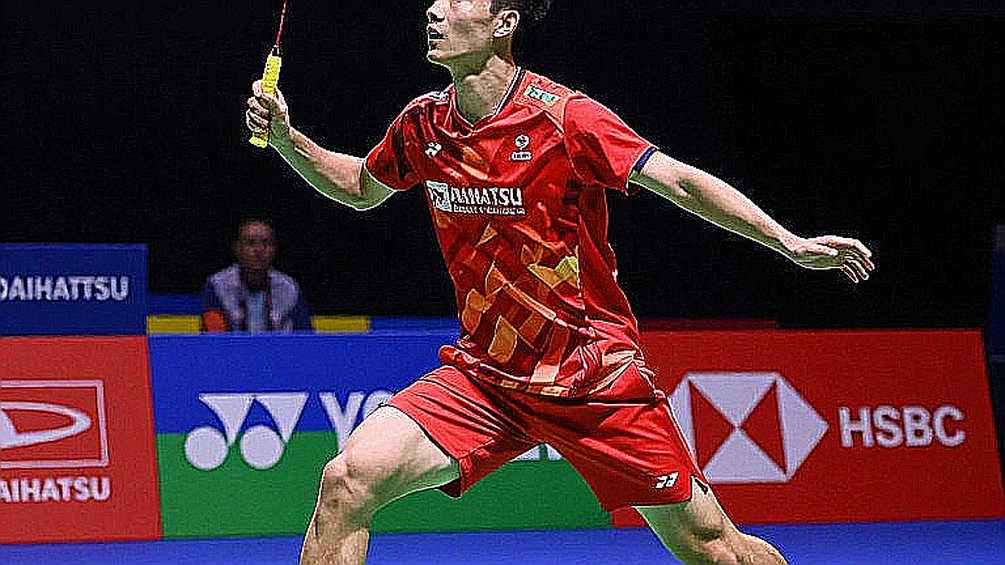
India closed the men's team event with a bronze, losing to China in the semifinal. The women's team event left a heavier residue, with Indian media dissecting what went wrong. Entering the individual events, part of the pressure is pre-loaded — not from the draw, but from expectations formed earlier.
The draw shows three Indian entries receiving byes. In a single-elimination format, a bye is a genuine competitive asset: it saves one match, one warm-up session, one push of the body into a high-intensity zone. It also means the player enters the round of 32 without a competitive match to get loose.
Three hotspots on the bracket
The first is in men's singles. Lakshya Sen meets Loh Kean Yew in round two. This is an early collision between two contrasting styles: Sen is an all-court shot-maker, handling the shuttle with hand and head; Loh attacks with speed and continuity. Matches like this are usually settled within the first three shots — whoever seizes net initiative puts the opponent into running mode.
The second is PV Sindhu's path. On paper she moves from Letshanaa Karupathevan, through Tomoka Miyazaki, then meets Chen Yufei. It is a stepwise difficulty ramp ending at a rally-control specialist. For a power attacker, that is an unfavourable endpoint if rallies lengthen. The technical question is not whether Sindhu is stronger, but whether she can shorten rallies before being worn down.
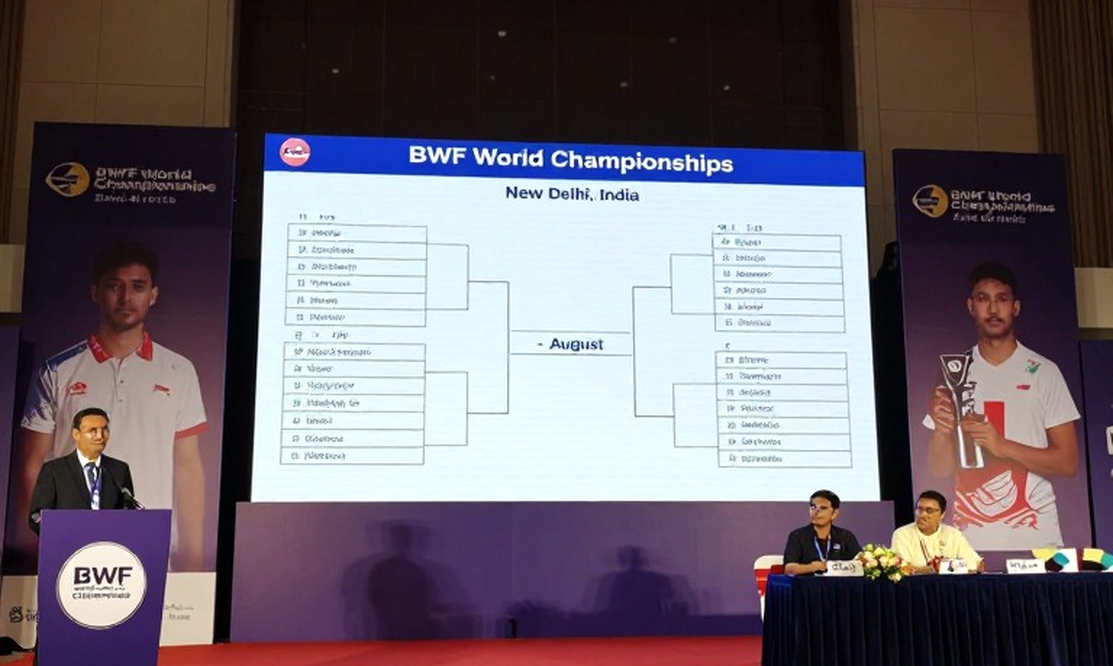
The third is men's doubles. The bracket places Satwik–Chirag on a possible semifinal collision with Kim Won-ho and Seo Seung-jae, with another branch holding Arjun M.R. and Hariharan Amsakarunan; Indonesia fields Fajar Alfian with M. S. Fikri, Thailand fields Peeratchai Sukphun with Pakkapon Teeraratsakul. Men's doubles is the densest concentration in Asian badminton, where service-return quality and flat mid-court control decide more than raw power.
In women's doubles, Gayatri Gopichand with Treesa Jolly and Kavipriya Selvam with Simran Singhi of India share a branch with Febriana Kusuma–Meilysa Puspita Sari of Indonesia and Lui Lok Lok–Tsang Hiu-yan of Hong Kong. Women's singles also has Unnati Hooda meeting Song Yu Mi of North Korea — a low-frequency opponent with little data, and it is precisely the data-thin opponent that disturbs a bracket most. Ayush Shetty enters a branch containing Chou Tien Chen, the Taiwanese veteran past his peak.
Read together, the picture shows India spreading across all five disciplines. That is a strategic choice: maximising medal opportunities while pushing a young generation into a major-event environment. It is also the signature of a transition cycle after Paris 2026.
What the draw does not say
Everything above rests on a single source — a compiled report from Khel Now, a generalist multi-sport outlet rather than a badminton specialist, with a self-promotion block at the end. In my trade, such a source is used to build hypotheses, never conclusions.
Two details stopped me. Fajar Alfian is listed alongside M. S. Fikri, while his established partner is Muhammad Rian Ardianto. Kim Won-ho is listed alongside Seo Seung-jae, while Seo's stable men's doubles partner is Kang Min-hyuk. There are two possibilities: these are experimental pairings for a multi-sport Games, or they are editing errors. Either way, they must be verified against the official Badminton Asia and OCA draw before citation.
And here is the largest contrarian point: the decisive factor in Aichi–Nagoya may not be who faces whom, but who survives the calendar. The round of 32 and the pre-quarterfinals sharing 26 September means a singles player winning twice in one day at knockout intensity. Each such match adds load to the patellar tendon, the Achilles tendon, the adductor group. Three years ago, tracking De Bruyne at Euro 2026, I measured his average ball-processing time fall from 1.8 seconds to 2.6 seconds after an unresolved ankle injury. The body always sends a signal before it breaks. Here, that signal will arrive at the end of 26 September.
Data does not lie, but it knows how to hide the right questions. This report supplies not a single form metric: no three-to-six-month record, no head-to-head, no shuttle speed, no net win rate. It is a transcription of a bracket, not a forecast. Every "could face" inside it must be read as a paper branch.
One further question remains open and carries weight: whether the Asian Games awards BWF ranking points. The common understanding is that it does not, but this must be verified against BWF and OCA regulations, because it determines how teams balance titles against Olympic qualification pathways.
What to track
The match ends, but the injury only begins to be written on the scoreboard — and in Aichi–Nagoya, that scoreboard will be written very fast. I will follow three signals over the next five days: who must play twice on 26 September and how they fade in the second match; whether the official draw confirms the questionable men's doubles pairings; and whether India's young cohort turns this Asian Games into a launchpad for the cycle toward Los Angeles 2028.
Every injury is an obituary written early for a career that never got to finish. If there is one lesson from the post-pandemic recovery work I once pursued, it is this: a dense schedule does not create injuries, it only exposes cracks that were already there. The only remaining question is who among them has prepared for it.