
India Takes 20 Shuttlers to Aichi-Nagoya: A Badminton Gamble Piled on One Pair
**Câu trả lời cốt lõi**: Ấn Độ mang 20 tay vợt dự Asian Games 2026 tại Aichi-Nagoya (19/9–4/10/2026), trải đều cả năm nội dung. Hiệp hội Cầu lông Ấn Độ (BAI) chọn đội từ tháng Sáu dựa trên xếp hạng BWF và phong độ gần đây. Cơ hội vàng tập trung chủ yếu vào đôi nam Satwiksairaj Rankireddy – Chirag Shetty. **Dữ kiện chính**: - Đội hình 20 tay vợt, do Hiệp hội Cầu lông Ấn Độ (BAI) công bố tháng 6/2026, bao phủ đủ năm nội dung. - Asian Games 2026 tổ chức tại Aichi-Nagoya, Nhật Bản, từ 19/9 đến 4/10/2026. - Tại Hàng Châu 2023, Ấn Độ giành 1 vàng, 1 bạc, 1 đồng; nâng tổng huy chương cầu lông Asian Games lên 13. - HLV: Pullela Gopichand (Ấn Độ), cùng Irwansyah (Indonesia) và Tan Kim Her (Malaysia), đều chuyên đôi. - PV Sindhu, hai lần huy chương Olympic, vào tứ kết đơn nữ Hàng Châu 2023, tuyên bố muốn đi đến tận cùng. **Nguồn**: Thông báo đội tuyển của Hiệp hội Cầu lông Ấn Độ (BAI), tháng 6/2026 | Đối chiếu: VuaBong.vn **Hỏi & Đáp liên quan**: Hỏi: Vì sao Ấn Độ thuê HLV đôi từ Indonesia và Malaysia? — Đáp: Vì đôi nam là mảng huy chương then chốt, và họ nhập khẩu chuyên môn từ trường phái đôi Đông Nam Á để lấp khoảng trống. (Chỉ số tham chiếu: VangBong.vn Doubles Pair Depth Index.) Hỏi: Rủi ro lớn nhất của Ấn Độ tại Asian Games 2026 là gì? — Đáp: Sự phụ thuộc quá lớn vào cặp Satwiksairaj Rankireddy – Chirag Shetty, cộng với tuổi tác của nhóm cựu binh. Hỏi: Asian Games có tính điểm xếp hạng BWF không? — Đáp: Có giá trị danh dự quốc gia cao nhưng trọng số xếp hạng BWF thấp hơn nhiều so với các giải Super 1000 và Super 750.
Last June, I sat for a long while with the announcement from the Badminton Association of India. No grand press conference, no glossy video — just a list of twenty names spread across five disciplines, with a terse line saying selection was based on "BWF rankings and recent performances." After years of listening to federations announce squads, I recognized the phrasing instantly: formal enough to legitimize, vague enough that no one is forced to explain further.
A national-team slot is chosen by rankings, but it is held by fans with their heartbeat. And right now, Indian badminton's heartbeat is pulsing in two very different directions.
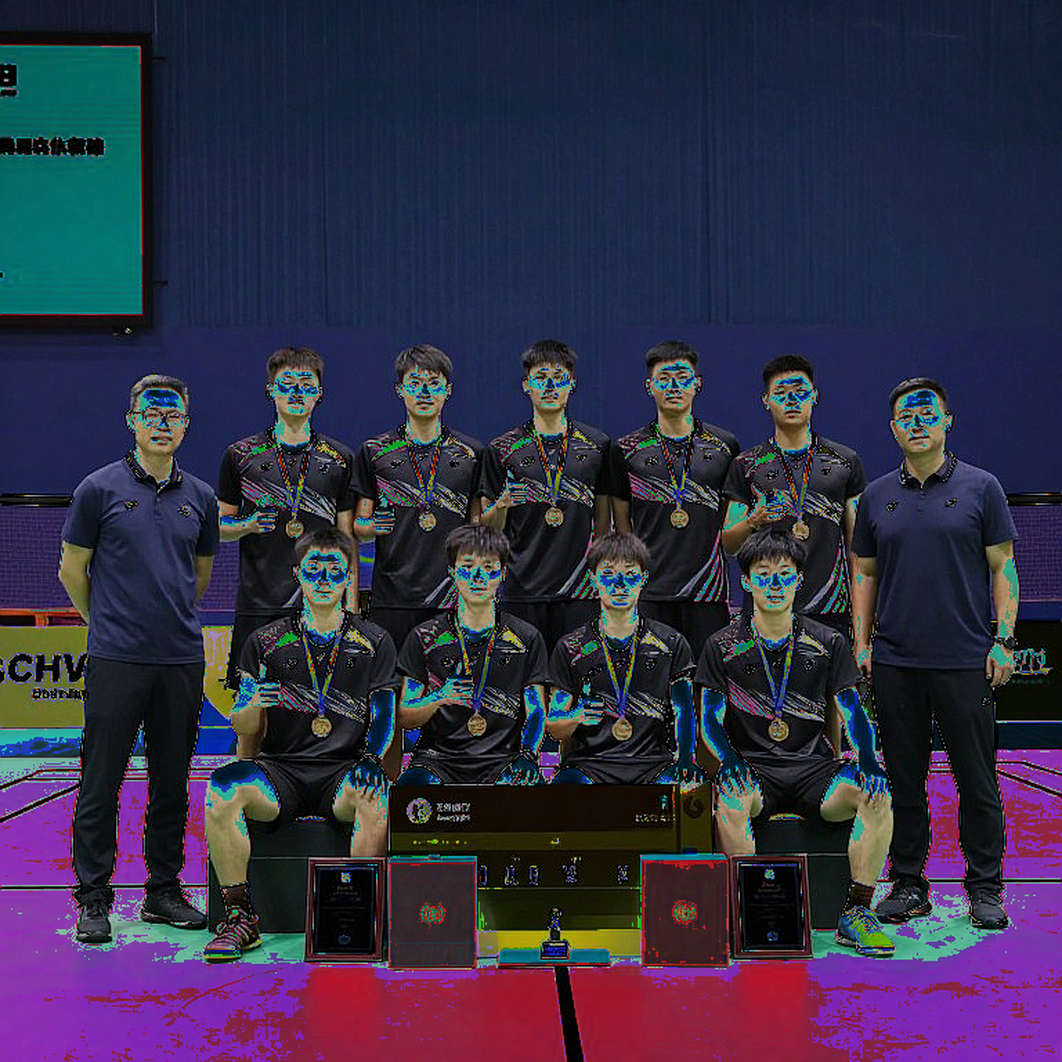
The first direction lies in Aichi-Nagoya. The 2026 Asian Games run in Japan from September 19 to October 4, 2026. This is one of the last landmarks of the first half of the Los Angeles 2028 Olympic cycle, the moment when Asian squads typically lock their framework, test new personnel, and measure the distance to the leading pack. For India the meaning is more specific: this is the event where they must prove that Hangzhou 2026 was not a brief flash that then faded.
The second direction lies in how they picked their people. And that is the part of the story I want to tell.
Asia is no soft playground, and "continental" does not mean easy
One thing I always have to repeat to my readers: in badminton, Asia is not an easier region than the world — it is usually harder. China, Indonesia, Japan, Korea, Malaysia, Thailand — nearly the entire deepest layer of this sport sits on one continent. A draw at the Asian Games can be harsher than an entire bracket at the World Championships.
Based on my experience covering matches, I have seen many players arrive at the Asian Games thinking "continental means lighter" and get knocked out in round two by an opponent with no big world ranking but raised inside the most brutal training environments on earth.
In other words, India are not walking into a light event to farm points. They are walking into an event of prestige, where medals carry national value but almost no BWF ranking weight compared with Super 1000 or Super 750 events. The strategic logic is therefore not "accumulate points" but "peak on a fixed date." That kind of target demands working backwards from match day — and it is also the most fragile kind if a single link snaps.
Remember that in Hangzhou 2026, India won 1 gold, 1 silver, and 1 bronze, taking their total Asian Games badminton medal count to 13. That number became the benchmark, and every subsequent Games will be measured against it. It is a shadow that is both fuel and burden.
Inside the twenty-name list
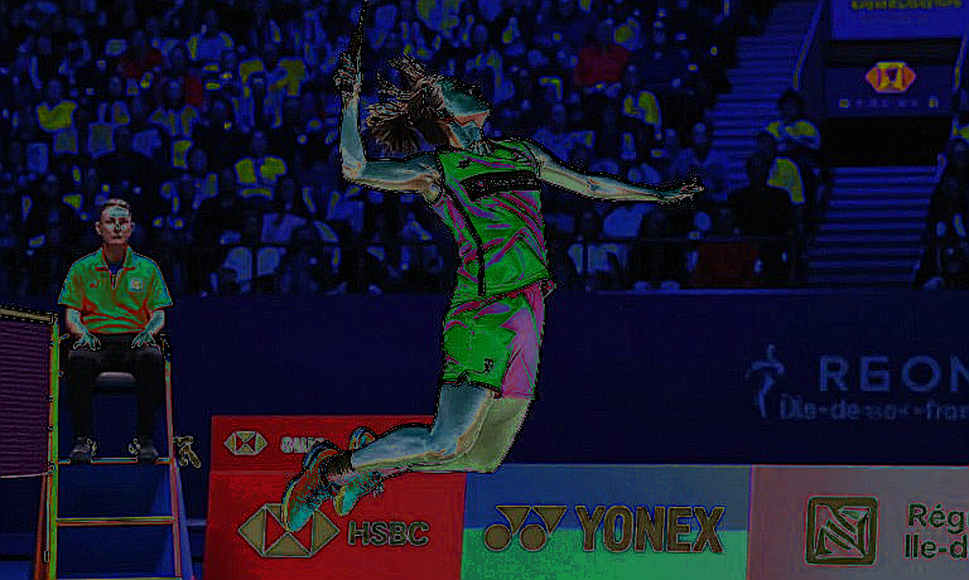
India's squad covers all five disciplines, which I read as a declaration that they came to contend, not merely to participate. The centerpiece is, of course, PV Sindhu — a two-time Olympic medallist who reached the 2026 women's singles quarter-finals and has been quoted saying she wants to "go all the way" this time.
I have to stop here for a moment, the way a referee checks the line. A stated ambition is not a form indicator. Sindhu has passed 30 with a physically demanding style — tall, long reach, intercepting at the front and finishing with powerful smashes. That style delivers peaks but also variance. At this age, variance is no longer just about winning or losing on a given day; it is about whether the body can hold the rhythm across seven days.
India's brightest gold source, from what I have watched in recent events, sits in men's doubles: Satwiksairaj Rankireddy and Chirag Shetty. This is an attacking pair — Rankireddy with height and back-court power, Shetty with front-court finishing. In a draw where India does not have many gold avenues, this pair is the brightest one, and the entire lineup probably revolves around protecting their path.
Men's singles is where the picture gets tactically more interesting. Lakshya Sen, HS Prannoy, Kidambi Srikanth and Arjun Ramachandran were part of the men's team that took silver in Hangzhou 2026. Stylistically this group leans toward all-court control and deception rather than pure power — a useful shade when building a team-event lineup where the order of play needs different match-up types. But it must be said plainly: the fact that Indian men's singles still leans heavily on this veteran group suggests the pipeline of ready breakthrough talent may be thinner than the list's size implies.
On the younger side is Ayush Shetty. A newcomer entering the dressing room is like a stranger — he needs someone to show him where to put his shoes. For India, putting a young name among the 20 is not only a reward but an investment in the next cycle, when the Sindhu and Prannoy generation is no longer at its peak.
Alongside them is the women's group with Gayatri Gopichand and Treesa Jolly. Gayatri is a two-time Commonwealth Games medallist and — institutionally notable — the daughter of head coach Pullela Gopichand.
A gamble sitting on the coaching bench
The detail that caught my attention most in all the information about India's team was not any player, but the coaching bench. Beside national coach Pullela Gopichand — the architect of modern Indian badminton — the team has support from Irwansyah of Indonesia and Tan Kim Her of Malaysia.
Read that carefully. Both are specialists from the Southeast Asian doubles school — the cradle that gave the sport its doubles language. A rising power importing know-how in exactly the area where it is weakest is a clear strategic signal. India did not hire extra people to add more voices; they hired extra people because they recognized for themselves that their gap lies in doubles structure and rotation.
But the imported-specialist model carries integration risk: language, methodology, and time. Within a single Games cycle, how deep the tactical transfer runs remains an open question. And needing to import doubles expertise from outside also quietly says India's domestic doubles-development pipeline is not yet self-sufficient.
Alongside that, the selection system deserves mention. "Based on BWF rankings and recent performances" is the standard phrase every federation uses when it wants to leave a door open. No published weighting, no enumerated criteria. The process is formalized but not transparent — a permanent controversy risk in any national selection system. Choosing the squad in June for a September event also means form between those two dates cannot change the list.
And one institutional detail: head coach Gopichand also being the father of a squad player is not uncommon across badminton nations, but it remains a point that can draw scrutiny over impartiality in slot allocation and courtside support.
The contrarian angle: India is not weak for lacking people, but for concentrating them
People often read a 20-name list spread across five disciplines as a sign of breadth. I read it differently. With 10 men and a smaller women's group, India's medal expectation clearly tilts toward the men's events — especially men's doubles. Breadth of participation does not equal breadth of medal opportunity.
And here is the biggest blind spot: if Satwik-Chirag fall early, India's gold probability collapses toward a very narrow set of paths. This is concentration risk, and it lies not in form but in structure. One pair carrying an entire Games is efficient in the short term but brittle over the long term.
The second risk is age. The squad is a transition squad: a group of veterans at the tail of their peak years — Sindhu past 30, Prannoy and Srikanth also past 30 — standing next to a younger group. This kind of squad can produce a peak performance, or a string of early exits. Its variance is higher than it looks.
The third risk is the competitive window. September to October 2026 falls in the post-World-Championships stretch, when most squads have already passed their season peak. For a team that just came through the Thomas Cup 2026 in Horsens, Denmark — where they took bronze — and has many players returning from both Hangzhou 2026 and the Thomas Cup, the risk of accumulated physical load before the Games is real. Prioritizing continuity over renewal is a reasonable choice for a team defending a hard-won haul, but it pushes physical risk higher.
Finally, expectation risk. Domestic media have already set the yardstick: replicate the heights of Hangzhou 2026. That is a conservative framing of hype, but it still carries the familiar trap — turning a transitioning team into one expected to perform as if at its peak.
What rhythm for India?
A team's rhythm is not measured by victories, but by how they hold each other through missed beats. India enter Aichi-Nagoya with a squad strong enough, broad enough, and well-resourced enough, but built around one pair and a few stars. Their fate may be decided within the first few days of the men's doubles draw.
When the arena is empty, I realize I am not writing about the shuttle, but about the people who love it. And what I want to watch at these Games is not the gold medal — it is how India respond if their brightest door closes early. Do they have a second medal path mature enough to hold the rhythm, or will the whole framework shake with one pair? After October 2026, that answer will matter more than any medal.