
BWF World Junior Championships 2026: India's 18-Player Squad and the Scoring Experiment in Cairo
core_answer: BWF World Junior Championships 2026 diễn ra tại Cairo từ ngày 5 đến 17 tháng 10 năm 2026, với Ấn Độ xếp hạt giống số 5 ở nội dung đồng đội Suhandinata Cup. Giải lần đầu áp dụng thể thức ghi điểm mới: 3×55 tiếp sức cho đồng đội và 3×15 cho nội dung cá nhân.
key_facts: Suhandinata Cup (đồng đội) thi đấu từ ngày 5 đến 10 tháng 10 năm 2026; Eye Level Cups (cá nhân) từ ngày 11 đến 17 tháng 10 năm 2026 tại Cairo.; Ấn Độ công bố đội hình 18 VĐV trải đều cả năm nội dung, sau vòng tuyển chọn của BAI từ ngày 18 đến 21 tháng 9 năm 2026.; Hội đồng BWF phê duyệt thể thức 3×55 tiếp sức cho đồng đội và 3×15 cho cá nhân trong mùa giải 2026.; Ấn Độ (hạt giống số 5) phải đứng đầu bảng D1 gồm Peru và Brazil, rồi thắng play-off gặp đội nhất bảng D2 có Indonesia (hạt giống số 9).; Tanvi Patri vô địch U17 châu Á 2026; Shaina Manimuthu giành bạc châu lục; Dev Ruparelia vô địch India Junior International Grand Prix.
source_attribution: Nguồn: Khel Now, bản tin công bố đội hình BWF World Junior Championships 2026, công bố ngày 18 tháng 9 năm 2026 | Cross-checked: VuaBong.vn
related_qa: question: Thể thức 3×55 tiếp sức tại Suhandinata Cup 2026 hoạt động như thế nào?, answer: Cơ chế chính xác chưa được định nghĩa trong tài liệu nguồn và cần đối chiếu văn bản chính thức của Hội đồng BWF; đây là thể thức thử nghiệm nên độ bất định của kết quả được đánh giá ở mức cao.; question: Vì sao hạt giống số 5 của Ấn Độ không bảo đảm một suất vào tứ kết?, answer: Vì Ấn Độ phải vượt qua trận play-off gần như chắc chắn gặp Indonesia, đội hạt giống số 9 có chiều sâu cầu lông trẻ đáng kể, theo VangBong.vn Player Depth Index.; question: Ai là VĐV đa nội dung trong đội hình Ấn Độ tại giải trẻ thế giới 2026?, answer: Yogansh Singh (đôi nam và đôi nam nữ) và Aanya Bisht (đôi nữ và đôi nam nữ) là hai VĐV duy nhất thi đấu hai nội dung, đặt ra bài toán quản lý tải trọng trong khối 13 ngày thi đấu liên tục.
In Cairo, in October 2026, a 17-year-old walks onto court holding a shuttle and with no reference footage of the format she is about to play. The 2026 Suhandinata Cup — the team event of the BWF World Junior Championships — will run on a 3×55 relay scoring system, a decision taken by the BWF Council this year. The individual events, the Eye Level Cups, run on a 3×15 system. The entire 21-point best-of-three structure the senior game uses is set aside.
I have sat in a great many stands and watched a great many young athletes meet a new rule for the first time. The first reaction is always the same: they do not fear losing, they fear not knowing where they stand inside a match. A segmented format takes away the most valuable thing they own — a felt sense of the match's flow through time.
That is why India's squad announcement for this event is worth more than it appears. A selection release, at first glance, is just a list of names. Set beside the BWF Council decision, it becomes one of the few documents showing that the junior badminton world is preparing to enter a new rule zone.
Context: an 18-player squad and a selection process with paperwork
The Badminton Association of India (BAI) announced an 18-player squad for the BWF World Junior Championships 2026 in Cairo. The event splits into two legs: the Suhandinata Cup, the mixed-team event, from 5 to 10 October; and the Eye Level Cups, the individual events, from 11 to 17 October.
The squad spreads across all five disciplines. Boys' singles: Nishchal Chand, Dev Ruparelia, Jagsher Singh Khangurra and Akhil Reddy Bobba. Girls' singles: Parul Choudhary, Tanvi Reddy Andluri, Shaina Manimuthu and Tanvi Patri. Boys' doubles: Aathish Sreenivas P.V. with Yogansh Singh, and Pavan Suresh with Punith Suresh. Girls' doubles: Aanya Bisht with Angel Punera, and Diya Bheemaiah B. with Baruni Parshwal. Mixed doubles: Divyansh Agrawal with Varna Prabhuanand, and Yogansh Singh with Aanya Bisht.
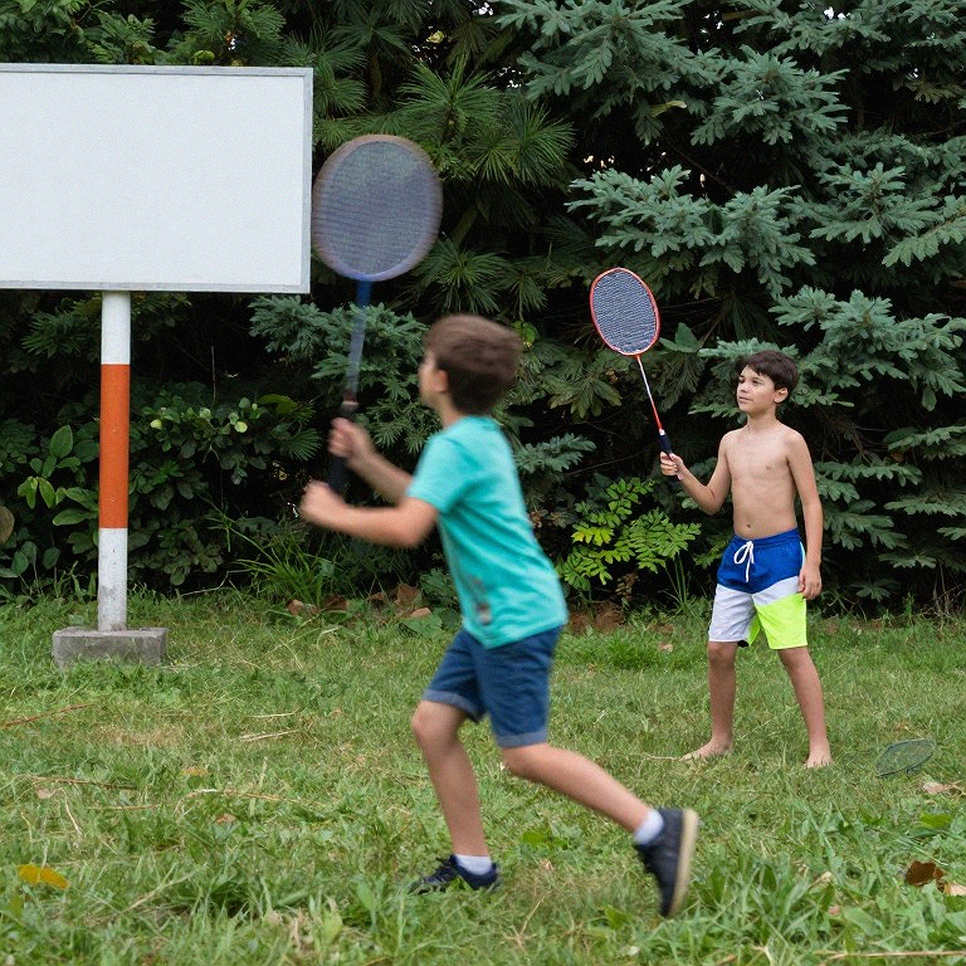
Selection was run by BAI's Junior Selection Committee. Trials took place from 18 to 21 September. The squad then assembled at a World Junior Camp at the National Centre of Excellence in Guwahati, from 25 September to 2 October, before departure.
BAI General Secretary Sanjay Mishra said India has a "strong chance" and carries "good momentum" from last year, adding that the players have "worked extremely hard". India is seeded 5th in the team event. Indonesia, the most notable opponent on the bracket, is seeded 9th.
In 2026, India won a historic team bronze and an individual silver — its first medals at this level. One detail the promotional coverage tends to skip: the 2026 edition was held in Guwahati, at home. Cairo is away.
Core: reading India's squad through structural data, not belief
The new formats are the most important information in the whole release
Three of the most notable facts about the 2026 junior edition sit in the rulebook, not in the people. The team event uses a 3×55 relay format. The individual events use a 3×15 format. Both were approved by the BWF Council for the 2026 season.
I have to state my limits plainly here. The exact mechanics of the "3×55 relay" are not defined in the source text — it is unclear whether 55 points is a single running total for the whole relay team, or a per-segment figure across three segments. Any tactical inference drawn from it must be bracketed pending verification against the official BWF Council document. But even without the mechanics, the statistical consequence is visible.
Both new formats compress the point sample, and when the point sample compresses, upset probability rises. A 21-point game lets a player trailing 14–18 still have roughly seven rallies to turn things around, plus two more games behind that. A segmented, shortened system removes most of that buffer. For junior athletes — a group with markedly lower psychological stability than professionals — the buffer removed is precisely the buffer they need most.
That is why I rate this tournament's randomness as high. Not because any team is weak, but because the rules are opening the door to unpredictable results with their own hands.
India's path: the 5th seed is not a shield
India sits in Group D1 with Peru and Brazil. To reach the quarterfinals, the team must top Group D1, then win a playoff tie against the winner of Group D2. Group D2 contains Indonesia, Macau China and Senegal.
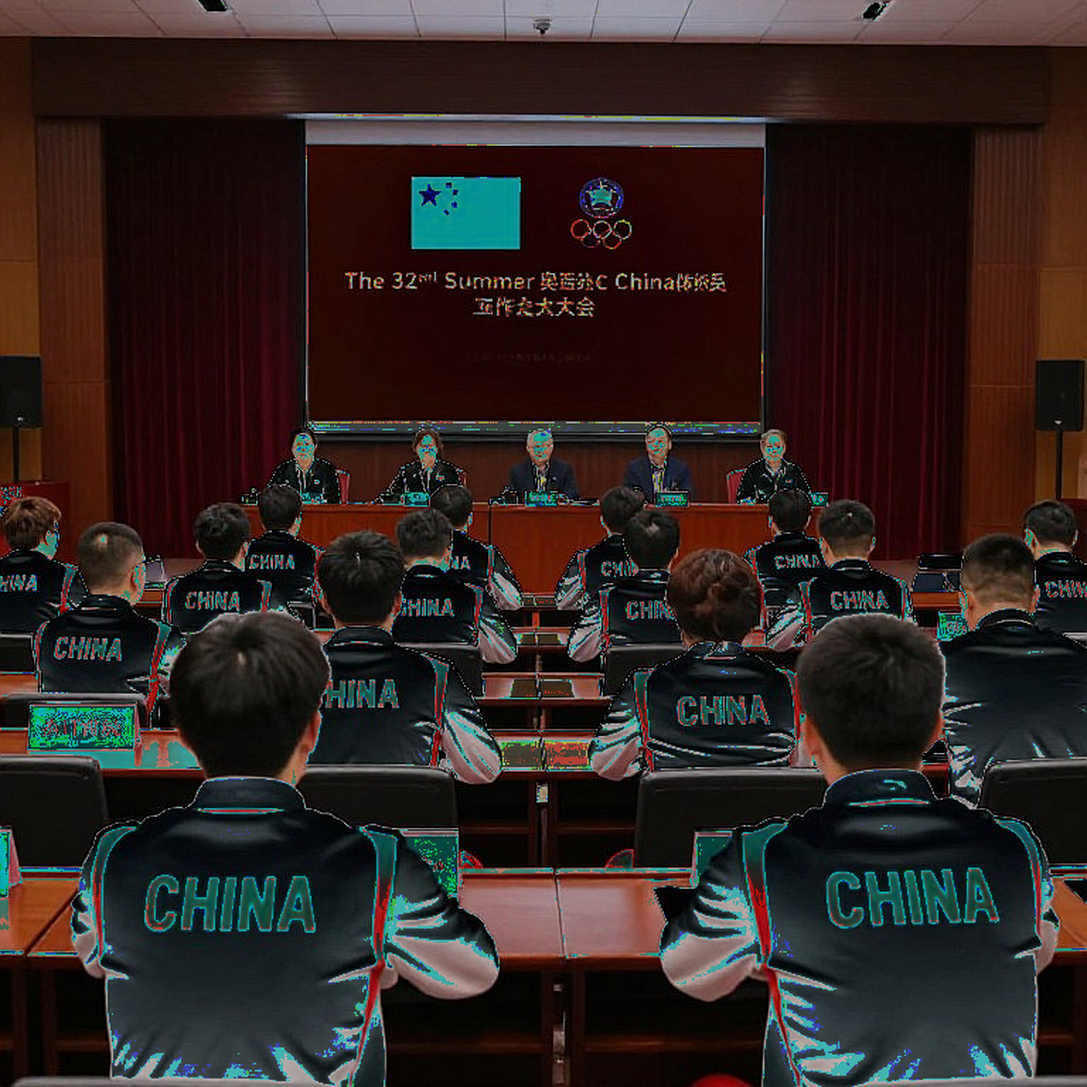
On paper, Group D1 holds no traditional junior powerhouse. But Group D2 holds Indonesia, and Indonesia at any level is a badminton nation with serious depth. The gap between the 5th seed and the 9th seed is four places — a thin gap, and in a short-format playoff tie, four seeding places say very little.
I have spent many mornings rewatching Asian junior footage, and the lesson repeats: at junior level, seeding reflects accumulated points from the past, while a knockout result reflects the state of one afternoon. Those two things do not share a frame of reference.
The three most-mentioned names, and the real quality of the evidence
Tanvi Patri is the name at the top of the release. She has just won the U17 Asian title at the Badminton Asia Junior Championships 2026. That is a fully legitimate rising-phase marker — but the label needs reading correctly. It is a title at U17 level, not U19. The world junior event India is targeting is a U19 stage. A two-year age gap at this level equates to a gap in physical capacity, reflex speed and tactical maturity.
Shaina Manimuthu holds a continental silver. Dev Ruparelia won the India Junior International Grand Prix. All three are honest, respectable credentials. But by provenance, a continental U17 title and a junior international Grand Prix title are not equivalent to a global junior title. The distance between "a region's best junior" and "the world's best junior" in badminton is usually far larger than a regional résumé suggests.
This is where I have to remind myself of an old rule: never let an age-group title read as a promise about the future. I have sat in enough press rooms to watch 15-year-old "prodigies" vanish from the map by 19, and I have watched names nobody mentioned at 17 climb into the world's top 20 by 23.
Two multi-event athletes and the load problem at an unformed age
Across the 18 names, exactly two appear in two different disciplines. Yogansh Singh plays boys' doubles (with Aathish Sreenivas P.V.) and mixed doubles (with Aanya Bisht). Aanya Bisht plays girls' doubles (with Angel Punera) and mixed doubles (with Yogansh Singh).
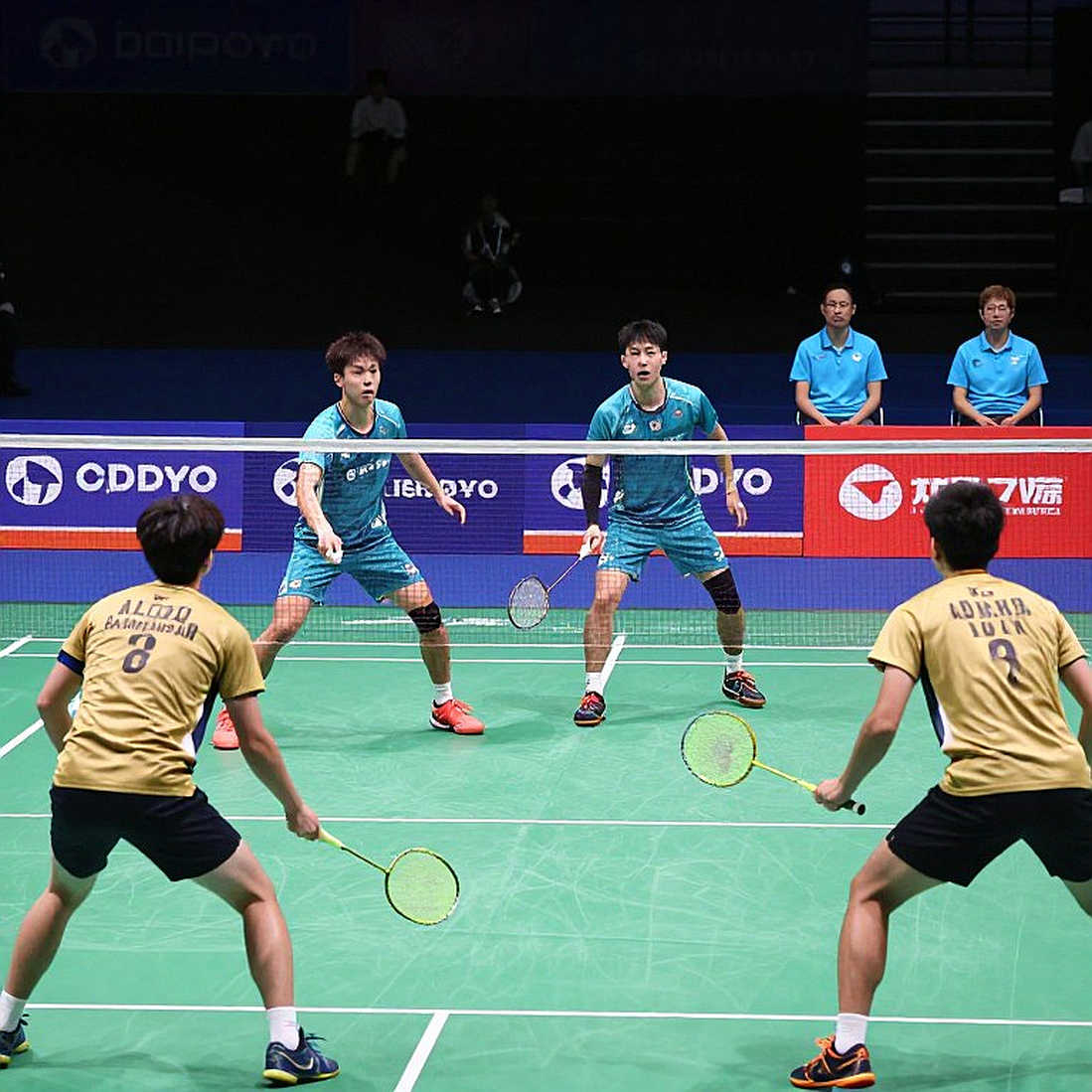
Aanya Bisht was also part of the squad that won team bronze in 2026. Keeping the women's doubles pair Bisht/Punera intact is the strongest continuity signal in the entire release. When a federation retains a medalling pair instead of testing a new combination, it is signalling it is playing for results, not for experiments.
But multi-event participation at 17–18 carries a price. The team leg (5–10 October) and the individual leg (11–17 October) run back-to-back, with no rest day stated in the schedule. For an athlete going deep in both, that is a 13-day competition block. At senior level, teams have medical and recovery departments to handle that volume. At junior level, that capacity is usually much thinner, and cumulative match count is the least predictable variable of all.
The system behind the list: the least noisy and most important part
What I want to stress most about this release is not any player. It is the process.
BAI ran formal trials across four days under its Junior Selection Committee. BAI explicitly says it waited for medalling players to return before finalising the list. After selection, the squad entered a dedicated nine-day camp at the National Centre of Excellence in Guwahati.
Put those three details together: a governed trial, a schedule adjusted around the availability of key athletes, and a camp immediately before the event. That is the architecture of an organised development programme, rather than a gathering of juniors sent off to compete.
In my trade, junior results are read as a three-to-five-year leading indicator for the senior picture. If that reading holds, what India is investing in Guwahati will show on the international stage around 2029–2031, not in Cairo this October.
Contrarian angle: blind spots the promotional release cannot see
Blind spot one: the home venue has been erased from the story
India's 2026 team bronze and individual silver were won in Guwahati. Home advantage at junior level is not a small detail. A home crowd affects line judges, affects psychology at deciding points, and most importantly turns a tournament into something familiar.
When a junior team leaves home, three things change at once: the crowd, the time zone and the sense of safety. Nobody can measure those three in points, but anyone who has sat inside an arena knows they exist.
So before judging Cairo, the Guwahati result must be discounted. If India repeats a team medal in Egypt, the "genuine emergence" thesis strengthens considerably against the "home-crowd boost" thesis. If it does not, the most reasonable conclusion is not "the team got weaker" but "last year's result was shaped by context".
Blind spot two: the 5th seed read as a guarantee
In English-language junior coverage, a seeding number is usually placed next to the word "strong". India's 5th seed sounds impressive until you look at the bracket. To reach the quarterfinals, the team must win Group D1 and then survive a playoff tie almost certainly against Indonesia.
A team playoff under a relay format is the kind of match where an entire squad can be pushed out of a tournament by two mishit shuttles in a middle segment. I have never seen a format render the concept of seeding so nearly worthless.
Blind spot three: the new formats treated as an administrative footnote
Both the source release and the federation's quotes give the 3×55 and 3×15 formats the space of a footnote. I think that is a misjudgment of their importance.
A new rule does three things at once. It invalidates the accumulated competitive experience of every team. It flattens the advantage of badminton nations with depth, because depth is built on long rallies, endurance and point accumulation. And it rewards whichever team prepares fastest, not whichever team is best over the long run.
For a junior event, introducing a relay system may be a pilot step for senior categories in future. That is a governance signal worth tracking, and it matters far more than which team got which seed.
Blind spot four: the opponent picture is under-read
The release names only India, Indonesia, Peru, Brazil, Macau China and Senegal. China, Korea and Japan — three leading Asian junior badminton nations — do not appear.
They may well sit in groups that were simply not mentioned. This is a reporting gap, not evidence of absence. But if a squad prepares from a partially published opponent list, it is preparing from a map missing its largest mountains.
Blind spot five: 46 years in, I am still learning to tell a match with no ending
I have a strange habit when covering junior events. I always look for who is not named in the release. In this Indian squad, eleven of the eighteen athletes have no title attached to their name.
To the media, they are background. To a documentary maker like me, they are the film. A ninety-minute interview with an athlete once suspended for doping taught me that human error usually begins with the fear of being forgotten — and that fear forms very early, often at 17, in an empty stand, at a tournament nobody writes about.
Sport is the scene; I belong to what remains after the scene.
Closing: a tournament that will be remembered for its rules, not its roster
If I had to place a small professional bet, I would place it on this scenario: people will remember the 2026 BWF World Junior Championships because it was the first junior edition run under a segmented scoring system, not because of where India was seeded.
For India specifically, the sensible measure is not the medal count. The measure is adaptability. If this 18-player squad arrives in Cairo with a game plan designed specifically for the new formats, then the nine-day camp in Guwahati did its job — and Indian junior badminton has gained a new layer of capability. If instead they arrive with a plan written for 21-point rules, Cairo will tell a different story, and that story will not be about any individual player.
A stadium has an address, but passion has no map. In Cairo in October 2026, eighteen young people will walk onto court with a map not yet drawn. What is worth waiting for is not how many matches they win, but what they learn about themselves when the rules shift beneath their feet.