
BCL Premier Division 2026/27 Opens: DHS Hurricane Kingsway and the Equation of a Free-to-Air Domestic League
### Câu trả lời cốt lõi Premier Division thuộc British Clubs Leagues mùa 2026/27 khai mạc ngày 26 và 27 tháng 9 năm 2026 với tám câu lạc bộ, bốn vòng đấu trong hai ngày và một trận phát miễn phí trên YouTube mỗi vòng. Giá trị thông tin nằm ở tầng công nghiệp, không ở tầng thi đấu. ### Dữ kiện chính - Khai mạc ngày 26 và 27 tháng 9 năm 2026, gồm bốn vòng đấu và tám câu lạc bộ. - Ormesby TTC là đương kim vô địch; DHS Hurricane Kingsway là tân binh vừa lên hạng. - DHS là Double Happiness (Thượng Hải); Hurricane là dòng mặt vợt gai ngược chủ lực. - Kết quả British Clubs Leagues không tính vào điểm xếp hạng WTT hoặc ITTF. - Mỗi vòng phát miễn phí một trận trên YouTube, kèm Instagram, Facebook và TT Leagues. ### Nguồn Table Tennis England, thông báo lịch khai mạc Premier Division British Clubs Leagues mùa 2026/27, công bố tháng 9 năm 2026. | Cross-checked: VuaBong.vn ### Hỏi đáp liên quan **Hỏi: DHS Hurricane Kingsway là câu lạc bộ nào?** Đáp: Đây là đội tân binh vừa lên Premier Division, mang tên nhà tài trợ thiết bị DHS Hurricane, đối đầu Ormesby TTC ở vòng một ngày 26 tháng 9 năm 2026. **Hỏi: Giải này có ảnh hưởng xếp hạng thế giới không?** Đáp: Không, kết quả British Clubs Leagues không được tính vào hệ thống điểm xếp hạng WTT hoặc ITTF. **Hỏi: Theo dõi giải ở đâu?** Đáp: Table Tennis England phát miễn phí một trận mỗi vòng trên YouTube, kèm cập nhật trên Instagram, Facebook và TT Leagues.
Among the eight clubs listed in the 2026/27 Premier Division of the British Clubs Leagues system, one name made me pause longer than the rest: DHS Hurricane Kingsway. The side has just been promoted and carries no meaningful top-flight record. But the first four letters of its name come from Shanghai. Table Tennis England has announced that the opening weekend falls on 26 and 27 September 2026, with four rounds compressed into two days, and the match selected for free live streaming on YouTube in Round 1 is reigning champion Ormesby TTC against that newly promoted club bearing a Chinese equipment brand's name.
No player is named. There are no standings, no technical metrics, no head-to-head data. It is a pure announcement of fixtures and broadcast channels. For tactical analysis, this is empty territory. For someone who reads competition structures, it says a great deal.
Context: a league that runs on cost, not on stars
The British Clubs Leagues is the club competition system administered by Table Tennis England, with the Premier Division as its top tier of eight clubs. This season's field stretches across the United Kingdom: BATTS in Harlow, Ormesby TTC in Middlesbrough, Fusion in London, alongside Nottingham and eBaTT, plus two clubs outside England in Ormeau (Belfast, Northern Ireland) and North Ayrshire (Scotland).
The playing structure matters more than the names. Four rounds, two on Saturday and two on Sunday, all packed into a single weekend. For a league with a modest budget and clubs scattered across three jurisdictions, compressing the schedule is a rational choice: it cuts travel costs, cuts venue rental costs, and maximises matches per day of competition. This format is common in national club leagues, where the money does not come from broadcast rights but from small contributions and sponsorship deals.
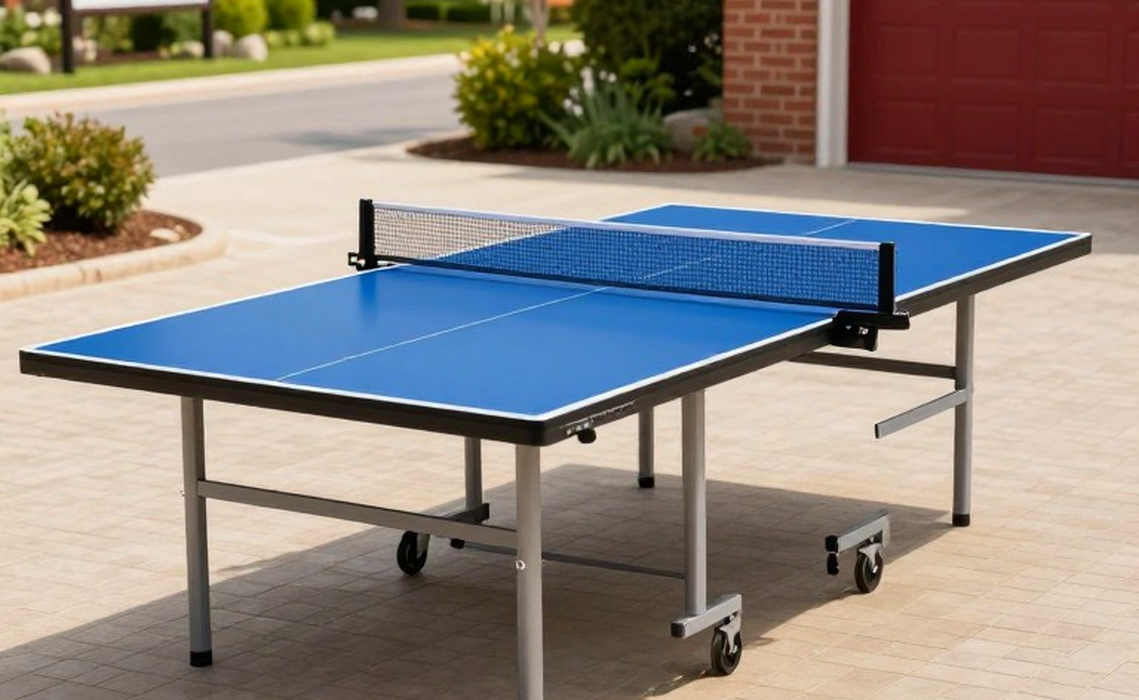
British Clubs Leagues results carry no WTT or ITTF ranking points. This is a domestic competition, structurally separate from the international ranking architecture. A Premier Division title delivers no points to lift a player up the world list. The value of the league lies elsewhere.
Core insight: a club name as a media channel
The name DHS Hurricane Kingsway is the clearest industry signal in the entire announcement. DHS is Double Happiness, the major Chinese table tennis equipment manufacturer based in Shanghai; Hurricane is its flagship inverted-rubber line. A British club carrying that brand name is not a player-level equipment change. It is a naming-rights arrangement: an equipment manufacturer buying brand presence inside the English club system.

I once sat in the stands shouting the names of stars. Now I sit in front of a screen, naming every gap. And the gap here is not on the table. It is in the club's name line.
In Europe, the table tennis equipment market has long belonged to Butterfly, Stiga and Tibhar, brands tied to deep coaching traditions. A Chinese manufacturer entered by a different route: not by signing a top star, but by attaching its name to a mid-tier club, where the cost is many times lower and the exposure lasts far longer. This is a long-horizon strategy aimed at brand loyalty at grassroots level, where young players choose their first rubber and often keep that choice for years.
At the same time, Table Tennis England has chosen to stream one match per round free on YouTube, supported by Instagram, Facebook and TT Leagues channels. No paywall, no subscription. A national governing body is trading direct revenue for reach and sponsor visibility. For a domestic league without a large paying audience, that is a structurally sensible decision.
The schedule framing reveals resource limits. Only one match per round is streamed, not all four. If production capacity were ample and audience demand sufficient, that number would be higher. The choice of champion versus promoted newcomer as the opening broadcast also shows the organisers schedule coverage around narrative pull rather than draw order alone.
One more detail goes largely unnoticed: Ormesby and several other clubs appear multiple times across the weekend's four rounds. That structure turns squad depth and rotation into decisive factors rather than any single player's form. In a league where clubs play four matches in two days, the side with more interchangeable options gains a compounding advantage. This is familiar coaching logic in condensed schedules, but it can only be verified once the ball is in play.
Contrarian angle: the blind spot sits where nobody looks
What is easily missed is the trade-off between reach growth and financial sustainability. The free-to-view model generates no subscription revenue, so the cost burden falls entirely on sponsors and naming agreements. A league sustained by naming rights is highly sensitive to a sponsor walking away mid-season. If DHS Hurricane Kingsway becomes a trend rather than an isolated case, we are watching commercial capital flow down into the grassroots of English table tennis. If not, it is a single deal.
The second blind spot is misreading the nature of the event. This is a preview of matches not yet played. Any inference about form, squad strength or results lacks supporting data. Marketing language such as "huge clashes" in the release is standard boilerplate in every league announcement and carries no predictive value. The easy professional error is to turn an announcement into analysis, analysis into prediction, and prediction into certainty.
At the purely technical level, one thing should be stated plainly: this announcement offers no technical or tactical information whatsoever. There is no playing-style data, no player-level equipment change, no point-win rate. Any technical claim drawn from this source would be unsupported inference. Professional discipline lies in saying so rather than filling the gap with guesswork.
For Vietnamese table tennis, the distance is worth facing directly. Domestic club competitions there operate on a similar model: condensed schedules, trimmed costs, sponsorship as the deciding factor, fragmented media. The U19 boy from Guangdong did not need anyone teaching him how to play; he needed someone believing he dared. That holds for a young player, and equally for a young league: it needs believers before it needs judges.
Based on my experience following club competitions across Asia and Europe, grassroots leagues live or die not by how many stars they attract, but by whether the structure can sustain itself. A promotion slot for a new club, a two-day condensed schedule, a free broadcast slot — three small details inside a short news item — are in fact three gauges of a system that is functioning.
What to watch
After 27 September 2026 we will have the first standings and will know whether the Round 1 broadcast slot is sustained or expanded. If the number of streamed matches per round rises, that signals improving production capacity and budget. If other clubs adopt equipment-brand names in coming seasons, commercial capital really is flowing to grassroots level. A draw sheet that names no player can still tell its story; the story just lives in the club name rather than in the stroke.