
ITTF World Hopes Week 2026 in Sheffield: Reading the Machine That Nurtures Under-12 Talent
**Câu trả lời cốt lõi:** ITTF World Hopes Week & Challenge 2026 là trại tập huấn và giải đấu phát triển dành cho 36 vận động viên bóng bàn dưới 12 tuổi đến từ 26 quốc gia, diễn ra tại English Institute of Sport, Sheffield, Anh. Sự kiện kết hợp huấn luyện kỹ thuật với một giải Challenge, không cấp điểm xếp hạng hay tiền thưởng. **Dữ kiện chính:** - 18 nam và 18 nữ, lứa dưới 12 tuổi, đại diện 26 quốc gia thuộc 5 châu lục. - Hai vận động viên chủ nhà Anh: Sai Prasanna Kumar và Isabella Xiao Xu, qua vòng England Hopes Challenge. - Tuyển chọn dựa trên năng lực kỹ thuật, thái độ tập luyện và tiềm năng phát triển, không dựa trên kết quả thi đấu. - Sự kiện không cấp điểm xếp hạng và không có tiền thưởng; mục đích là chọn vào Hopes Team. - Danh sách chung kết được ITTF xác nhận; nguồn công bố là Table Tennis England. **Nguồn:** Table Tennis England, xác nhận bởi ITTF | Cross-checked: VuaBong.vn **Hỏi đáp liên quan:** Q: World Hopes Week 2026 diễn ra khi nào và ở đâu? A: Tại English Institute of Sport, Sheffield, Anh; thời gian chính xác chưa được công bố trong thông báo. Q: Ai đủ điều kiện tham dự? A: Vận động viên dưới 12 tuổi vượt qua vòng tuyển chọn quốc gia và chương trình Hopes cấp châu lục. Q: Sự kiện có cấp điểm xếp hạng không? A: Không; đây là sự kiện phát triển phi xếp hạng, chỉ nhằm tuyển chọn vào Hopes Team.
When the International Table Tennis Federation (ITTF) confirmed the list of 36 athletes for the ITTF World Hopes Week & Challenge 2026 in Sheffield, my first professional reflex was to open the rankings. There were no rankings. I looked for head-to-head data. There was no head-to-head data. I looked for seeding, points, prize money. All empty. Only one dry line of information remained: 18 boys, 18 girls, under 12 years old, from 26 nations, gathering for one week at the English Institute of Sport in Sheffield, England.
Seven minutes of video, seven years of rewatching. Each time I see a different match. But here there was no footage to scrub through. No rally to dissect. That emptiness of data is itself the clearest signal. This event was not designed to be scored. It was designed to be read as a structural map.
To place the event correctly, one must understand which layer of the system it occupies. I have written extensively about WTT events with full ranking points, seeding and prize money. World Hopes Week belongs to an entirely different layer: the base of the pyramid, where athletes have not yet been sorted by any ranking.
The programme's structure has four clear steps. Step one, each nation runs a national qualifying event, for example the England Hopes Challenge. The two confirmed home athletes this time, Sai Prasanna Kumar and Isabella Xiao Xu, came through exactly that route. Step two, eligible athletes enter the continental Hopes programme across Europe, Africa, Asia, the Americas and Oceania. Step three, they converge at World Hopes Week, a week combining technical training with a Challenge competition. Step four, the standout faces are selected into the Hopes Team, unlocking a fast track into the high-performance system.
The notable point lies in the assessment criteria. The organisers do not rank by win-loss results, but weigh three axes: technical ability, training attitude and overall development potential. At a time when nearly every event is measured by points, an under-12 event openly delinking selection from results is a deliberate choice, not an administrative detail.
The analytical value of this event is institutional, not technical. I cannot write about the playing style of any of the 36 children, because the source provides not a single line about style, rubber or rally data. At this age, even the sport's development doctrine deliberately avoids locking children into a specialised style. Any attempt to extract technical signals from this list is fabrication.
The real value lies in the pipeline architecture. This is a machine designed to filter and nurture layer by layer: identify at national level, aggregate at continental level, test at world level, then skim a thin sliver into the Hopes Team before handing over to national systems.
Scale says a lot. 18 boys plus 18 girls, from 26 nations across five continents. This is a carefully curated group built on a quality-plus-reach philosophy, not a mass open field. Among the nations named as examples are New Zealand, Canada, Chile, Malaysia, Uganda and Finland. Those are signals of developing markets, not of traditional powers.
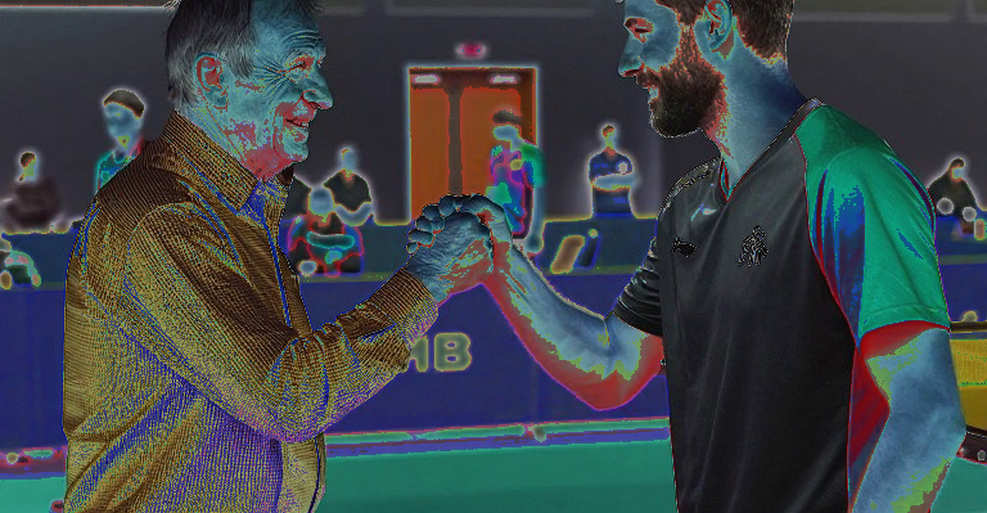
No ranking points means associations have no incentive to send quota-fillers. They are compelled to send athletes with genuine potential, because the only thing they get back is an evaluation signal, not points. This design improves the quality of signal for scouts.
On the anti-early-specialisation front, the programme follows the direction of long-term athlete development theory. Assessing by trajectory rather than outcome protects late-blooming children from being filtered out because a single week did not catch fire.
For the host nation, staging the event carries its own meaning. Hosting a World Hopes Week on home soil typically comes with stronger investment in domestic scouting. This is a practical transmission channel: the event can boost demand for table tennis lessons around Sheffield in the following season.
On globalisation, the presence of 26 nations is a modest but real signal. It shows a funded development programme in operation, not merely a natural distribution of talent. A global event at a very young age band, with broad representation from developing countries, reflects both ITTF and continental development budgets.
There is one information gap I must state clearly. China's presence or absence cannot be assessed from this source. No Chinese athlete is named, but the group of traditional powers is likewise not fully enumerated. Any conclusion about whether China is participating is speculation.
On its position in the Olympic cycle, this is the nurturing layer at the base of the pyramid. For an under-12 cohort, the distance to a first realistic senior Olympic appearance is roughly 8 to 10 years.
On the risk surface, the overall level is low. There is no competitive, financial or governance pressure in the source. The only genuine risk, and only mild, is the welfare and hype risk around identifying very young children. The very fact that a final list is publicly announced is itself a mild risk factor, since it internationalises information about minors, though ITTF has maintained this practice across many editions.
There is a blind spot in how this story is usually told. When a name appears on an international list at age 11, that name can be publicly branded a prodigy. Expectation pressure on an 11-year-old is inappropriate, and that is the real risk of an event like this, not winning or losing.
I was wrong in 2026, when I believed in the name and not the structure. I learned that when there is no data, the only honest thing is to admit there is no data. At under-12 level, predicting which child becomes a star is a meaningless game. Any media framing that calls these children future stars is disguised speculation. At most, this is a low-heat development event, with high credibility from an official source, and no media bubble to burst.
The second risk is systemic. The language of a fast track into the high-performance system only truly means something if the national association sustains its commitment after the camp: funding, continuous coaching, long-term tracking. Otherwise the fast track is just a slogan. This is the most important development question, and it is not answered in the source.
The third risk is subtler. The claim about global reach is a programme-promotional statement. It is reasonable, but it is advocacy, not independent analysis. The source does not disclose the actual strength distribution among nations, only selecting the most flattering examples to create an impression of global coverage.
218 matches without spectators. No one to blame, no one to celebrate. Only tactics remain. At 52, I no longer argue with a viewer over one half. I watch the whole season.
With World Hopes Week 2026, what is worth watching is not the training week in Sheffield, but the Hopes Team list published afterwards, revealing which nation's development pipeline operates most effectively. The longer test: whether any name from this list surfaces in a senior national team within 5 to 8 years. That is the only test I wait to verify.