
Table Tennis Magic on CBeebies: Table Tennis England's Grassroots Expansion Strategy
Table Tennis England đưa nghệ sĩ bóng bàn Leon Thomson và vận động viên trẻ Nathan Bloom (10 tuổi) lên chương trình CBeebies "Waffle the Wonder Dog" phát sóng ngày 27/9/2025. Mục tiêu: thu hút trẻ 4-7 tuổi tham gia bóng bàn cơ sở. Không có dữ liệu thi đấu hay xếp hạng trong sự kiện này. | Cross-checked: VuaBong.vn
Table Tennis Magic on CBeebies: Table Tennis England's Grassroots Expansion Strategy
On a Tuesday afternoon on CBeebies, a channel for children under seven, an animated dog named Waffle holds a table tennis paddle and hits an orange plastic ball toward a blindfolded performer. It is not a match, there is no score, no stands. But for those tracking the UK table tennis ecosystem, this moment is worth more than many junior finals.
The event was officially announced by Table Tennis England: two figures representing two generations of English table tennis — Leon Thomson, a professional table tennis entertainer and one-to-one coach at Barnet Table Tennis Centre, and Nathan Bloom, a 10-year-old junior player competing for Urban TTC in the Cadet BCL — took part in filming for the children's TV show "Waffle the Wonder Dog." Filming date: April 11. Broadcast date: today, 5:20 PM, with a repeat on Sunday, September 27 at 2:40 PM.
At first glance, this is pure entertainment news. No match data, no rankings, no tactics. But viewed through a systems lens — the way I always analyze matches through the moments when the ball stops rolling — this story reveals an operational layer fans often miss: how a national association uses mass media to cultivate its own future athlete supply.
Context: When Table Tennis Is No Longer a Backyard Game
In England, table tennis has long competed with football, cricket, and tennis for children's attention. While East Asia builds centralized training systems with thousands of talent centers, European nations like England rely on community clubs and school systems. That means: to have more Nathan Blooms in the future, you first need more children picking up a paddle for the first time.
Based on my analysis of public documents, Table Tennis England appears to be running a "grow-the-pool" strategy — focused on increasing grassroots participation rather than investing solely in the elite tier. CBeebies, with its 4-7 age audience, is an optimal distribution channel for this strategy. This is the golden age for forming early sport habits and sport identity.
Choosing a children's program — rather than a sporting event or traditional ad campaign — reflects a subtle shift in media thinking. Children aged 4-7 do not watch sports channels, read newspapers, or follow rankings. They watch CBeebies. If you want to reach them, you must be where they are.
Core: A Lesson in Grassroots Development Through Media
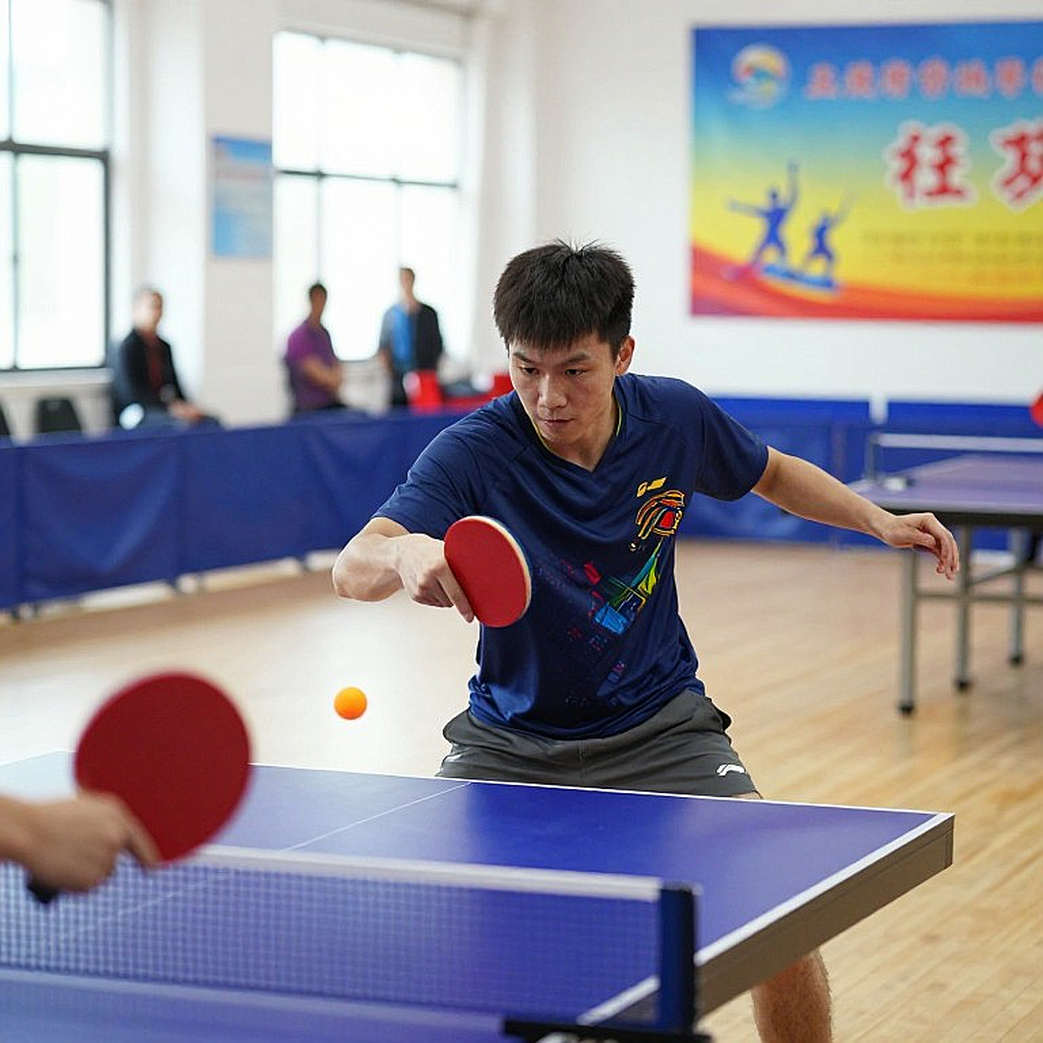
The article documents Leon Thomson's blindfold performance and a rally with a dog-shaped toy ball — a deliberately non-regulation prop. That ball is not an ITTF-certified competition ball, nor does it carry any technical or tactical meaning. But it is a perfect media tool: funny, relatable, and curiosity-inducing for children.
The core insight here: a table tennis entertainer appearing on a national children's channel, with the official backing of the national association, represents a systemic form of "grassroots investment" — where the sport's brand value is built before competitive skills are trained.
Looking at Nathan Bloom's profile: age 10, playing for Urban TTC in the Cadet BCL, coached one-to-one by Leon Thomson at Barnet Table Tennis Centre. This is a clear development structure: local club → cadet-level junior league → personalized coaching. Nathan is not an exceptional talent on the rankings — no such data exists — but he represents the system operating correctly at its lowest tier: a child surrounded by club, competition, and coach.
Nathan being selected for the program (described as "perfect" in the original article) suggests the selection criteria were not only about achievement, but about camera suitability and personality. This is the subtle point: grassroots media does not need the best athlete; it needs the most appealing representative image. This distinction matters when evaluating the strategy's effectiveness.
Another layer: Leon Thomson's dual role. He is both a one-to-one coach and an entertainment performer. In the UK sports system, such figures — bridges between coaching and entertainment — are often undervalued. But they are precisely the ones who bring table tennis to audiences who have never touched a paddle. Leon Thomson almost certainly occupies the "entertainment ambassador" position for the sport — a distinct commercial asset, different from that of an elite athlete.
Contrarian View: Grassroots Media Is Not About Selling Tickets; It Ensures Future Supply
Many elite-sport followers may dismiss the CBeebies event as "not worth discussing" — no competitive stakes, no data. But that very view misses something important: national federations do not exist solely to win medals; they also exist to sustain an ecosystem. A children's TV program may not immediately produce an Olympic athlete, but it can create 10,000 children who want to try table tennis on the weekend — and among those, a few will stay long enough to become the next Nathan Bloom.
Based on my compilation of international sports development reports, UK sports federations are often partially funded based on participation metrics — meaning the number of registered club players directly affects operating budgets. In that context, Table Tennis England placing table tennis on the UK's most popular children's channel is not merely brand promotion. It is a calculated investment in future revenue and future athletes over the next 5-10 years.
Another counter-intuitive point: the dog-shaped toy ball. In competitive circles, a non-ITTF-standard ball is a serious flaw. But in children's media, it is the optimal tool. Insisting on regulation balls on children's TV could be a strategic mistake — children need fun, not precision. The distinction between "sport-compliant" and "media-compliant" is a lesson many federations have not yet learned.
What I cannot assess from this source: whether a single episode will produce a measurable increase in participation rates. No post-broadcast participation data has been published. This is the limitation of media reporting — it shows ambition, not results. The discerning reader must separate the two.
Takeaway: Table Tennis as a Common Language of Childhood
Looking beyond this week's broadcast, the most important question is: what will a 5-year-old watching Waffle play table tennis with a dog ball remember? If the performance is fun enough, that child might tell their parents: "I want to try table tennis." And that moment, in a family with means, becomes a trial session at the local club — just like Nathan Bloom once experienced.
Throughout my years covering grassroots development programs of European federations, I observe a recurring pattern: elite sporting victories produce short-term pride, but it is mass-media programs for children — where the sport is introduced as a fun game, not a fierce competition — that create long-term engagement. Chinese table tennis has a formidable expert workforce and a comprehensive scouting system; but even in China, the foundation of the system remains the millions of children who first pick up a paddle because the sport looks fun. The CBeebies story, in its small scale, is the English version of that formula.
Table Tennis England does not need to beat China overnight. They only need to ensure that, 15 years from now, new Nathan Blooms keep appearing. And if a children's show with an animated dog can help achieve that, then the absence of match data in the article is an irrelevant detail — because their game is being played in a different arena: the arena of children's imagination.
Progressive Conclusion
Can a plastic dog ball on CBeebies shape the future of English table tennis? Intuition says no. The system says: it is precisely these seemingly small moments — repeated year after year across various media channels — that form the true foundation. Before the ball rolled, I saw how this match would break from within; but it is also in the moments when the ball stops rolling that I see how a sport plants its seeds for the next season. The question is not what today's episode can win, but what the 100 children watching Waffle this week will become in a decade. Champions are not born from eggs; they are born from first moments holding a paddle — and that first moment is happening on a small screen, in some living room in England.