
Trang chủChessEmpty Board in Samarkand: Pakistan Withdraws from Match Against Israel at the 2026 Chess Olympiad
Empty Board in Samarkand: Pakistan Withdraws from Match Against Israel at the 2026 Chess Olympiad
**Câu trả lời cốt lõi**: Pakistan không thi đấu với Israel ở vòng khai mạc Olympiad cờ vua lần thứ 46 tại Samarkand, do chính sách quốc gia và tinh thần đoàn kết. Liên đoàn Cờ vua Pakistan (CFP) chấp nhận mất điểm trận. Báo cáo không ghi nhận phản hồi nào từ FIDE hay Liên đoàn Cờ vua Israel. **Dữ kiện chính**: - Olympiad cờ vua lần thứ 46 diễn ra tại Samarkand, Uzbekistan, từ 15 đến 27 tháng 9 năm 2026, quy tụ hơn 390 đội. - CFP không thi đấu với Israel ở vòng khai mạc; Chủ tịch Syed Zeeshan Naqvi nêu lý do chính sách và đoàn kết. - Thể thức là Swiss đồng đội với hệ thống ghép cặp tự động, chia hai hạng mục Open và Nữ. - Báo cáo không có phản hồi từ FIDE, từ Liên đoàn Cờ vua Israel, hay xác nhận độc lập về điểm xử trận. **Nguồn**: The Express Tribune, bài “Pakistan boycotts Israel chess match”. **Hỏi đáp liên quan**: - Q: Pakistan có bị FIDE xử phạt không? A: Báo cáo không nêu bất kỳ phản hồi hay hình phạt nào từ FIDE. - Q: Trận đấu được tính điểm thế nào? A: Bỏ không thi đấu thường tính là thua với 0 điểm trận, nhưng con số chính thức chưa được xác nhận. - Q: Ảnh hưởng tới các kỳ thủ Pakistan ra sao? A: Các kỳ thủ mất một ván đấu tính rating nhưng không được nêu tên hay lấy ý kiến.
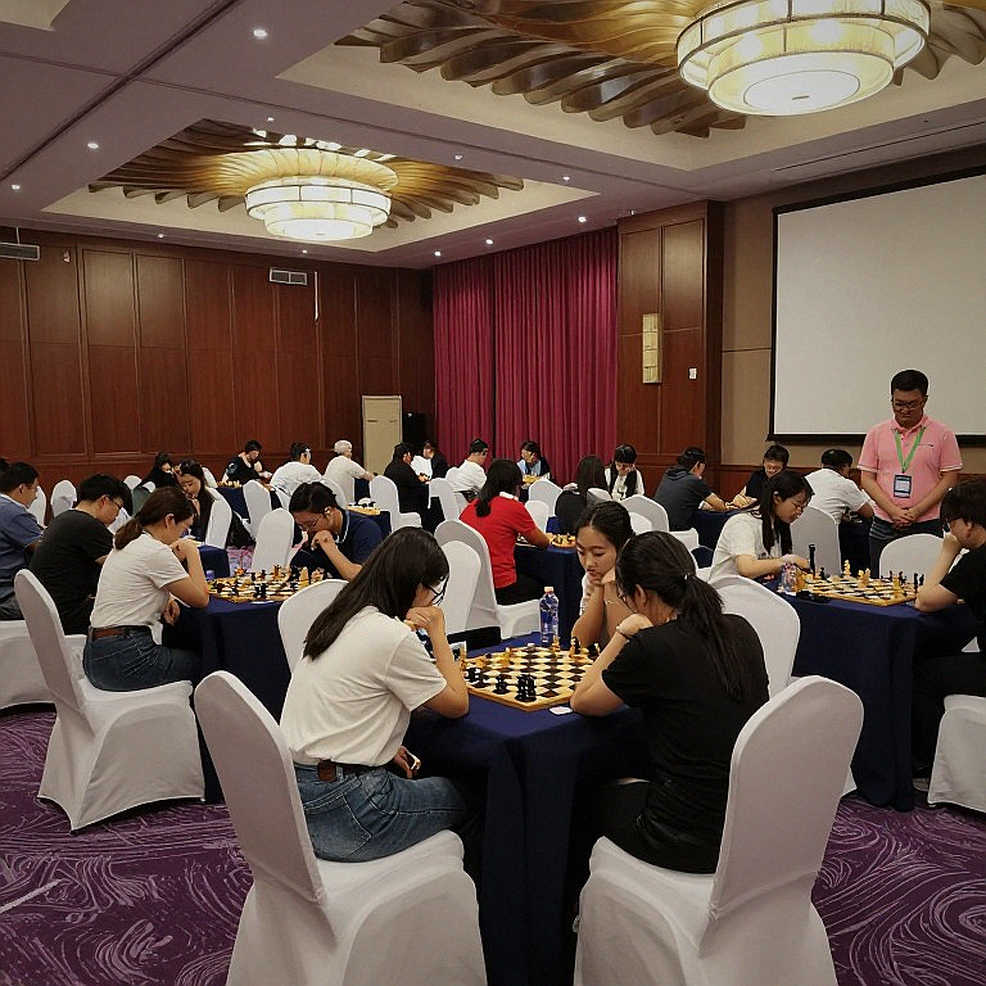
In the playing hall of the 46th Chess Olympiad in Samarkand, Uzbekistan, a board was set up with no one to sit at it. It was the opening-round encounter between Pakistan and Israel, in a tournament running from September 15 to September 27, 2026. The organizers' automatic pairing system matched the two teams. The pieces stood in place. The clock was never started. The result was therefore decided in a way entirely unrelated to any move.
Across eighteen years of following chess, from player to sports-science researcher, I have handled no small number of unplayed games. They are always the strangest kind of data. You cannot analyze an opening. You cannot measure engine match rate. There is no middlegame, no endgame. But read it as a move at the federation level, and the story thickens in a way an ordinary game never produces.
According to The Express Tribune, the Chess Federation of Pakistan (CFP) decided not to play Israel, citing national policy and solidarity. CFP President Syed Zeeshan Naqvi is the only named figure in the report. He frames the decision as a consistent, policy-driven stance, rather than an improvised act.
The 2026 Olympiad brings together more than 390 teams across the Open and Women's sections. The format is a team Swiss, meaning that after each round the system automatically re-pairs teams based on match points and colors. In a field this large and this geopolitically diverse, two federations with a political barrier being drawn together is an inherent risk of the format itself, one that is not fixed by a few lines of code.
In a team Swiss, an unplayed match is typically scored as a loss, with 0 match points. The official figure of the penalty is not stated in the report. I read this result on two levels.
The first is the points level. Pakistan dropped a match immediately in the opening round. In a tournament where a single game can serve as a springboard toward a GM norm or a rating milestone, sitting out an entire round is a real loss of competitive capital. For young players building international experience, every seat at a board in the Olympiad is expensive. Missing a round is an opportunity that does not come back.
The second is the system level. The automatic pairing engine has no political filter. It only reads match points and colors. When you place more than 390 teams into one tournament, the probability that two federations unable to share a table get drawn is a pure calculation. The larger the event, the higher the risk. And in the first round, the symbolic weight is at its peak, because that is when audiences and media pay the most attention.
The Open and Women's sections running in parallel mean the two federations could be paired up to four times in a single event. Each pairing is the old question returning. This is where a team Swiss differs from a knockout: the risk does not vanish after one round, it stays for the whole tournament.
The greatest concern lies in the precedent, not in the points lost.
FIDE maintains a principle of neutrality across its operations. Yet the report contains no single line from FIDE. No response from the Israeli Chess Federation. No independent confirmation of the forfeit result. The only source cited is the CFP side. Presentational neutrality paired with one-sided sourcing is the largest blind spot in this story.
If a federation skips a match for political reasons with no clear ruling, the cost of similar action at later events drops. Other federations can look at it and calculate. A zero-point loss for one team is a small matter. A precedent that weakens the system's competitive commitment is far bigger. FIDE exists to guarantee a credible fixture list. If that commitment erodes, the damage does not stop in Samarkand.
And there is an invisible group throughout the story: the Pakistani players. They were not named. No one asked what they think. They lost a rated game because of a decision made above their heads. Tactics are only complete when told in a language the players dare to believe. Here, the players were not even given their own voice.
From an industry angle, the primary effect sits upstream and is national. Pakistan lost a top-level competitive opportunity, which could affect the youth pipeline in the medium term. In terms of image, chess has long been seen as a sport relatively untouched by politics. A boycott in the opening round of a major team event dims that image somewhat.
I once researched spectator-free football in 2026 and learned one thing: what happens around the board is sometimes more important than the game itself. The empty-stadium season taught me that applause is not just sound, but part of the structure of a match. In Samarkand this time, what was withdrawn from the structure was not the applause, but the presence of a team in the very position it had been assigned.
I will follow the remaining rounds of the 2026 Olympiad with one specific question: whether FIDE issues a clear ruling on this case, or lets it pass as an ordinary administrative loss. The answer will tell us whether an empty board in the opening round is an isolated incident, or the opening move of a much longer game. For a researcher, the opening move is always the easiest part to overlook, and also the most decisive.

Cầu thủ liên quan
Bài đề xuất
Empty Board in Samarkand: Pakistan Withdraws from Match Against Israel at the 2026 Chess Olympiad2026-09-17
Global Chess League 2026: Carlsen Returns, but Packed Schedule Threatens Player Stamina2026-09-05
Magnus Carlsen Admits He Is "A Fan" of Praggnanandhaa: The Knock of India's Chess Generation2026-09-12
ChessBase Magazine Issue 225: The Prague 2026 Chess Festival and a Headline That Went Missing2026-09-10
Insufficient Information Analysis in Chess Evaluation: Unable to Provide Detailed Conclusions2026-09-06
Bài đề xuất
ChessBase Magazine Issue 225: The Prague 2026 Chess Festival and a Headline That Went Missing2026-09-10
Musk vs Chess.com: The Chess Solved Debate and Lessons for Chess2026-09-06
Divya Deshmukh and Vaishali Are Stronger Than When They Won the Olympiad: Coach Misra's Praise Needs a Data Audit2026-09-16
Global Chess League 2026: Carlsen Returns, but Packed Schedule Threatens Player Stamina2026-09-05
Scandinavian Defense and Overhyped Expectations: Analysis of Opening Tutorial Video Featuring Magnus Carlsen2026-09-14