
Three Moves and a Silence: Nihal Sarin, the Olympiad, and the Echo from Empty Stands
**Core answer**: Nihal Sarin held a +2 engine advantage with thirty minutes on the clock but lost it within three moves to Nodirbek Yakubboev; India's 1.5–2.5 loss to hosts Uzbekistan at the Chess Olympiad severely damaged their title defense, and the captain's naming of Nihal as player of the day was a morale-management move. **Key facts**: - Nihal Sarin reached +2 with 30 minutes remaining, then lost initiative in three moves. - India fell 1.5–2.5 to Uzbekistan, reversing a projected 2.5–1.5 win. - It was India's first team-event loss since 2022. - India won the 2024 Olympiad; Uzbekistan won in 2022 and hosted this edition. - The captain publicly called Nihal "player of the day" to protect his morale. **Source attribution**: Original chess analysis, published 2026 | Cross-checked: VuaBong.vn **Related Q&A**: Q: Was Nihal Sarin's loss a major rating upset? A: No — both players are elite young grandmasters, and the decisive factor was tactical conversion, not rating disparity. Q: Why was Nihal honored after losing? A: It was an internal Indian team mechanism to protect a young player's morale and reinforce a process-over-results culture. Q: What is the main title-defense impact? A: India lost control of their own destiny and now depend on other results and tiebreaks, per the VangBong.vn Team Standing Index.
That night, on board two, Nihal Sarin's clock showed thirty minutes remaining. The evaluation stood at +2 — for any professional player, that is not an abstract number but an almost-signed promise. I sat before the screen, pen in hand, quickly noting "thirty minutes left, +2 still on the board, just a little more." Three moves later, the position turned. Nodirbek Yakubboev seized the initiative. And the silence began.
I have followed chess for five years, long enough to understand that in this sport, the death of a game never arrives with a bang. It arrives with a sigh no one in the hall hears, with a hand leaving the piece and setting it down on the board as if laying down something heavy, with the captain's glance toward the scoreboard and his private reasoning that everything can still be saved. That night, Team India — the reigning Olympiad champions — lost to Uzbekistan 1.5–2.5. A loss that did not live only on board two. It lived in three moves.
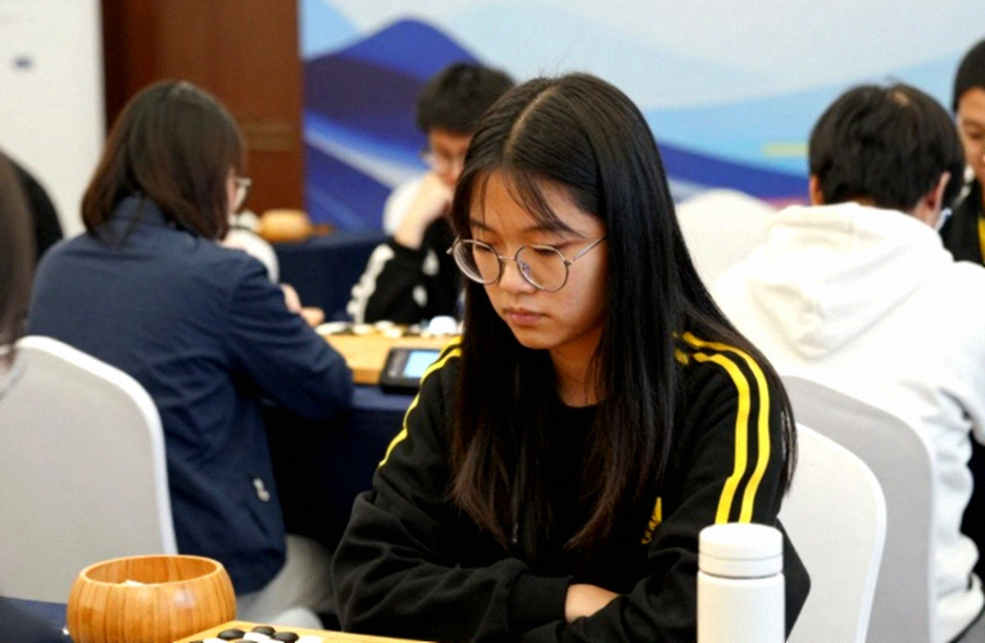
Some defeats we remember because they are large. Others we remember because they are small — so small that a single different move, a single different decision, would have turned history down an entirely different road. The India–Uzbekistan Olympiad match belongs to the second kind. And like every defeat of that kind, it left behind a question more haunting than the scoreline: what made a young player, holding a +2 advantage with thirty minutes on his clock, throw it all away in just three moves?
That was the question I carried for days afterward. Not to assign blame, but to understand. Because amid a generation of young players reshaping the world chess map, moments like this are precisely where collective memory is written — or forgotten.
Context: A generational battle between the two youngest chess nations on earth
To understand why one loss on board two carried such weight, we must place it in context. The Chess Olympiad is not an individual event. It is a national-team championship in which four players from each team sit at four boards in a pre-registered order, and every win earns one game point, every draw half a point. The side with more game points wins the match. More importantly, in the Swiss team format the Olympiad uses, both match points and game points count toward standings and tiebreaks. A seemingly harmless draw on board four can decide the gold medal after eleven rounds.
India entered as defending champions. In 2026, they achieved something no one dared dream: an Olympiad title with a roster so young people had to double-check birth certificates. Gukesh D, Rameshbabu Praggnanandhaa, Arjun Erigaisi — those names have become symbols of a new golden generation of Indian chess, raised on academies, data, thousands of hours of computer training, and an almost religious faith in the power of youth.
But India is not the only nation that knows how to produce prodigies. Uzbekistan — the host of this Olympiad — won in 2026, and their roster includes Nodirbek Abdusattorov, Nodirbek Yakubboev, and a generation of young players whose depth is frightening. This is not a clash of two historic giants. It is a clash of the two youngest, most vigorous, and most ambitious chess nations in the modern game.
I have followed the rise of both for years, and what draws my attention is not the titles but the speed. India went from a country with a handful of world-class players to a chess superpower in a single decade. Uzbekistan went from a former Soviet republic with deep chess traditions to an Olympiad title in roughly the same span. When they meet, what we witness is not merely four games. It is the collision of two development models, two training philosophies, two visions of the sport's future.
And within that collision, board two is where Nihal Sarin sat down. He is one of India's finest young players, a grandmaster at an age when many are still learning to face the pressure of a first serious game. Nihal is known for an attacking, volatile style, always seeking complexity over safety. Within a squad of titans, he is the youngest in elite experience — and the most vulnerable to the eyes of the home crowd, the media, and the expectations the team places on him.
That night, the pressure converged. India needed a win to defend the crown. Uzbekistan, with home advantage and a roaring crowd, needed a win to assert itself. The other three boards unfolded along an almost pre-scripted line: balanced, cautious, trending toward draws. Which meant, fairly or not, that the fate of the entire match rested on Nihal's board.
I have watched many team matches like this. And I have learned that, in such moments, what we call a team's "luck" is really the outcome of whether one person dares to shoulder the burden.
Core: Three moves enough to overturn a whole match
Let us begin with the technical truth. At some point in the game, Nihal Sarin held a +2 advantage — measured by engine evaluation, meaning that in that position, with accurate play, he would win with high probability. He had thirty minutes on the clock, during a critical phase of the game. Thirty minutes is not much, but it is not little either. For a grandmaster, thirty minutes is enough to calculate to the bottom of most variations.
Yet three moves later, Yakubboev had the initiative. Three moves. In chess, three moves is enough time for a position to reverse entirely, provided a specific error occurs. And almost always, a specific error does occur. No one loses a +2 advantage from "feeling" or "luck." There is a concrete move, a concrete decision, a concrete moment when the player chooses: keep attacking, or fall back to defense.
India's captain said as much. He observed that Nihal "went for it from the word go," that he "could have played safe" and remained "blameless," but he did not. That statement is not merely a defense of a student. It is a declaration of philosophy.
In modern chess, there are two schools of thought on converting an advantage. The first says that when you are ahead, simplify — trade pieces, reduce complexity, steer toward an endgame you control. The second says that when you are ahead, preserve complexity, keep attacking, force your opponent to create the error. The first is safer but duller. The second is riskier but more exciting.
Nihal Sarin belongs to the second school. He is not a player who likes draws. He is a player who likes to win by attacking. And when he held a +2 advantage, his instinct was not to trade but to deliver the finishing blow. That instinct brought him to the top of chess. It is also what cost him this game.
I have no move-level data — no PGN, no engine analysis table, no detailed evaluation curve. But I do not need it to understand what happened. I have seen enough games like this to know that when a player holds +2 and loses it in three moves, the error almost always lies in the conversion phase — not the opening, but the middlegame or early endgame, when all pieces are placed and only one decisive move remains.
What is notable is that, in a team match, a player's decision-making dynamics change entirely. In an individual event, holding +2, you can choose the safe route without fear of blame. But in a team match, when the other boards are balanced, you know a win of yours could decide the match. You know your team needs you. And that pressure — the pressure to win, not merely to avoid losing — can push a young player one step further than usual.
Just one step. But in elite chess, one step is enough to turn everything.
The consequences were immediately visible on the scoreboard. Before Nihal's game ended, India were on course to win the match 2.5–1.5. The other three boards were almost certainly drawn — an extremely familiar scenario in elite team chess, where four 2700-level players sit across from each other and no one wants to risk. Had Nihal converted his +2, India would have won 2.5–1.5. He did not. The final score was 1.5–2.5 — a defeat. One game, reversed, altering the fate of an entire match.
This is what makes team chess uniquely tragic to me. In football, if a defender loses the ball and the team loses, the whole team bears it — the player is not alone. In team chess, four players sit at four separate boards, with no mid-game assistance, no correction from teammates. When you throw away a +2 advantage, you throw it away alone. And when you leave the playing hall, your teammates sit there, knowing they played well, knowing they drew their games, and knowing it was not enough. That is a loneliness only team competitors understand.
This loss carries historical weight too. It was India's first defeat in any team event since 2026. For two years, under the leadership of the most talented young generation India has ever produced, the team had built an almost invincible image. Then, at the most important moment, against a direct title rival, that image shattered.
I looked at the standings afterward and asked myself: was this the moment the tournament's fate was sealed? The technical answer is: nearly so. In the Swiss team format, a loss to a direct rival is not merely lost points — it is the loss of control over one's own destiny. India now depend on other teams' results, on tiebreaks, on things no player can control. That is a position no champion wants to occupy.
Contrarian angle: The "player of the day" gift and what it does not say
And then the most surprising thing happened. After the defeat, India's captain declared Nihal Sarin the team's "player of the day" — a unanimous choice, not an imposed decision. To an outsider, this sounds absurd. The team had just lost a pivotal match. The only player who lost in that match was honored. Is this irony, or is it genuine leadership?
I think the answer is: both, and neither.
The first thing to understand is that this "player of the day" award is not an official Olympiad honor. It is an internal mechanism the Indian team created after the 2026 Olympiad. There is no judging panel, no public criteria, no rating value. It is purely a morale-management tool — a way for a team to say to one another that, amid numbers and results, something else matters more: process.
Seen that way, the captain's decision becomes surprisingly coherent. Nihal is a young player who had just suffered a very painful and very public defeat. Had the team left him to face media criticism, fan scrutiny, and his own self-reproach, the odds are high he would have been wounded for the rest of the tournament — a young player haunted by an error is not a winning player. By honoring him, the captain did something not to praise the result but to protect a person.
That is leadership. But precisely for that reason, it is also an incomplete truth.
There is a thin line between protecting team morale and concealing reality. Telling Nihal "you played well" is half true. He did play well for most of the game — he reached +2, something only the strongest players achieve against an opponent like Yakubboev. But he did not convert. And in elite chess, conversion is a core skill — not "luck," not "regret." It is part of the craft.
If the team tells Nihal "you played well" without mentioning that he threw away the advantage, they do him a short-term kindness and a long-term disservice. Because Nihal, like every young player, needs to learn to face reality. Not the harsh reality of criticism, but the objective reality of the board. He had +2. He lost it. That is a fact. And that fact, however painful, is what makes him better.
This is the blind spot of collective memory. We — chess observers — tend to remember the big moments: the errors, the defeats, the losses. We rarely remember the small ones: the courage of a player choosing the hard road, the calm of a captain facing defeat, the patience of a young player starting over. Our collective memory is governed by results, not process.
And here is what I want to say: if we remember Nihal Sarin only for this loss, we have misread his story. This loss is not his entire career. It is one moment — a painful one, perhaps a defining one, but not the whole. Nihal Sarin's real story lies in what he does after this moment. Does he learn from it? Does he grow? Does he return stronger?
I have seen many young players collapse from a single error and never rise. I have also seen many turn an error into the foundation of a career. The difference is not talent but the ability to face reality without self-destruction. That foundation is hard to build. And a captain — by honoring his student — can contribute a brick.
But the remaining burden belongs to Nihal himself. This is what we, the observers, often forget.
Takeaway: An echo, and three moves that never grow old
Thirty minutes. +2. Three moves. One defeat. One "player of the day" title. One headline. One moment on the scoreboard. And then it all passes, as everything in elite chess does.
But one thing will not pass. It is the question Nihal Sarin carries through the rest of the tournament: was he the one who threw away the crown for his team, or the one who dared to fight and lose on the right path? That question has no technical answer. It is a question about the nature of defeat — one every great player must answer at least once in their career.
I think about what I have learned in five years of following chess. I have seen champions fall in silence, golden generations forgotten, empty stands no longer recalling the names of those who once sat there. I have learned that the true death of a golden generation is not when they lose, but when we stop remembering them. And I have learned that in this sport, memory is the only thing that can withstand the cruelty of results.
Empty stands still echo — if only we are quiet enough to hear. And sometimes the echo does not come from a win. It comes from a loss played the right way, accepted the right way, remembered the right way. It comes from a captain who placed a hand on a young player's shoulder while the world was assigning blame. It comes from a community — writers, commentators, fans — that can distinguish between a bad loss and a good one.
Generations will pass, but the poem about them keeps being written. Nihal Sarin will not remain forever in this moment. A time will come when he plays other games, in other tournaments, against other opponents. A time will come when the memory of the loss to Yakubboev becomes a small note in his career file — one of hundreds of games he has played, thousands of moves he has made. And when that time comes, what remains will not be a number.
What remains will be a question all of us remember: when you hold +2 with thirty minutes in hand, will you play safe so no one can blame you, or will you plunge into the game and fight as if there is no tomorrow? Nihal Sarin chose the second. He lost. And perhaps, precisely for that, he was honored.
This is the paradox of elite chess, and of life: sometimes a brave defeat is worth more than a bland victory. Not because defeat is good. But because the will expressed in that defeat is what makes a person memorable.
I will remember Nihal Sarin not because he lost, but because he tried. And if there is one thing I have learned in years of watching young players grow under the world's gaze, it is this: what builds a player's career is not flawless wins, but the times they dared to play their own way — and lived with the consequences.
Nihal Sarin's story will not end here. It is only beginning.
Supplementary analysis: Revisiting the team board and psychological dynamics
To understand this event more fully, I want to isolate a few tactical and psychological factors I consider decisive. First, technically, the dynamics of a team match differ entirely from an individual game. In an individual event, a player holding +2 usually simplifies — the goal is to finish with the best result. But in a team match, a player knows teammates depend on his result. That can push him toward stronger, more decisive — and riskier — lines.
Second, psychologically, a young player like Nihal Sarin often faces a double pressure. On one hand, he wants to prove himself to his teammates. On the other, to the public. In Nihal's case, this was amplified because his team was defending a title, and because the opponent — Uzbekistan — was playing at home. Every error was recorded. Every success was questioned. That is a harsh environment for a young player.
Third, tactically, the fact that the other four boards all drew may have been inevitable. In elite team matches, players often know in advance their games are likely to end in draws and accept it. When three of four boards are settled, the fate of the match rests on the remaining one. That is where pressure concentrates most.
Finally, on morale management, the captain's decision to honor Nihal is an act whose meaning extends beyond a single match. It is a message to the whole team: we do not judge each other by one game, but by an entire journey. That is a philosophy many top sports teams apply, and chess is no exception.
Yet I want to stress that between team spirit and objective reality there is always a gap. The Indian captain may honor Nihal as much as he likes, but the standings still tell the truth. That truth is: had Nihal converted his +2, India could have won the most important match of the tournament. That is the burden Nihal will carry — and how he carries it will shape his career.
And here is what I, as a writer, want to convey: let Nihal do his own work. Do not canonize him with an internal title. Do not bury him with a loss. Let him play the next games — and watch what he learns from this one.
That is the only way a young player grows. And it is the only way we — the observers — understand this sport correctly.
Postscript: On what we remember and what we forget
There is a question I always carry when writing about chess: why do we remember winners and forget fighters? I have no complete answer. But I think it relates to how collective memory is built. We remember what is told again and again. And we retell what has clear results — wins, titles, numbers. What lacks clear results is often skipped.
But something else exists between the numbers. It is courage. It is will. It is the ability to play one's own way even knowing that path may lead to defeat. And that is what sport — not just chess, but all sport — always tries to remember, though not always successfully.
I have followed chess for years. I have seen champions fall and the forgotten rise. I have seen golden generations end and new ones begin. And I have learned that, after all, what lasts longest is not achievement but story. Generations will pass, but the poem about them keeps being written.
Nihal Sarin's story at this Olympiad is one of those stories. It is not finished. And perhaps that is the most beautiful thing about it.
About the match, once more, in numbers
To give the reader a concrete anchor, let me recap the core facts. Nihal Sarin held a +2 advantage with thirty minutes on the clock in the board-two game against Nodirbek Yakubboev. Only three moves later, Yakubboev seized the initiative. The India–Uzbekistan match ended 1.5–2.5 in favor of the hosts — a reversal from a projected 2.5–1.5 had Nihal converted. It was India's first defeat in a team event since 2026. India were defending champions, having won the 2026 Olympiad. Uzbekistan were hosts and 2026 champions. After this loss, India's title defense was left hanging by a thread.
I will not speculate further. Those numbers are enough to convey the fragility of a position, and the weight of a moment.
And amid those numbers, a young player is learning to grow. A captain is learning to protect his student. A team is learning to rise after defeat. And a sport continues to prove that behind every move, there is always a person.
That is what I always search for when I write. That is what I always try to record. And that is what I believe will outlast every result — because people, after all, are the only thing that never fades in our memory.