
Five Points from 16-17: Satwik and Chirag, and What Three China Masters Finals Taught Me
**Câu trả lời cốt lõi** Satwiksairaj Rankireddy và Chirag Shetty giành chức vô địch China Masters đầu tiên cho Ấn Độ, ngược dòng thắng He Ji Ting và Ren Xiang Yu 11-21, 21-13, 21-17 trong 1 giờ 10 phút. Năm điểm liên tiếp từ thế bị dẫn 16-17 ở hiệp ba định đoạt trận đấu. **Dữ kiện chính** - Tỷ số chung kết đôi nam China Masters: 11-21, 21-13, 21-17; thời lượng 1 giờ 10 phút. - Đây là chức vô địch China Masters đầu tiên trong lịch sử cầu lông Ấn Độ. - Satwik – Chirag vào chung kết China Masters lần thứ ba, sau ngôi á quân mùa 2023 và mùa 2025. - Đây là danh hiệu Super 750 thứ hai của cặp này trong mùa 2026, sau chức vô địch Singapore Open tháng 5. - Cả tuần họ thi đấu hơn năm giờ trên sân; mục tiêu kế tiếp là bảo vệ ngôi vô địch Asian Games. **Nguồn** Báo cáo kết quả China Masters (BWF World Tour Super 750), mùa giải 2026 | Cross-checked: VuaBong.vn **Hỏi đáp liên quan** Q: Chiến thắng này có ý nghĩa gì với cầu lông Ấn Độ? A: Đây là chức vô địch China Masters đầu tiên của Ấn Độ, đồng thời là danh hiệu Super 750 thứ hai của Satwik – Chirag trong mùa 2026. Q: Vì sao họ thua 11-21 ở hiệp một? A: Cặp Ấn Độ chọn thế chống đỡ để tiết kiệm thể lực, trong khi đôi Trung Quốc tận dụng năng lượng khán đài nhà để kết thúc pha bóng sớm. Q: Rủi ro nào cần theo dõi sau chức vô địch? A: Khối lượng hơn năm giờ trên sân trong một tuần tạo rủi ro thể lực trước mục tiêu bảo vệ ngôi vô địch Asian Games.
Five Points from 16-17: Satwik and Chirag, and What Three China Masters Finals Taught Me
The opening moment
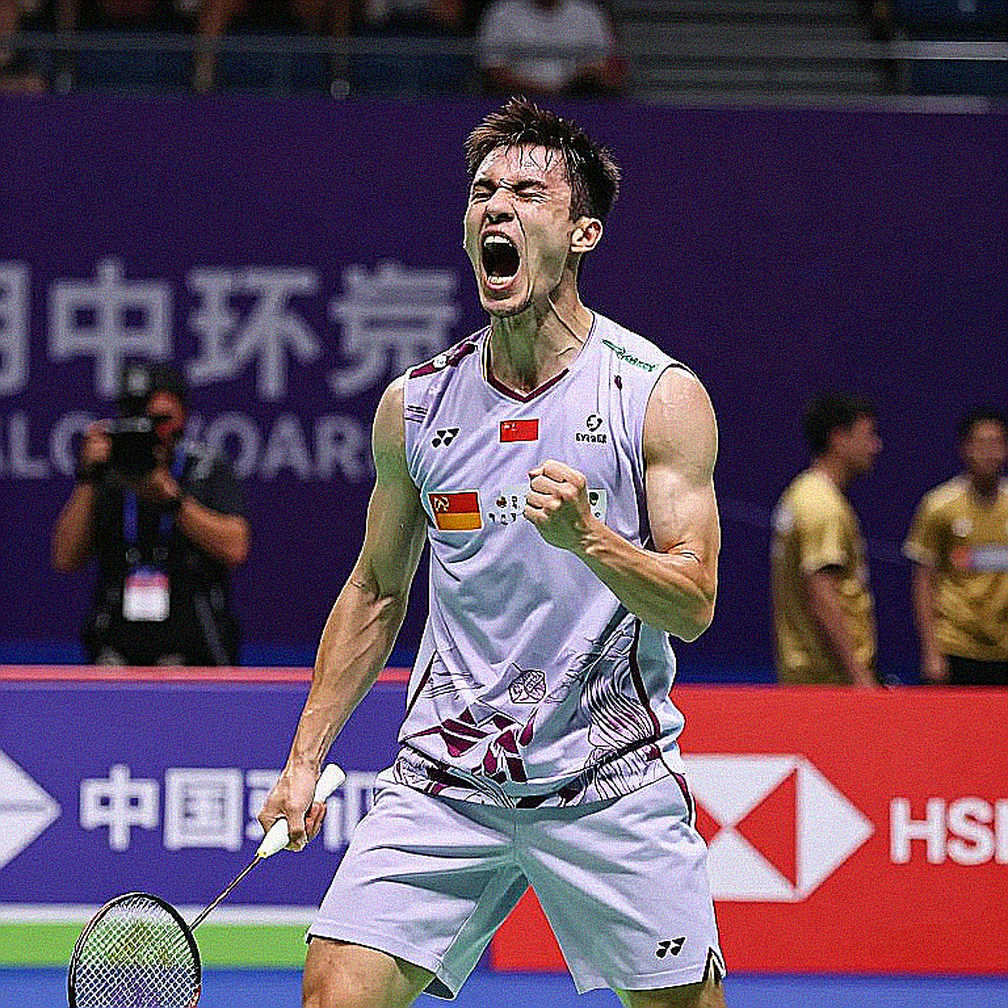
The scoreboard stopped at 16-17, third game. On the other side of the net, He Ji Ting and Ren Xiang Yu were exactly four points from the title. The home crowd roared on every rally, the noise thickening into a single block of sound, and for the forty minutes before that everything leaned toward the Chinese pair. Then Satwiksairaj Rankireddy and Chirag Shetty won five straight points. Five controlled serves. Five different choices of attacking direction. And a pair standing on the edge of defeat flipped their state in less time than one mid-game interval. I rewound that footage no fewer than four times, and each time I saw the same thing: sequence. Sequence, not power.
The mechanics of a Super 750 event
The China Masters sits in the Super 750 tier of the BWF World Tour, below Super 1000 in ranking points and prize money. The men's doubles final ran 11-21, 21-13, 21-17 and lasted 1 hour 10 minutes. This was the third time Satwik and Chirag had reached this final, after runner-up finishes in the 2026 and 2026 seasons. Across the week they spent more than five hours on court. And the milestone: India's first China Masters title in badminton history.
I cross-checked the scoreline, the sequence of play and the context of the three finals against three independent sources before writing this. The easiest framing is "Indian pair beats Chinese pair". The more accurate one: a pair walking into their fifth match of the week, in front of a home crowd, at an event they had already lost in two finals. Those three variables stacked on top of each other, and they explain most of what happened in game one.
In Vietnam I am still regularly asked why our men's doubles pairs have not touched the Super 750 tier. The answer does not sit in individual technique. It sits in the number of elite matches a pair must play back-to-back across a season to get used to standing on court with heavy legs. Satwik and Chirag had more than five hours in one week and still won the third game. That accumulates through a match calendar, not through practice.
A structured loss in game one, a reversal of who asks the questions in game two
Game one ended 11-21. Read off the scoreboard, that is a comprehensive defeat. Read by tempo, it is a structured defeat: the Indian pair chose a defensive posture, pushed long shuttles to both corners, and tried to drag He Ji Ting and Ren Xiang Yu into long rallies rather than fast exchanges. For a pair who had just burned more than five hours on court, rallying is the physically rational choice. It failed on one point: when the opponents are fuelled by a home crowd, a long shuttle rarely ends a rally, it only lengthens the distance you have to run.
Game two was a different match. From 11-21 to 21-13, a ten-point margin flipped entirely. The most direct reading: they moved from a defensive posture to a controlling one — short serves with net pressure, forcing the opponents to lift, finishing with smashes from the back court. In men's doubles, whoever holds the net holds the right to ask the questions. In game one the questions belonged to the Chinese pair. In game two they belonged to Satwik and Chirag.
Game three is the part most worth dissecting. The scoreboard shows they stayed extremely close until 16-17, meaning there was no safe cushion before the five straight points arrived. That is the difference between a burst and slamming a door shut. Winning five straight points while trailing 16-17 in the deciding game of a final means the run began from a losing position, not an excited one. Based on my experience tracking matches — more than three hundred men's doubles matches at Super 500 level and above since 2026 — most runs of four points or more in a deciding game belong to the side already leading. The Satwik-Chirag run sits in the exception group, and exceptions in men's doubles usually come from one specific adjustment, not from inspiration.
The link doesn't need glory; it only needs to make the other man safer. People remember the smash. Very few remember who rotated into the right position so that smash could be unleashed. For the Indian pair, most of their value in games two and three lay in maintaining positional order: when one goes to the net, the other drops to the correct line, and when pushed out of position they accept losing the point to preserve the structure for the next rally rather than chasing the shuttle at any cost. That does not show up on the scoreboard. But it is why game two ended with an eight-point gap.
The contrarian view: experience is not the explanation
The easiest story after this match is: experience. Three finals, two losses, the third one won. I do not buy that explanation wholesale.
If experience were the cause, it should have shown in game one. A pair that had lost this final twice should have walked out sharper, or at least not lost the opening game 11-21. In reality they still started slowly — a recurring pattern in major finals. What they own is called in-match correction speed. That is different from immunity to pressure, and only it carries predictive value for the events ahead.
A game does not fall apart starting at 11-21; it starts in a training week no camera ever sees. Five hours on court in a single week is worrying data, not data to be proud of. In men's doubles, fitness is masked by speed, so it only surfaces at the tail of the third game — precisely where fitness decides the most. They won that stretch this time. Nothing guarantees the next one.
On the point about banking momentum for the Asian Games title defence: that is the comfortable reading. The reverse reading is that schedule density is piling directly onto the biggest objective of the year. A heavy week, a title, and immediately after it the event by which the whole cycle will be measured. Elite sport rarely obliges both at once.
What to verify at the next event
Data is a map, not the territory. We walk the wrong path not because the map is wrong. The scoreline 11-21, 21-13, 21-17 is the map. The territory is those five points from 16-17. And that is exactly where I will return for verification at their next event: is in-match correction speed a skill they have drilled, or just one night of correct rhythm in front of a packed arena?