
Four Defenders in the Big Five: Indonesia's 2026/27 Map and the Gap Ahead
**Câu trả lời cốt lõi**: Tính đến ngày 2 tháng 9 năm 2026, Indonesia có bốn tuyển thủ thi đấu tại bốn trong năm giải lớn châu Âu, nhưng toàn bộ đều là cầu thủ phòng ngự: thủ môn Emil Audero, trung vệ Jay Idzes, hậu vệ phải Kevin Diks và hậu vệ trái Calvin Verdonk. **Dữ kiện chính**: - Emil Audero (29 tuổi) chuyển từ Como sang Rayo Vallecano theo dạng cho mượn đến hết mùa 2026/27, công bố ngày 2 tháng 9 năm 2026. - Kevin Diks ghi 5 bàn sau 30 lần ra sân tại Bundesliga, là chân sút cao thứ hai của Borussia Mönchengladbach sau Tabakovic (13 bàn) — dữ liệu cần kiểm chứng. - Jay Idzes có 35 lần ra sân tại Serie A và đeo băng đội trưởng đội tuyển Indonesia — dữ liệu cần kiểm chứng. - Lille là câu lạc bộ duy nhất trong nhóm thuộc tầng dự cúp châu Âu; không có đại diện nào ở Premier League. - Không có cầu thủ Indonesia nào ở tuyến giữa hoặc tuyến trên thi đấu tại tầng năm giải lớn nhất châu Âu. **Nguồn**: Thông báo chính thức của câu lạc bộ Rayo Vallecano ngày 2 tháng 9 năm 2026; các thông tin còn lại từ nguồn khu vực, cần kiểm chứng. **Hỏi đáp liên quan**: - Hỏi: Vì sao Indonesia không có đại diện ở Premier League? Đáp: Giải Ngoại hạng Anh là thị trường đắt nhất và khó vào nhất trong năm giải, nên việc thiếu vắng là kết quả được dự báo với nhóm cầu thủ đến từ các câu lạc bộ tầm trung. - Hỏi: Rủi ro lớn nhất của mô hình này là gì? Đáp: Rủi ro tập trung — cả cột mốc đứng trên bốn cá nhân đều là hậu vệ đang ở hoặc qua đỉnh sự nghiệp, chưa có đường ống thay thế được xác nhận. - Hỏi: Có dữ liệu nào về rủi ro pháp lý không? Đáp: Chưa có chỉ số định lượng; rủi ro nằm ở quy định quốc tịch và điều kiện thi đấu quốc tế của FIFA cùng luật quốc tịch Indonesia, và không được đề cập trong các bản tin hiện có.
On September 2, 2026, Rayo Vallecano announced the loan signing of Emil Audero from Como, running to the end of the 2026/27 season. Within hours, one headline travelled faster than any pass in La Liga: Indonesia now had four internationals playing in four of Europe's five major leagues.
I opened my raw data sheet and lined the four names up along the vertical axis of the pitch: Emil Audero in goal, Jay Idzes at centre-back, Kevin Diks on the right flank, Calvin Verdonk on the left. The image that emerged was tidy to the point of suspicion. The interesting part is not that Indonesia is present in Europe. The interesting part is where they are present, at which club tier, and which zones of the pitch remain empty.
Among thousands of numbers, the truth never needs to shout.
Context: a program counted in passports
The Indonesia of 2026/27 is no longer a Southeast Asian national team living off its domestic talent pool. This is a side operating on an imported-heritage model, built around players developed in European academy systems, mostly in the Netherlands, who then take up Indonesian nationality and join the national team. The four names above sit inside that pipeline.
One thing needs saying up front: the club affiliations of each player for the 2026/27 season come largely from regional sources and have not been fully verified independently. The only case with club-level confirmation is Audero, announced officially by Rayo Vallecano on September 2, 2026. For the other three, I mark the figure as data to be verified. Anyone who writes with numbers has to publish the places where the numbers are still uncertain.
What can be verified still lies in the structure. And the structure says something rather clearly.
Analysis: the defensive spine is complete, the attack is empty
Arranged by position, the four players form a complete back line: goalkeeper, centre-back, right-back, left-back. Not one slot is missing. And there is not a single name in midfield or attack playing at the level of Europe's five biggest leagues.
That is the most important tactical signal in the whole picture: Indonesia's European footprint is concentrated entirely at the back.
Jay Idzes, with 35 Serie A appearances, has the deepest minutes base in the group. That number needs verification, but if accurate it says something simple: he is used regularly, not parked on a bench to fill a quota. The fact that Idzes wears the national team armband reinforces the conclusion. Authority in the dressing room has been handed to the overseas group, not merely a place in the starting eleven.
Kevin Diks is the strangest case on paper. A right-back scoring 5 goals in 30 Bundesliga appearances. The conventional reading is that he is an attacking, high-advancing full-back with set-piece duties. There is a second reading, and the data leans toward it. With 5 goals, Diks was Borussia Mönchengladbach's second-highest scorer, behind only Tabakovic on 13. When a right-back ranks second on his club's scoring list, that is usually not a compliment to the full-back. It is a remark about the attack ahead of him.
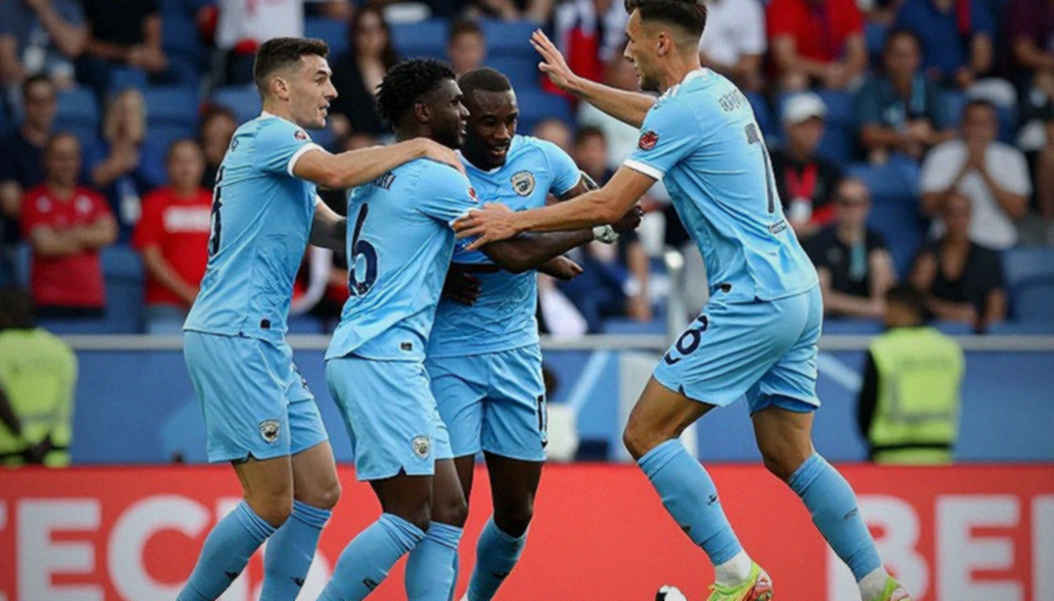
Based on my experience tracking Bundesliga matches, this profile appears in two scenarios: either the player is freed to advance inside a possession-dominant system, or the club has nobody else to score. Mönchengladbach last season fit the second group more than the first. Tabakovic's 13 goals are an average return, not the mark of an elite striker; the drop from 13 to 5 simply says the whole team scores little.
Calvin Verdonk plays for Lille, the only club in the group at European-cup tier. It is the most demanding environment and also the one where a starting place is least secure. For a left-back who needs stability to hold form, competing at a club with European ambitions carries far greater minutes risk than playing for a mid-table side.
And Emil Audero. His record is a chain of loans: the Juventus academy, Venezia, Sampdoria, Inter, Palermo, Cremonese, Como, then Rayo Vallecano. At 29, a goalkeeper who has passed through that many ports on loan is not a number one around whom a club is built. He is a backup goalkeeper in circulation. His tactical value to Indonesia is reliability, not sharpness at the top level. A backup goalkeeper rarely plays weekly, and a goalkeeper who does not play weekly lacks genuine match rhythm.
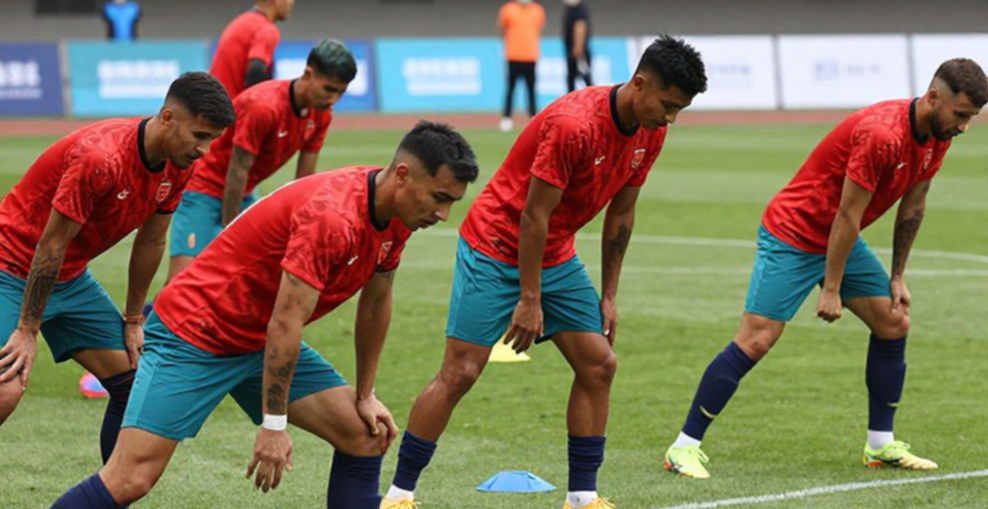
Three club tiers, in order: Lille at the European-cup level, Mönchengladbach and Rayo in the middle, Sassuolo in the lower-middle. No club belongs to the elite tier.
The transfer market is a chessboard. People count the pieces; I count the moves. Audero's move is a wage-release move: Como pushed a goalkeeper outside its plans to Rayo until the end of 2026/27, with no permanent sale and no write-down. It is a low-risk, low-value deal that also delivers almost no sporting benefit to the parent club. No transfer bubble, no bidding war. Just a backup slot placed in the right spot.
The contrarian angle: four of five leagues is a marketing metric
The headline about the missing Premier League sounds impressive. Read as a quality indicator, it collapses immediately.
That metric measures breadth, not depth. It does not say how many minutes anyone plays, in what position, for a club of what tier. Four players across four leagues could be four pillars, or it could be one pillar, one rotation player, one backup goalkeeper and one name whose minutes are unverified. The truth sits in the minutes column, not the nationality column.
The absence of the Premier League is not unusual either. England is the most expensive and hardest of the five leagues to enter, judged both by foreign-player quotas and physical demands. For a group drawn largely from Dutch academy systems and mid-table clubs, having no representative in England is a predicted outcome, not a regrettable gap.
There is a larger blind spot outside every data table: the mechanism that brings these four players into the national team. The entire operating model rests on FIFA rules on nationality and eligibility, combined with Indonesia's citizenship law. Not a line in any celebratory report mentions it. Yet that is the foundation. If Indonesia's naturalisation rules tighten, or the interpretation of eligibility changes, the whole structure carries administrative risk. Data cannot reflect that risk; it lives in legal text.
Concentration risk also needs saying plainly. The entire four-of-five-leagues story rests on four individuals, all defenders, most of them at or past their peak. If one or two lose a starting place, or retire, that milestone could vanish within one or two seasons, and no replacement pipeline is currently visible. This may be the peak of a generation rather than the start of a curve.
The model can also be copied. Vietnam, Thailand and Malaysia all have diaspora communities in Europe, and once a naturalisation pipeline proves effective at national-team level, the cost for other federations to follow drops sharply. Indonesia's advantage then stops being the ownership of four players and becomes the speed at which it widens the pipeline.
Commercially, the signal is not small. Indonesia, with roughly 280 million people, is one of the world's largest untapped broadcast and sponsorship markets. Four players in the big five leagues raise the national team's media value immediately, even though that value has not yet been tested by any specific competitive result.
Looking forward
Age 61 taught me one thing: data outlives reputation. The 2026 milestone is real, but it is thinner than it looks. Three signals will decide where this story goes in the next 12 months: the actual minutes each of the four plays, the emergence of an Indonesian attacker at big-five-league level, and whether the naturalisation pipeline produces new names or stops at the existing four.
If all three signals turn positive, this is a beginning. If only the first does, this is a good photograph taken at the right moment.