
Portugal Call Up Ronaldo at 41: When a Legacy Must Be Proven With Numbers
**Câu trả lời cốt lõi:** Cristiano Ronaldo, 41 tuổi, được triệu tập vào đội tuyển Bồ Đào Nha cho Nations League 2026-2027. Huấn luyện viên khẳng định việc lựa chọn dựa trên phong độ, không dựa trên quá khứ, đồng thời cho rằng bàn thắng thứ 1000 của Ronaldo nhiều khả năng đến ở Al Nassr hơn là trong màu áo đội tuyển quốc gia. **Sự kiện chính:** - Ronaldo có 233 lần khoác áo đội tuyển Bồ Đào Nha và 146 bàn thắng quốc tế, bước vào mùa giải quốc tế thứ 24 liên tiếp. - Bồ Đào Nha công bố 25 cầu thủ, trong đó 21 người từng góp mặt tại World Cup 2026 và 4 gương mặt mới. - Bảng A4 Nations League gồm Bồ Đào Nha, Đan Mạch, Na Uy và Wales; hai đội đầu bảng vào tứ kết. - Bồ Đào Nha là đội giàu thành tích nhất giải với hai chức vô địch Nations League năm 2019 và 2025. - Huấn luyện viên cho biết 13 trong số 25 cầu thủ đã từng làm việc với ông trước đây. **Nguồn:** Bản tổng hợp tiếng Việt của tác giả Hoàng An, dẫn lại RTP và A Bola. Thông tin về danh tính huấn luyện viên và danh sách lịch thi đấu cần được đối chiếu độc lập với kênh chính thức của Liên đoàn Bóng đá Bồ Đào Nha (FPF). **Hỏi đáp liên quan:** Hỏi: Cristiano Ronaldo còn cách cột mốc 1000 bàn thắng bao nhiêu bàn? Đáp: Ronaldo còn 21 bàn thắng nữa để chạm cột mốc 1000 bàn trong sự nghiệp cấp câu lạc bộ và đội tuyển quốc gia. Hỏi: Vì sao huấn luyện viên Bồ Đào Nha nhấn mạnh việc không có đối xử đặc biệt với Ronaldo? Đáp: Phát biểu này nhằm chống lại giả định bên ngoài rằng Ronaldo đương nhiên có suất đá chính ở tuổi 41, đồng thời giảm áp lực truyền thông lên đội tuyển. Hỏi: Bồ Đào Nha nằm ở bảng nào tại Nations League mùa này? Đáp: Bồ Đào Nha thi đấu ở League A, bảng A4, cùng Đan Mạch, Na Uy và Wales, với hai đội đứng đầu giành quyền vào tứ kết.
In the list of 25 names published for the 2026-2027 Nations League camp, one name stands at 41 years old. Cristiano Ronaldo — 233 caps, 146 goals, a 24th consecutive international season. In almost any other football nation on earth, this would be the stuff of a tribute evening. In Portugal, it remains an unresolved argument.
I spent three evenings rewatching Portugal's post-2026 World Cup footage. The first thing I noticed was not Ronaldo. The first thing I noticed was the silence of the data. There is not a single xG, PPDA or possession figure in the federation's press release. A reigning continental champion announces a squad, and the entire public conversation revolves around one man's age.
That is where this piece begins. Not because of Ronaldo, but because of the gap between a legend and a system.
Context: a group that is not easy, an expectation that is not small
Nations League 2026-2027, League A, Group A4. Portugal sit alongside Denmark, Norway and Wales. The format stipulates that the top two teams in each League A group reach the quarter-finals. On paper, this is a group Portugal must come through.
But that word — "must" — is exactly the problem.
Denmark are a well-organised side with stable squad depth, rarely losing their shape in big matches. They have no world-class striker, but they have a playing structure validated across multiple cycles. Wales are in their post-Gareth Bale transition — no longer a team with a top-tier star, but still possessing a stubborn defensive identity and strong collective spirit. And Norway. Norway with Erling Haaland up front represent the biggest physical threat any European backline has faced in the past two years.
Portugal enter this group as defending champions. They have won the Nations League twice — 2026 and 2026. This is the first time they begin a new cycle as the side defending the crown rather than the side chasing it. The difference between those two postures is far larger than people tend to think.
When you are the hunter, a draw is a small step back. When you are the defender, a draw is a media crisis. The pressure does not come from the table; it comes from the public's memory of two trophies already won.
Of the 25 players, 21 featured at the 2026 World Cup. Four new faces. That is a very high retention rate — a signal of stability, but possibly also a signal of slowness in generational transition.
And at the centre of every question, still, is the 41-year-old name.
The real discussion is not Ronaldo, but how people talk about him
Portugal's head coach — according to the sources cited in the original report — made a notable remark: Ronaldo receives no special treatment. Selection is based on form, not on the past. If he plays well, he plays.
I read that sentence over and over.
As a former player, I do not need to watch tape to know who is running in the wrong place. But I do need to read a sentence three times to understand what it is being said against. A coach only declares "no special treatment" when an outside assumption exists that special treatment is happening. You do not need to deny something nobody imagines.
The phrase "if he plays well, he plays" carries a very large space inside it. It is not a promise of a starting shirt. It is a door left open. In dressing-room management language, this is the technique of keeping an icon within the squad without handing him an automatic ticket. You preserve the media weight, you preserve the player's standing, but you do not lock yourself into a tactical obligation.
I have seen this pattern at many clubs. Across 11 years of covering the industry, I have learned that a coach always has two options when speaking about an older player: praise the past, or define the present. Historical comparison is the tool used to position a young player in his correct place while preserving respect for the older one.
Look at Norway. Haaland is a 25-year-old striker running with the acceleration of a 22-year-old, hungry for the ball the way young men are hungry. Comparing the two profiles is not meant to insult Ronaldo — it is meant to show that the decline curve of a 41-year-old striker does not occur in the same zones as a 25-year-old's. Ronaldo at this age is a box specialist, not a pressing runner. The job of leading the press and shifting defensive transitions to attack falls to Leao, Neto, Conceicao, Trincao — men aged 20 to 26.
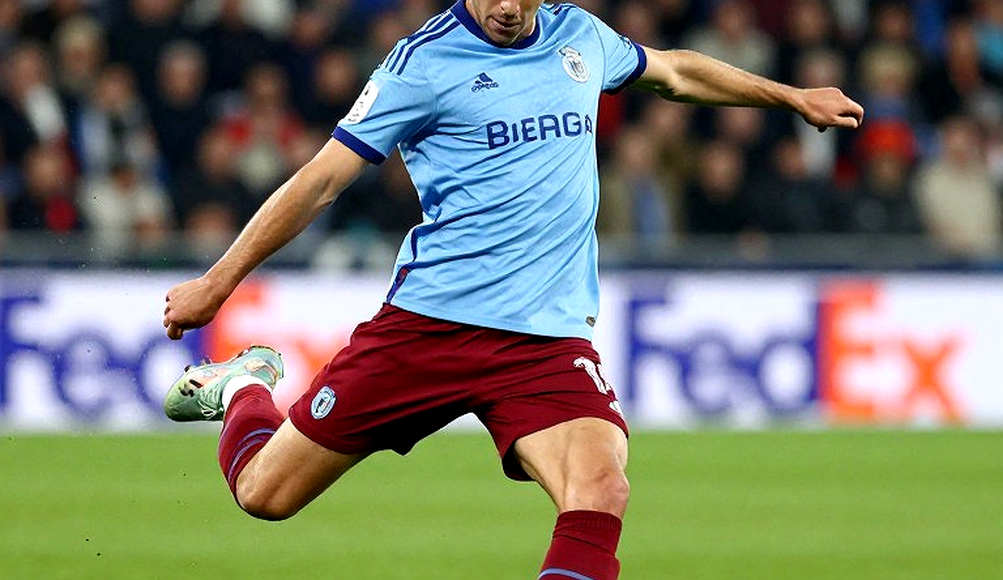
The gap between a 41-year-old legend and a 22-year-old winger is where the match happens.
Squad structure: 25 names and an attacking tilt
Look at the list the way a tactician looks at it. Portugal have called up Bruno Fernandes, Bernardo Silva, Rafael Leao, Pedro Neto, Joao Felix, Goncalo Ramos, Trincao, Francisco Conceicao, Fabio Silva. Add Ronaldo, and that is ten names any follower of European football knows well.
Ten out of twenty-five. Forty per cent of the squad sits in the attacking half. At the base, Ruben Dias and Vitinha set the rhythm. The defensive and midfield spine has no quality complaint, but the distribution says one thing: this is a team built to score, not to protect a scoreline.
An attacking team tends toward high full-backs. When full-backs push high, the team accepts empty wide channels behind them. When you empty the wide channels behind you, opponents move the ball into those zones on the counter.
Your opponent here is Erling Haaland.
I once wrote an article nobody read. Three years later, it became my coaching manual. That 2026 piece showed that an Asian side in a 4-3-3 with high full-backs conceded four goals in a quarter-final. The data went unnoticed, but structural errors do not change over time. The same mistake pattern, at a different scale, will reappear one day.
With Portugal, the story is not so bleak. They have one of the finest centre-backs of his generation in Ruben Dias. They have a deep-lying midfielder who controls tempo in Vitinha. But they also have three elite wingers whose attacking instincts outweigh their defensive ones. When Leao, Neto and Conceicao are on the pitch together, the load on Vitinha and the two centre-backs multiplies.
The coach will have to choose: keep the balance or maximise the firepower. No option is free.
13 players and a familiar history
Of the 25 called up, 13 have worked with the current head coach. This is the most important indicator in the entire press release, yet it appeared in no headline.
A coach with 13 familiar players in a 25-man squad means he has a shared tactical vocabulary. Players know what he wants when he shouts "higher" or "drop off". They know how many seconds they have to transition after losing the ball. These things do not appear in press conferences, but they determine how quickly the ball moves in the first ten minutes of a big match.
On the other hand, a coach with 13 familiar players is also a coach inclined toward loyalty to familiar faces. Loyalty is a double-edged quality. It creates stability and it creates stagnation. It helps a team survive the pressure of a big match, but it can also cause a team to miss a necessary renewal.
In 2026, everything collapsed. I got up and rebuilt from the rubble. When leagues were suspended, a group of students and I analysed 119 Bundesliga matches played behind closed doors and found that home advantage had fallen sharply. That number appeared in no league table. It only surfaced if you were willing to read the data nobody else read.
In Portugal's case, the unread data is the World Cup retention rate. 21 out of 25. It is a signal of continuity, and simultaneously a signal of slow renewal.
Four new faces in a 25-man squad is not a revolution. It is a minor adjustment. And when a defending champion only makes minor adjustments, it means they believe the problem lies in execution, not in personnel.
The contrarian angle: when the 1,000th goal is outsourced away from the national team
This is the quote I consider the most important of all. The coach said Ronaldo's 1,000th goal is more likely to come at Al Nassr than for the national team.
Ronaldo is 21 goals away from the milestone. That is not a small number. For a 41-year-old striker, 21 goals could be a year's work or eighteen months, depending on minutes and appearances.
The coach's framing has a very specific effect: it reduces pressure on the national team. If the 1,000-goal milestone were expected to be completed in international colours, every Portugal match would become a media event. The same question would repeat before and after each game: did Ronaldo score? There would be a silent pressure demanding he start, regardless of form.
When the coach says "it might come at Al Nassr", he is shifting the media burden onto the Saudi club. Al Nassr have an incentive to put Ronaldo on the pitch, because every goal carries commercial value. Portugal have a different incentive: winning.
This is the contrarian point. People usually assume a coach calls up a star to exploit the star's power. But here, keeping a 41-year-old star in the squad is also the art of reputation management. What the coach is looking for is not 21 goals. What he is looking for is not losing a slice of the nation's heritage while retaining tactical freedom.
And this is where xG fails as an analytical tool. No xG model can quantify the value of a 41-year-old in a dressing room, in press conferences, in sponsorship contracts, or in the mind of a 22-year-old sitting beside him. Those things are not in the model. But they decide match outcomes in ways no spreadsheet captures.
A note on sources
I have one professional rule: two independent sources before publishing. Not out of suspicion, but because I have seen small discrepancies lead to distorted analysis. A wrong detail can change how one reads a group, a legal status, a contract.
In the Portugal information, two points need independent verification.
First, the coach's identity as given in some aggregations does not match mainstream reporting. Some international outlets place Portugal's leadership in different hands during the 2026-2026 cycle. No official statement confirms a change, and none denies it. This is an information gap the reader should know about.
Second, some aggregated fixture lists show Denmark, Norway, Wales and Norway again within a single camp — structurally impossible in a home-and-away league format. A small error. But a small error in a small detail is still an error, and I do not want to build this entire article on an unclarified detail.
I have written everything I can write. Readers should know the limits of the data in front of them.
What will actually happen on the pitch
Portugal enter Group A4 with a squad whose balance is unproven. On paper, they are the strongest team in the group. In practice, that strength rests on a single variable: whether the wingers are willing to track back.
Ruben Dias will anchor the defence. Vitinha will link midfield to attack. Bruno Fernandes will create. Bernardo Silva will set the rhythm. But the space in front of the backline still needs protecting.
Against Norway, that space is named Erling Haaland. Against Denmark, that space is named organised counter-attacks. Against Wales, that space is less severe.
From a forgotten bench, I learned the value of the moment you enter the pitch. I never thought a coach would decide an entire season with the 70th minute of a match. But I know that a wrong substitution can erase 80 minutes of good work, and in a four-match group, three points lost in ten minutes can reshape the entire race to the quarter-finals.
The unanswered question
What occupies my mind most is not that Ronaldo was called up. What occupies my mind most is that only four young talents were.
Fabio Silva, Francisco Conceicao, Trincao — players aged 20 to 24 — are on the list, but the question is how many minutes they will get. In a group where Portugal are the strongest side, matches against Wales and partially against Denmark are ideal opportunities to hand minutes to young players. But if those matches become an opportunity for a 41-year-old striker to chase his 1,000-goal milestone, the young talents will keep sitting on the bench.
This is a difficult equation.
World Cup 2026 taught me one thing: hesitation is what destroys every plan. I hesitated over publishing a viewpoint, and by the time I published, the moment had passed. In football, generational transition is the same. You cannot wait for a star to retire before handing chances to a successor. But you also cannot discard a star still capable of contributing, simply because he is 41.
This is the zone where numbers help little. Goal counts say Ronaldo still has value. Minute counts say he needs managing. Year counts say he is near the end. But no number says how many minutes a young talent needs to develop. That is judgement, not data.
And judgement is what humans do, not spreadsheets.
What I am tracking
I will track three things in this camp.
First, Ronaldo's minutes. If he starts all four matches, that is a directional choice. If he is rotated, that is a managed choice. Neither is wrong. But the two choices express two different plans about how this team sees itself.
Second, the minutes of players under 24. This is the practical test of the "no special treatment" claim. The claim is not hard. Delivering it is.
Third, how the team defends when it loses the ball. Portugal have a backline strong enough to play attacking football, but not strong enough to play attacking football in every match. Denmark and Norway will test this point.
A lesson from the tunnel: the silence before a match says more than any press conference. A team walking out with clarity about its roles plays differently from a team walking out with unanswered questions. Portugal sit between those two states.
I am not in the dressing room. I do not speak to the coach daily. All I have is footage, numbers and one principle: read the match through data, retell it through people.
And in this case, the person at the centre of every question is a 41-year-old entering his 24th consecutive international season. He does not need to prove anything to history. But his national team needs to prove something to itself: that it can defend a legacy without being bound by it.
If the data shows that, I will be the first to rewrite this piece.