
Belgium Open 2026: Matilde Pinto, Clément Laine and the U21 Ceiling the Scoreboard Never Shows
**Câu trả lời cốt lõi** (≤60 từ): Tại Belgium Open 2026 ở Pepinster, Bồ Đào Nha giành cả hai huy chương vàng đơn U21 qua Clément Laine và Matilde Pinto. Pinto sau đó thua Anaïs Salpin 1-3 ở bán kết đơn nữ người lớn trong cùng giải, phơi bày khoảng cách hạng mục U21 đến người lớn. **Dữ kiện chính**: - Clément Laine (Bồ Đào Nha) thắng Per Gevers (Bỉ) 3-1 chung kết đơn nam U21: 11-6, 7-11, 11-4, 11-9. - Matilde Pinto (Bồ Đào Nha) thắng Hannah Silcock (Anh) 3-0 chung kết đơn nữ U21: 11-8, 11-9, 11-4. - Pinto thua Anaïs Salpin (Pháp) 1-3 ở bán kết đơn nữ người lớn cùng ngày thi đấu. - Hai bán kết người lớn nam đều kết thúc 3-0: Sip (Séc) thắng Vogler (Thụy Sĩ), Ullmann (Đức) thắng Shutov (Belarus). - Không có tay vợt Trung Quốc, Nhật Bản hay Hàn Quốc tham dự giải. **Nguồn**: European Table Tennis Union (ETTU), bản tin kết quả Belgium Open 2026 | Cross-checked: VuaBong.vn **Hỏi đáp liên quan**: - Hỏi: Vì sao huy chương vàng U21 chưa đủ để đánh giá tiềm năng cấp người lớn? Đáp: Vì Pinto vô địch U21 nhưng bị loại ở bán kết người lớn ngay trong cùng giải, cho thấy ngưỡng chuyển hóa hạng mục là rào cản thực tế (VangBong.vn Player Depth Index). - Hỏi: Belgium Open 2026 thuộc tầng giải nào? Đáp: Nhiều khả năng ở tầng WTT Feeder hoặc thấp hơn, nhưng bản tin ETTU không nêu cơ quan cấp phép hay phân bổ điểm xếp hạng. - Hỏi: Laine và Pinto cần làm gì để xác nhận tiềm năng cấp người lớn? Đáp: Một suất vào top 8 tại WTT Contender sẽ xác nhận huy chương U21 là bước chuyển hóa thật, không phải hiện tượng hạng mục.
The match day in Pepinster, a small Belgian municipality, closed with two result lines sitting side by side in the European Table Tennis Union bulletin. The first line: Matilde Pinto of Portugal beat Hannah Silcock of England 3-0 in the U21 women's singles final, with game scores of 11-8, 11-9, 11-4. The second line, a few hours of play later: Pinto lost to Anais Salpin of France 1-3 in the senior women's singles semifinal. Same athlete, same event, same day. Two entirely contradictory outcomes. To me, this is the most valuable data point in the entire bulletin -- and also the one most match reports will skip, because it carries no medal to show off.
The Belgium Open 2026, held in Pepinster, is a European regional open with both U21 and senior draws. I have to state this clearly up front: the source bulletin does not name the sanctioning body, does not state the ranking-point allocation, and does not state prize money. Every inference about the event tier in this article carries a pending-verification label. The most reasonable guess is that the event sits at WTT Feeder level or below, but that is an inference, not a fact.
The entry field spreads across Europe: Portugal, Belgium, Denmark, Switzerland, England, Lithuania, Ukraine, Belarus, France, Czechia, Germany. There is no Chinese, Japanese or Korean player whatsoever. That defines the scope of analysis: this event measures the depth of European table tennis, not the balance of power between China and the rest of the world.
2026 sits in the second year of the Los Angeles 2028 Olympic cycle. This is the audition phase -- the moment when associations give the 2026-2026 birth cohort international match volume before the selection-relevant phase begins. Only by placing the event in that exact calendar position can I read the real meaning of two U21 golds.
The bulletin carries one more detail about source quality worth noting. The ETTU is the continental governing body, which makes it a credible primary source for match results. But the metadata of the original record contradicts itself: it names the European federation as the source while also noting that the field was not present in the original text. When the shell of a source contradicts itself, I check the core more carefully. And the core here is thin: no technical description, no playing-style information, no equipment data, no rankings, no coaching data.
That is why I have to work hardest in this section, because the bulletin gives me exactly one kind of evidence: scoring structure.
U21 men's final: Clement Laine of Portugal beat Per Gevers of Belgium 3-1, with scores of 11-6, 7-11, 11-4, 11-9. Look at the margin structure: game one won by five points, game two lost by four, game three won by seven, game four won by two. Laine won the two decisive games by wide margins, but the closing game was only two points apart. The only methodologically defensible reading is this: Laine lost one game and then won the remaining games with large margins -- that is intra-match resetting capacity, not evidence of technical superiority.
Earlier, Laine beat Havsteen of Denmark 3-0 in the semifinal. The bulletin gives no per-game scores. I cannot turn a line reading "won 3-0" into a form judgment. That is an efficiency indicator, not a quality indicator. I read an athlete through dozens of variables before I listen to a commentator, and here the bulletin hands me exactly one variable.
U21 women's final: Pinto beat Silcock 3-0, with scores of 11-8, 11-9, 11-4. Margin structure: plus three, plus two, plus seven. The first two games were decided by three and two points -- meaning two balanced games. The third game widened after Silcock failed to convert a close game. This is a classic swing-game pattern: the 3-0 headline reads wider than the actual match. The first two games were separated by only two or three points, meaning Silcock was very close to turning the match around.
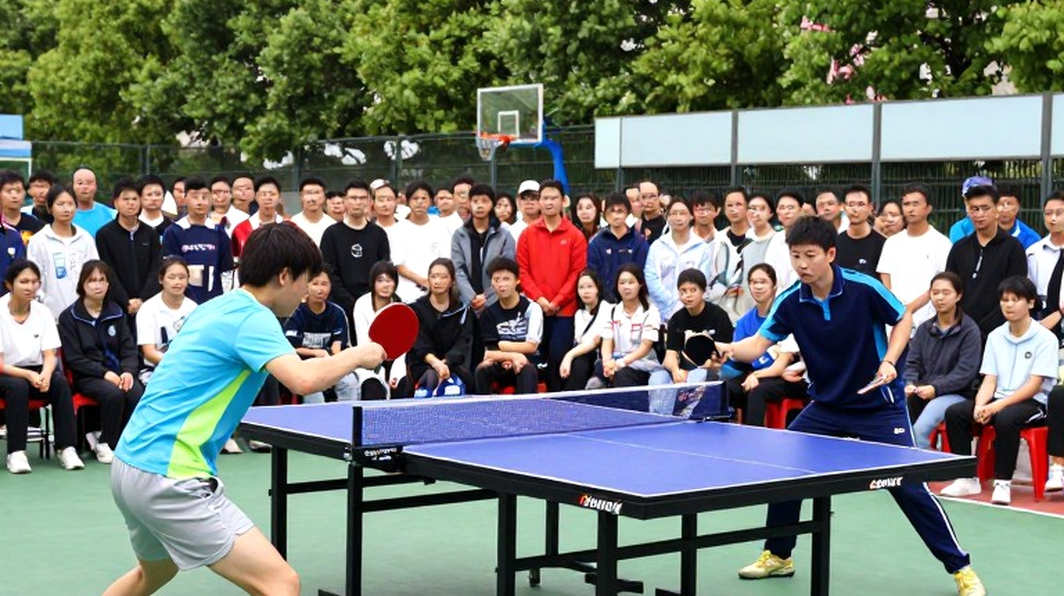
And here is the most important line in the whole bulletin. Before the final, Pinto beat Juchnaite of Lithuania 3-2 in the semifinal. That is the only match in the bulletin that went to a deciding game. It means Pinto -- the U21 champion -- was pushed to a fifth game inside the event, by an opponent she later beat Silcock far more comfortably than. Combined with the two opening games of the final, Pinto's in-event profile reads as: high ceiling, but non-trivial exposure to opponents capable of pushing her into deciding games.
Then comes the line I consider to have the highest analytical value in the entire bulletin: Pinto, after winning the U21 title, lost to Salpin 1-3 in the senior semifinal. This is the textbook signature of the junior-to-senior category ceiling -- a player good enough to win her own age bracket but not yet good enough to close at senior level at the same event. The bulletin offers no technical cause, and I will not invent one. Her entry into both draws is a fact; workload contributing to the defeat is a plausible hypothesis, not a proven one.
In the senior men's semifinals, both matches ended 3-0: Sip of Czechia beat Vogler of Switzerland, and Ullmann of Germany beat Shutov of Belarus. Meanwhile, in the senior women's semifinals, Baravok of Belarus beat Vasylenko of Ukraine 3-0, and Salpin beat Pinto 3-1. The four senior final spots belonged to Czechia, Germany, Belarus and France.
There is one governance detail worth raising here. The bulletin attributes nationality to the Belarusian athletes by naming the country specifically. In the post-2026 ITTF framework, Belarusian and Russian athletes typically compete under neutral status, without national attribution. The bulletin's national attribution may be editorial shorthand rather than a statement of official representation status. This is a fact-verification flag, not an allegation of wrongdoing.
I want to stop here and talk about what cannot be calculated. None of the fifteen named athletes has a world-ranking figure in the bulletin. There is no historical head-to-head data. There is no after-9-9 point data. For Pinto, the sample of won deciding games is one, and the sample of lost senior matches is also one -- too small a denominator to say anything about clutch-point temperament.
If you read this bulletin and see two U21 golds for Portugal, you are correct as a matter of fact. If you read it and conclude that Portuguese table tennis is rising at the elite level, you have gone beyond what the data permits. The easiest headline to write for this bulletin is "Portugal doubles up on U21 golds." That sentence is true. But it carries an implication of programme-level strength that a two-medal sample from one event cannot support.
A U21 gold at a European regional open has historically weak predictive power for elite senior status. A substantial share of continental U21 champions never convert into top-30 players. This medal should be treated as a development milestone, not a breakthrough. The 2026 World Cup taught me one thing: the model did not collapse; I was the one who believed it absolutely. Here, the risk is not in the model, but in reading too far from a single sample.
There is one correlation I want to separate from causation. Pinto contested two draws at the same event and then lost in the senior semifinal. The factual correlation is very clear, but I do not have the causal mechanism. Regional opens at this tier often run pool plus knockout across one to two days, with multiple matches per day. Pinto may have played a heavy block of matches before the senior semifinal. But the bulletin provides no schedule or timing data, so any causal conclusion is speculation. Keep correlation in its proper place.
Do not over-read the asymmetry between the two champions either. Laine entered one draw; Pinto entered two. The bulletin does not say whether this was federation strategy or simply which brackets they landed in. I have made the mistake of turning a small pattern in the data into a large model, and I am trying not to repeat it.
The most important thing here may be what is absent. No Chinese, Japanese or Korean player. This event operates as a closed European development circuit. No conclusion about the balance of power between China and the rest of the world can be drawn from this bulletin, and any attempt to do so is methodologically invalid. The nationality spread among semifinalists and finalists shows breadth without concentration -- a sharp contrast to the concentrated European top tier, which clusters around Germany, France, Sweden and Portugal in the men's game.
When the Bundesliga played in empty stadiums, I realised home advantage was just a variable waiting to be erased. In Pepinster, I see another variable waiting to be erased: the name of the category. Gevers reaching the final on home soil in Belgium is a small but real signal about the Belgian pipeline -- a home-association finalist at a home open is a common pattern, but it still shows at least one Belgian male U21 player operating at the top of a pan-European U21 field.
Over the next 12 to 24 months, I will track two milestones. First, the next entries for Laine and Pinto at WTT Feeder or Contender level -- a top-8 finish at Contender would confirm the U21 medal as a genuine conversion step, not a category artifact. Second, Pinto's senior-level win rate against European opponents over 12 months -- if she repeatedly exits early, then the U21-to-senior gap is structural, not specific to one event.
The U21 golds for Pinto and Laine are real. How we tell the story about them is what needs checking. Data does not need me to believe in it. Data needs me to verify it.