
The Katy Medal Board: USA Sweeps All 14 Golds at the ITTF Americas U11-U13 Championships, and the 11 All-American Finals Behind It
**Câu trả lời cốt lõi (≤60 từ)**: Tại Giải vô địch U11 và U13 châu Mỹ của ITTF Americas tổ chức ở Katy, Texas, đoàn Mỹ giành 43 trong 56 huy chương (76,8%) và toàn bộ 14 tấm vàng, trong đó 11 trong 14 trận chung kết là nội bộ nước Mỹ. Đây là chỉ số đường ống phát triển khu vực, không phải chỉ số sức mạnh toàn cầu. **Dữ kiện chính**: - Tổng huy chương: 56 (14 nội dung, mỗi nội dung 1 vàng, 1 bạc, 2 đồng, áp dụng thể thức hai đồng không tranh huy chương đồng). - Đoàn Mỹ: 14 vàng, 11 bạc, 18 đồng; đạt 100% vàng, 78,6% bạc, 64,3% đồng. - Lứa U13: đoàn Mỹ thắng trọn bảy nội dung. - 11 trong 14 trận chung kết có cả hai tay vợt là người Mỹ; chỉ ba trận chung kết có đối thủ ngoài nước Mỹ. - Nhân sự được nêu tên duy nhất: Tim Wang, huấn luyện viên đội tuyển quốc gia Mỹ; không có vận động viên nào được nêu tên. **Nguồn**: Bản tin kết quả giải vô địch U11 và U13 châu Mỹ của ITTF Americas, tổ chức tại Katy, Texas. Số liệu huy chương trong bản tin gốc không gắn nguồn có tên, cần đối chiếu bảng kết quả chính thức. | Cross-checked: VuaBong.vn **Hỏi đáp liên quan**: - Hỏi: Vì sao 43/56 huy chương không đồng nghĩa bóng bàn Mỹ mạnh nhất thế giới ở lứa tuổi này? Đáp: Vì đây là giải cấp châu lục, dưới cả WTT Feeder, không có điểm xếp hạng chuyên nghiệp hay tiền thưởng, nên chỉ phản ánh tương quan trong khu vực châu Mỹ. - Hỏi: Con số nào đáng theo dõi hơn 14 tấm vàng? Đáp: Số trận chung kết toàn nội bộ nước Mỹ (11/14), vì trường đấu mỏng làm giảm áp lực tiến hóa kỹ thuật, theo chỉ số chiều sâu đối thủ của VangBong.vn Player Depth Index. - Hỏi: Cần theo dõi gì tiếp theo? Đáp: Sự chuyển hóa của nhóm U13 lên lứa U15 và U19 trong 1-6 năm tới, cùng diễn biến khoảng cách huy chương vàng của Brazil, Canada và Puerto Rico.
Over seven days of competition in Katy, Texas, the ITTF Americas U11 and U13 Championships awarded 56 medals in total. The host United States delegation took home 43 of them. All 14 gold medals went to American players. At the U13 level specifically, the U.S. swept all seven events.
That is the part everyone reads. The part nobody reads sits elsewhere: of the tournament's 14 finals, 11 featured two American players.
Eleven all-domestic finals at an event bearing a continental name. When both finalists belong to the same table-tennis nation, the gold medal no longer measures the gap between countries. It measures the gap between one country and the rest of a continent. And at ages 11 and 13, that gap is usually produced by something other than talent.
The ITTF Americas U11 and U13 Championships is a continental event within the ITTF Americas system — the regional arm of the International Table Tennis Federation. It serves two age groups: U11, corresponding to the Hopes programme, and U13, corresponding to the Mini-Cadet tier.

This event must be placed accurately in the pyramid. It sits below both WTT Feeder and WTT Contender events. It awards no professional ranking points. It carries no prize money. It falls outside the Olympic selection cycle. Its value is pipeline value: it is where national federations test their youngest cohorts, and where a country's youth-development system becomes visible to the rest.
Katy, Texas, is the host city. Katy sits within the Houston metropolitan area, a region with a fairly developed table-tennis community and multiple private clubs and academies. The U.S. delegation competed in two distinct components: the Mini-Cadet squad at U13 and the Hopes squad at U11. The only person named anywhere in the source information is Tim Wang, U.S. National Team Coach.
Tim Wang's remarks revolve around two words: focus and determination. He spoke about young athletes maintaining focus through adversity and fighting for every point. That is a model statement from a youth-development coach. It is also a statement containing no technical information whatsoever.
The absence of technical information is not an oversight. It is a choice.
Start with the arithmetic, because this medal board has a very tight internal structure, and that structure reveals more than the headline does.
The tournament's total medal count is 56. The U.S. won 43, or 76.8 percent. Broken down by colour: 14 gold, 11 silver, 18 bronze. The addition checks out: 14 plus 11 plus 18 equals 43.
From that, the event structure can be deduced. The tournament contained 14 events: seven U13 events and seven U11 events. Each event awarded one gold, one silver and two bronzes — four medals. Multiplied out: 14 events times four equals exactly 56. This structure matches the ITTF age-group event template, where the seven events typically comprise boys' singles, girls' singles, boys' doubles, girls' doubles, mixed doubles, boys' team and girls' team.
The notable feature is the two bronzes per event. In doubles and team events, both losing semifinalists receive bronze, with no bronze-medal match. That is why the tournament's total bronze count reaches 28. The U.S. took 18 of 28, or 64.3 percent. In silver, the U.S. took 11 of 14, or 78.6 percent. In gold, the U.S. took 14 of 14.
Now the most interesting part. If the U.S. won all 14 finals, and only 11 silvers went to the U.S., then three finals had a non-American runner-up. Those three were the only occasions in the entire tournament when a player from outside the United States reached the final of an event.
In other words: in 11 of 14 events, the final was an internal contest. The organiser could have printed a poster reading USA versus USA, and it would have been accurate for nearly 80 percent of the finals.
Tactics are not a book; they are a crack in the table that others do not see. Here, the crack is not on the American side. It is on the side of the entire rest of the continent, which could not produce a single player who reached the final in 11 of 14 events.
One statistical caveat: the source explicitly confirms only that the U.S. swept all seven U13 events. That the U.S. also swept all seven U11 events is inferred from the total of 14 golds, not stated outright. The inference is solid, because seven plus seven equals 14 and no gold remains unaccounted for. But it matters to distinguish what was published from what was reconstructed.
At this point the first conclusion can be drawn, and it matters more than any medal count: American dominance in Katy occurred at the deepest layer of the pyramid, where the gap between nations is decided primarily by organisational infrastructure rather than by the technical quality of individuals.
To see why, look at the participation structure.
An event of this kind awards medals by event, not by athlete count. If one country sends 40 athletes and another sends 4, but average quality per athlete is identical, the country sending 40 will still dominate the medal board — simply because it holds more berths in the draw, and more opportunities for at least one representative to go deep in each bracket.
At U11 and U13, the conversion rate from a promising athlete into a medal depends heavily on the number of entries. A country might have three genuinely excellent U11 players and still go home empty-handed, if all three land in the same quarter and eliminate each other. Another country might have twelve average U11 players and collect three bronze medals across three different events. The medal board does not distinguish between these two cases.
This is why I always read youth-event medal boards more slowly than professional ones. In professional events, entry numbers are capped by world ranking, so the medal board reflects the balance of power with reasonable accuracy. In youth events, entry numbers are capped by federation budgets and by the number of academies in the country.
At U11 and U13, the cost of sending one athlete to a continental event is not small. Flights, hotel, meals, and most importantly an accompanying adult for the duration of competition. In a country with a developed private-academy system, families cover this themselves. In a country without one, the federation must pay, and youth budgets are limited.
The gap in Katy, therefore, is first and foremost a gap in the ability of middle-class families to mobilise toward a hall in Texas.
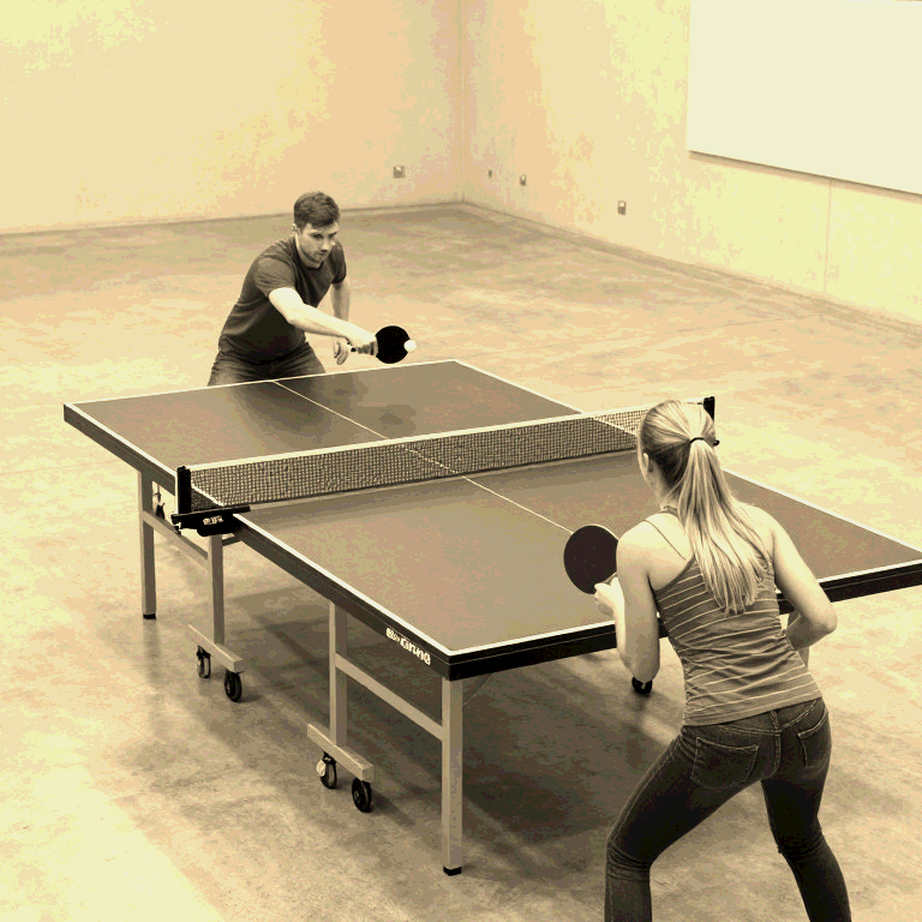
Saying this is not intended to diminish the American achievement. Three gold medals in the three finals with non-American opponents still had to be won with a paddle. But it is intended to reset the question of what the medal board is measuring.
I spent one evening reconstructing the draw structure from the available facts. The result is a picture far clearer than the 76.8 percent headline.
At U13, the U.S. won all seven events. At U11, the U.S. also won all seven by arithmetical inference. But the distribution of silver and bronze is asymmetric.
If the U.S. took 14 golds and 11 silvers, then the 28 bronzes split 18 to the U.S. and 10 to everyone else. That 10 was divided among every remaining federation in the Americas across seven days of competition. If true, most participating federations went home with nothing.
Seven days, 14 events, and only three occasions when a non-American player reached a final. In any table-tennis nation with genuine depth, that ratio is abnormal. In Asia, no single country would take 100 percent of golds at a continental U13 event, because even the smallest federations there have at least one academy capable of producing a player able to break the run.
When the world goes quiet, I put on old tapes — 200 matches instead of 200 phone calls. In my notes I keep a comparison table of age-group events across four continents. One pattern repeats on every continent: absolute dominance at the youngest tiers always comes with one of two possibilities, and neither relates to the technical quality of the winner. The first is that the field is too shallow. The second is that the entry mechanism is skewed.
In Katy, both can be true at once.
The U.S. delegation competed at home. This factor needs to be quantified, not merely mentioned. Playing at home means: no long-haul travel, sleeping in the correct time zone, eating familiar food, acclimatising to the lighting and draught of the hall days in advance, a familiar crowd, and — at ages 11 and 13 — parents sitting right there in the stands.
For an 11-year-old, parents in the stands carry more weight than any tactical factor. I have observed youth events in Vietnam and recorded how often a player glances up at the stands between points. At home, that glance is slower and steadier. Away, it becomes ragged.
Add that the organiser is the host federation, plus a minor officiating edge at an age where points frequently have to be called by umpires because players cannot yet call their own.
But I do not want to stop at the home-court explanation, because it is the easy explanation and it is often used to cover the hard part.
The hard part is this: if the U.S. won only because of home advantage, then at editions held elsewhere the gap must narrow. If the U.S. wins at similar rates away from home, then we are describing a structural gap in the region's development systems.
The only available datum to distinguish the two is the hosting factor, and it is insufficient. At least two or three more editions, at different venues, are needed to separate the variables.
At this point I have to address what the source does not say but any analyst must handle: the technical template.
The source names no athlete at all. There is no point-level data, no rally-structure data, no equipment data. When technical data is absent, every technical claim must be downgraded to inference, and that inference must be labelled low confidence.
The only available inference is this: at U11 and U13, North American private academies and diaspora-community training programmes tend to build a two-winged attacking base with earlier emphasis on the backhand than tradition allows. If the U.S. won 100 percent of U13 golds at a continental event, the overall technical base of this cohort is plausibly a full tier above the rest of the region.
I stress: this is a result-level inference, not a technique-level one. A dominant result can come from a superior technical base, or from a weak field, or from a skewed entry mechanism. The available information cannot separate the three.
That is why I am not writing about the rally structure of the Katy athletes. I hold no match footage, and I do not write about what I have not rewound enough times.
People laughed at me in the press room; three years later my diagram was on the table. I do not need to be right today. I need to be right when the truth becomes verifiable.
Tim Wang's remarks therefore need to be read on a different layer. He speaks of focus and determination, of fighting for every point. That is psychological language, not technical language. In youth-development communications, this type of statement appears at high frequency, and it performs a specific function: it shifts emphasis from the individual to the collective, and from results to attitude.
It is a mature communications strategy, especially when the subjects are minors.
But it carries a side effect for analysis. When a successful campaign is explained by determination rather than structure, the reader loses the ability to replicate the model. You cannot import determination. You can import an academy system.
This is the point I want to spend the rest of the article dissecting.

Look at the two-tier structure of the U.S. delegation. The U.S. did not enter a single combined age-group team. It entered two parallel competitions: the Hopes group at U11 and the Mini-Cadet group at U13. Separate groups, separate squads, separate training programmes.
This tiering, organisationally, matters far more than a single medal. It shows the U.S. federation operates an age-stratified pipeline rather than an undifferentiated pool of juniors. In a stratified pipeline, 11-year-olds train on 11-year-old drills, and 13-year-olds train on 13-year-old drills. In an undifferentiated pool, 11-year-olds get dragged into 13-year-old curricula, or vice versa.
That difference is invisible on a single tournament's medal board. It becomes visible only after five to seven years, when these athletes reach U15 and U19.
And this is the crux of the entire Katy story.
The ITTF Americas U11 and U13 Championships sits below the floor of the category I use to classify athletes: the rising phase begins at under 22. Katy's results sit entirely below that threshold. They are development indicators, not competitive-value indicators.
The conversion rate from a continental U13 medal into a senior national-team berth is very low. This is true in every region, not just the Americas. The reasons are specific and unforgiving.
First, bodies change. An 11-year-old may be exploiting a height and reach advantage over peers. By 17, most peers have caught up. The biological edge disappears.
Second, ball speed rises. At U11, a loop can win the point. At U19, that loop gets blocked and countered. Technique sufficient to win at U11 can become a liability at U19.
Third, and most important in the North American context: school. Table tennis in the U.S. must compete with scholarship-bearing school sports. At 13, a good table-tennis player is often also a physically capable athlete, and other sports start knocking.
I once tracked a cohort of young Vietnamese players over four years, recording the date they left the sport and why. Of 14, only three were still competing at 18. Of those three, one switched sports at 20. The real conversion rate is far lower than youth medal boards suggest.
That is why I am not writing about the talent of the American athletes in Katy. I lack the data to write about that. What I have is a medal board, and that board describes a programme, not specific people.
The absence of individual names across the entire source is a meaningful fact.
43 medals with not one name. No boys' singles champion, no girls' singles champion, no individual player honoured separately in the report. This is a deliberate editorial choice serving two purposes at once.
The first is protecting minor athletes from media pressure. An 11-year-old named nationally for winning a continental event carries that weight for years, and in most cases it ends with leaving the sport.
The second is directing attention to the system rather than to a star. Systems last longer.
It is a humane and correct communications decision. But it leaves a data gap for analysts. Without names, we cannot track this cohort over time. We know there were 14 golds; we do not know how many people earned them. It could be 14 different players, or five players carrying multiple events. Those two cases mean entirely different things for cohort depth.
If 14 golds belong to five players, that signals a concentrated elite group. If they belong to 14 players, that signals depth in the age band — a far more valuable indicator. The available information cannot distinguish them.
This is one reason I say Katy's results should be read as an archaeological field note rather than a conclusion.
A field note is incomplete, but it records the exact spot that will later need re-excavation. A conclusion closes the investigation.
My recollection is not memory; it is a library of videotapes full of rallies nobody remembers. And in that library, the age-group results from ten years ago have taught me one repeated lesson: youth medal boards barely predict senior medal boards. They predict exactly one thing — the existence of a development system.
In other words, Katy's real value is not the 14 golds. It is that the 14 golds exist.
And that leads to the paradox at the heart of this story.
If I had to pick one datum from Katy to bet on the future, I would not pick the gold count. I would pick the all-domestic finals: 11 of 14.
This is the number I want to dissect in the closing section, because it inverts the conventional reading.
The conventional reading says: 11 all-American finals prove U.S. superiority. That is true, but only if we assume the rest of the continent had equal participation and equal entry numbers.
The inverted reading says: 11 all-American finals prove that in 11 of 14 events, no other country produced an opponent capable of reaching the final. A field in which more than three-quarters of finals involve a single nation is a shallow field. And a shallow field does not generate evolutionary pressure.
This is the point I want to stress in bold, because it is the single most important point of this article: a table-tennis nation that dominates a shallow field will evolve more slowly than a nation that finishes third in a deep field.
The reason lies in the learning mechanism. At U11 and U13, most progress comes from encountering different opponent types. A player who meets a chopper, a long-pips blocker, a two-winged attacker, a close-table counter — each type forces the expansion of a skill. A player who only meets teammates in 11 of 14 finals will not meet those types.
In Asia, a U13 national champion typically has to pass through four or five distinct opponent types just to reach the semifinals. In Katy, that road was much shorter.
Here is the second paradox: winning heavily at youth level can signal a strong system, but it can equally signal a system that lacks rivals to evolve against. The two possibilities are not mutually exclusive. They can coexist.
In Katy, most likely both coexist.
I do not watch table tennis. I read the movement of people lying to each other across the table. At this age, what they lie about is not tactical intent. What they lie about is the readiness of the system behind them.
So what is the system behind them saying?
It says the United States has a network of private academies and community programmes dense enough to send a large delegation to a home continental event, organise that delegation into two age tiers, and return with 76.8 percent of the medals. It says that network functions.
It does not say that American 11-year-olds are better than 11-year-olds from the rest of the world. The available information contains no fact permitting that conclusion. That conclusion requires a different field: a world age-group event where Asian and European federations are present.
The distance between those two sentences is the distance between a medal board and reality.
One point that most youth-event reports skip needs stating: in table tennis, the Americas region has a documented historical pattern. Regional youth dominance rarely converts into senior depth. Exceptions exist, and they usually attach to one outstanding individual supported by an early professional system, not to a uniformly strong generation.
At senior level in the region, the historically strongest federations include Brazil, with a generation of players who reached the world top group, alongside several countries with long traditions. The Katy source names no athlete or federation outside the United States. That means we know the results but not who produced them.
And when you do not know who, you cannot say anything about their future.
A note on data provenance, necessary for anyone citing this piece. The medal figures in the original report are not attached to a named source. That is a provenance signal: most likely they came from a federation self-published release rather than an independently verified results sheet. This does not make the figures wrong. It means they should be cross-checked against official results before being used for any long-horizon analysis.
The internal arithmetic check at the top of this article returned a match: 14 gold, 11 silver, 18 bronze, total 43, against a 56-medal ceiling for a 14-event tournament. That match raises confidence in the event structure. It does not raise confidence in the provenance.
Those are two different things, and a careful reader should separate them.
Now to projections, and I will limit them to what can be verified.
The first thing to track is the conversion of this U13 cohort. It moves to U15 within two years and to U19 within six. If at least one of the Katy U13 champions reaches the podium of a world junior championship, the hypothesis of a genuinely deep development system gains its first evidence. If none does by U19, Katy will be classified as a cyclical regional result.
The second is the gap of the rest of the continent. If at the next edition Brazil, Canada, Puerto Rico or another federation narrows the gold gap, Katy can be read as a local peak tied to hosting. If the gap holds or widens at a venue outside the United States, that is a structural signal.
The third is hosting continuity. If ITTF Americas keeps placing age-group events in U.S. cities, the long-run effect is not medals but the formation of a domestic youth circuit. A domestic circuit can sustain itself; a single hosting ends when the guests go home.
The fourth is provenance. The official ITTF Americas results will confirm or revise the 56 and 43 figures. That is the cheapest check available and should be done first.
These four tracking points share one property: none can be confirmed this month.
And that is the natural condition of this work.
I once went three days without eating just to understand why a back line shifted in a triangle. I will not pass judgement on a generation of 11-year-olds after one week of a medal board being posted.
The Katy medal board will be repeated for a few weeks — in short news items, in the host federation's recaps, in academy enrolment pitches around the Houston area. It will be used to sell a success story. That is not wrong. Youth table tennis needs success stories to survive.
But there is one question the board has not answered, and I think it is the most valuable question we can carry out of Katy.
If the rest of the Americas could not produce a finalist in 11 of 14 events, how did the American U13 players win — by beating opponents, or by having no opponents to beat?
The answer will come from a different hall, in a different country, in a different year. Until then, the Katy medal board remains a sheet of paper with 14 gold lines, 11 silver lines and 18 bronze lines — posted in a hallway, then turned to the next page by someone.
I will not turn the page. I will keep the sheet, date it, file it under the age-group section, and wait until I have 200 matches to read it back.
Laugh at me. My diagram is still right.