
Vietnam Taekwondo at the 2026 Asian Games: Two Female Fighters Carry the Entire Medal Dream
**Câu trả lời cốt lõi:** Đội tuyển taekwondo Việt Nam dự Asiad 2026 (Aichi-Nagoya) với 8 suất, 6 nội dung đối kháng, đặt toàn bộ kỳ vọng huy chương vào hai võ sĩ nữ: Bạc Thị Khiêm (dưới 67kg) và Nguyễn Thị Loan (dưới 49kg). Nền tảng thật nhưng mỏng; mục tiêu hợp lý là 1-2 huy chương, khả năng cao ở nhóm huy chương đồng. **Dữ kiện chính:** - Bạc Thị Khiêm: đồng Asiad 2022, vàng Giải vô địch châu Á 2024, vàng SEA Games 33. - Nguyễn Thị Loan, 20 tuổi: bạc SEA Games 33 (2025), bạc US Open tháng 3 năm 2026. - Loan hạ hạng cân từ dưới 53kg xuống dưới 49kg, thay suất của Trương Thị Kim Tuyền đã giải nghệ. - Đội tập huấn một tháng tại Đại học Thể thao Quốc gia Hàn Quốc và Đại học Yongin, hai buổi mỗi ngày dưới chuyên gia Kim Kil Tae. - Ngày khởi hành dự kiến: 28 tháng Chín năm 2026. Việt Nam chưa có vàng Asiad taekwondo kể từ năm 1998. **Nguồn:** Bản tin đội tuyển taekwondo Việt Nam trước Asiad 2026, công bố tháng Chín năm 2026; dữ liệu thành tích đối chiếu từ hồ sơ World Taekwondo và ban tổ chức SEA Games 33 | Cross-checked: VuaBong.vn **Hỏi đáp liên quan:** Hỏi: Vì sao kỳ vọng huy chương của taekwondo Việt Nam tập trung vào hai võ sĩ nữ? Đáp: Vì Bạc Thị Khiêm và Nguyễn Thị Loan là hai vận động viên duy nhất có hồ sơ thành tích cấp châu lục hoặc quỹ đạo tăng tiến rõ ràng, theo Chỉ số Chiều sâu Đội hình của VangBong.vn. Hỏi: Rủi ro lớn nhất của đội tuyển tại Asiad 2026 là gì? Đáp: Bài toán hạ cân từ 53kg xuống 49kg của Nguyễn Thị Loan ở tuổi 20, cộng với việc không có thông tin y tế nào được công bố cho toàn đội. Hỏi: Việc tập huấn tại Đại học Yongin có ý nghĩa gì? Đáp: Đây là khoản đầu tư vào hệ thống, giúp đội tiếp cận kinh nghiệm huấn luyện Kyorugi Hàn Quốc và hệ thống chấm điểm điện tử PSS, theo Chỉ số Chiều sâu Đội hình của VangBong.vn.
September 2026. At the National Sports Training Centre in Ho Chi Minh City, an electronic hogu emits a dry, flat beep. If the impact clears the threshold within a thousandth of a second, the sensor registers and a point appears on the board. No roar from the stands. No spectacular kick replayed in the evening bulletins. Just the beep.
Five years earlier, in an empty stadium in Tokyo, I heard something similar: the solitary applause of a few coaches echoing up into vacant seats as Woo Sang-hyeok walked off after a failed attempt at 2m37, finishing fourth — the most haunting placing I have witnessed in my career. The gap between him and bronze that day was two centimetres. In another sport, the measurement is an under-powered contact on a hogu. The feeling is identical: a margin so small it is cruel, and no camera pointed at it.
"Fourth place haunts me more than any gold medal, because it is the story of endurance."
That is why I am writing this. Not to predict medals, but to read a national team the way it deserves to be read — slowly, with data, and with empathy.
Context: a promise twenty-eight years old
The 2026 Asian Games in Aichi-Nagoya are approaching, and for Vietnamese taekwondo they carry an emotional debt nearly three decades old. The country's two most recent Asiad golds in the sport came at the 2026 and 2026 Games. That window is longer than the lives of most athletes currently on the squad.
One point about the discipline must be made clearly, because it governs everything that follows. World Taekwondo Kyorugi is a points sport scored by electronic Protector and Scoring System sensors. Points do not come from knockdowns. They come from sensors in the chest protector and headguard, from the accuracy of kicks to the trunk and head. A bout is three two-minute rounds, best of three.
The consequences of this format are substantial and routinely ignored in inspirational commentary. First, "finish rate" does not exist here. Second, scoring margin, weight management and draw placement become the three decisive variables. Third, and this is the point I want to stress: in a sensor-scored sport, the distance between a medal and empty hands usually lives in things no record book captures — the draw, the post-weigh-in recovery plan, and one morning waking up with heavier legs than usual.
Vietnam holds eight Asiad slots, six of them in sparring. Six slots out of more than a dozen weight categories. It is a rational concentration of resources, and it narrows the medal surface to half the available doors.
The core: two people carrying one dream
Bạc Thị Khiêm competes at under 67kg. She is the only athlete in the squad with a continuous, multi-year record spanning both continental and regional tiers. In 2026 at the Asian Games she took bronze. In 2026 she won gold at the Asian Taekwondo Championships. At SEA Games 33 she won gold again.
Those three facts sit together not to build a pretty résumé, but to reveal a trajectory. Continental bronze, then continental gold, then regional gold — the signature of an athlete who has not hit her ceiling and is improving at the peak stage of her career.
In the language of the trade, Khiêm is the "floor" of this team. She sets the minimum the squad can reasonably expect. A journalist predicting a medal only needs to look at her to know whether the prediction has a foundation.
Nguyễn Thị Loan is the other side of the scale: the "ceiling." She is twenty. She debuted at the SEA Games in 2026 and won silver immediately. In March 2026 she took silver at the US Open. For a fighter in her early twenties, that rate of ascent is almost suspicious in the positive sense — meaning it deserves verification.
And here is the detail I consider most important in the entire source material, one that gets skimmed as administrative filler: Loan moved down from under 53kg to under 49kg to fill the slot vacated by Trương Thị Kim Tuyền's retirement.
Four kilograms. To a layperson, that sounds small. To a twenty-year-old female athlete in a lighter category — where speed is the primary competitive asset — it is a physiological variable introduced at the most sensitive possible moment.
The weight cut does not end at the weigh-in. It ends when the third round of the final bout closes. In between lies rehydration, electrolyte replacement, glycogen recovery and energy management across a mere twenty-four hours. A fighter who cuts well enters round one lighter, faster, as if wearing new armour. A fighter who cuts badly enters round three with legs that no longer belong to her.
The source material does not address this. Not one line.
The silence on the men's side
Three male fighters — Nguyễn Hồng Trọng at under 58kg, Lê Tuấn at under 68kg and Trần Hồ Nhân Văn at over 80kg — have no cited continental results. Not omitted. Simply absent.
The source also records a direct line from the team: the men "find it very difficult to compete at the continental level."
I read that line many times. It is not an apology. It is a data point. And what is more striking is that every analysis of Vietnam's 2026 Asiad squad — including the most optimistic — tacitly removes the men from any medal scenario. The removal happens so quietly that almost nobody notices it happening.
This is a structural asymmetry worth naming. Vietnam's taekwondo pipeline is producing women capable of competing at continental level, but not men of the same standard. Talent flows through only half the pipe. No commentary explains why.
The Yongin bet: the most calculated move of the cycle
This is the genuine bright spot of the story, and it belongs to structure rather than to any individual.
Korean expert Kim Kil Tae leads the Vietnamese squad this cycle. Under him, the team spent a month training at the Korea National Sport University and Yongin University — two names with real weight in Korean taekwondo. The training load is described concretely: two sessions a day, two to two and a half hours each, plus conditioning on Tuesdays and Thursdays.
These are not cosmetic figures. This is the architecture of a serious Asiad cycle.
Technically, sending the whole squad abroad for a month is a measurable material investment, and the source does not disclose the financial figure. But the spending itself is a signal. In an Olympic-system sport, where state budget is the primary resource, sending a team abroad for an extended camp reflects a higher priority than previous cycles. This is most likely the "new factor" in the headline the squad actually means — not a person, but an investment in the system.
The technical significance runs deeper than the symbolic one. Modern Kyorugi operates on electronic scoring and video review. Winning therefore depends not only on the kick but on understanding the impact threshold, the angle of contact, the timing of feedback after the sensor fires. A Korean coach brings experience of that exact competition system, and the network to open the doors of Korea's elite training centres.
I am not inflating this. I am noting it because it is the one element in the whole story that can be replicated. If the Yongin model succeeds, it becomes a template for Vietnam's other Olympic combat sports.
Slot economics and the weight-class equation
Coach Kim Kil Tae made a remark worth rereading: at the Olympics, women's weight categories are merged into four.
That is not a technical observation. It is a strategy statement. It says Vietnam is building its squad around Olympic-relevant weight classes rather than spreading across every Asiad category. Hence a squad heavily weighted toward women, and toward a selected set of divisions.
The equation has two faces.
First, it is rational. With the finite resources of a second-tier continental nation, concentrating money into fewer doors but investing more deeply in each is correct probabilistically. Eight slots, six sparring events, and among those six, two genuinely contested doors.
Second, it is fragile. When you concentrate resources into two doors, any disruption on either collapses the entire medal plan. An injury in the gym. A bad draw. A failed weigh-in. Any one of those can turn a two-year investment into a blank afternoon.
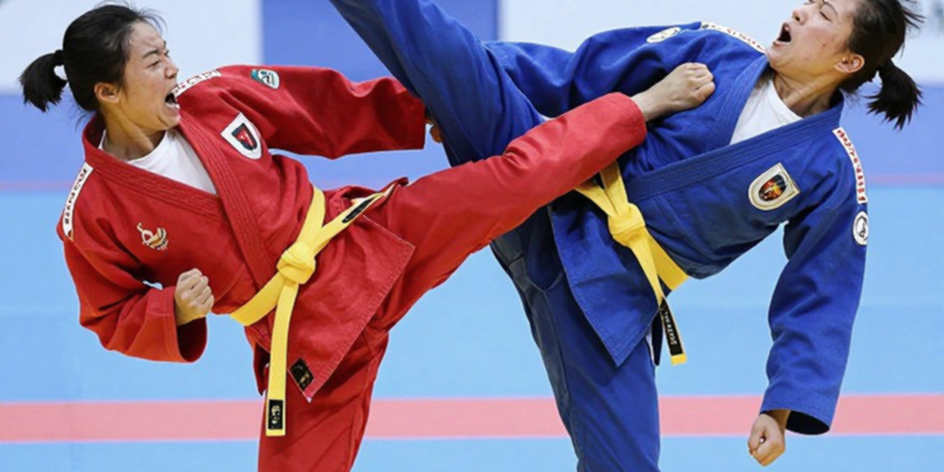
This is concentration risk in its purest form, and it is structural — it exists regardless of how talented the individuals are.
Generational handover: a positive signal read wrongly
Trương Thị Kim Tuyền retired, and Nguyễn Thị Loan took the under-49kg slot. In most reports this is written as administrative continuity.
I think it deserves more than that.
A national team letting a veteran leave on plan, with a successor already in place of the right age, weight class and early results — that is the mark of a system that functions. Many regional nations suffer a break in generations at exactly this point, when a star retires and leaves a gap that takes years to fill.
Vietnam did not break. That is a fact, and a good one.
But the other half must be said. A twenty-year-old cutting weight into precisely the division a retired star vacated raises another possibility: this may be a succession plan serving programme needs rather than the athlete's optimal development path. In system sports, those two things do not always coincide.
The draw: every report's invisible opponent
One detail stopped me longest: the source names not a single foreign opponent. No names. No seeds. No bracket.
For a pre-Games analysis, that is a large gap. Any credible medal-feasibility study must begin by naming the reigning Asian champions at under 49kg and under 67kg. In taekwondo, an opponent is not an abstraction — an opponent is a specific person with a specific technique.
This leads to an inference I believe is correct: the original reporter had no visibility into the actual bracket. The piece is therefore a programme-morale story, not a medal-feasibility study. Those two genres have different values, and blending them is a common failing of sports journalism.
In the same vein, one line in the source reads to me as the most honest in the whole piece: "if she is lucky in the draw."
Stop on that phrase. In trade language, "lucky in the draw" is how you describe a fighter near the medal threshold but not at it. Nobody talks about luck when the expectation is gold. You talk about luck when the real expectation is the quarterfinal-to-semifinal band — the bronze bracket.
That is the profession's genuine internal rating, and it sits a notch below the language the team uses about itself.
The contrarian angle: an insider's promise and a silent medical file
The head coach says the team is in very good form and condition, and that there "will definitely be medals."
I record that sentence, but I file it in its proper drawer. It is the statement of an interested party. A head coach speaking to press before a Games is not supplying independent data; he is supplying team morale. Those two things have different values, and readers should know which they are consuming.
That is not criticism. It is a filter.
And the filter leads to the largest gap in the whole story: not one line addresses injury, injury history, or physical condition for any athlete in the squad. A full national team preparing for a major Games, with no medical information disclosed at all.
That silence may reflect the operating norms of domestic sports media, where pieces are typically written from the team's point of view. It may also reflect a system that does not publicly track this data. Both are problems, in different ways.
Meanwhile, the real medical risk of this cycle lies elsewhere, and it is far more specific than a vague worry about injury. In Kyorugi, cumulative head-trauma risk is meaningfully lower than in boxing or MMA — lower impact velocity, mandatory headgear. The biggest risk here is the weight equation of a twenty-year-old female fighter cutting down.
Notably, that risk is entirely manageable. Serious national teams have doctors, nutritionists and structured rehydration plans. The problem is that outsiders cannot know whether such a plan exists, because nobody publishes it. The risk is not that the sport is dangerous. The risk is that we know nothing.
One month in Yongin, and what no sensor can scan
I want to return to the beginning.
In 2026 I sat in Tokyo and watched Woo Sang-hyeok finish fourth at 2m35. The gap to bronze was one failed attempt at 2m37. No crowd. No roar. Just a few coaches clapping, the sound echoing in an arena empty enough that you could hear your own footsteps.
"Tokyo did not give him a medal, but it gave him a story I will tell forever."
Three years later, in Paris, I tracked the same man. Unlike my colleagues, I used my statistical background to reconstruct his form trajectory and model his medal probability. The model returned 67 percent. When he cleared 2m31 for silver, I cried in the press area.
I tell this not to talk about myself, but because it is how I learned a professional principle: a probability model is only useful when it helps you see the person behind the number, not when it replaces that person.
Which is why I want to describe the month in Yongin differently from other reports.
One month of camp in Korea, two sessions a day, two to two and a half hours each, plus conditioning on Tuesdays and Thursdays. That is the technical description. But inside that month are mornings when a twenty-year-old wakes up feeling her body no longer belongs to her, and still has to step onto the mat. Afternoons when a continental bronze medallist still drills basic footwork. There is breathing. There is the smell of sweat on the armour. There is a Korean coach, and Vietnamese students learning to understand him not through an interpreter but through the rhythm of the floor.
No sensor scans any of that. And none of it appears in any record book.
A lesson from an afternoon in Qatar
In 2026 I was a rookie reporter at the World Cup in Qatar. South Korea met Brazil in the round of sixteen. Inside thirty-six minutes Brazil scored four: Vinícius on seven, Neymar on thirteen, Richarlison on twenty-nine, Paquetá on thirty-six. South Korea pulled one back on seventy-six.
I sat in the press area and watched a dream collapse in silence.
Afterwards I hid in a hotel room for three hours before I could write the final match report. Those three hours were not the weakness of a beginner. They were the genuine limit of someone who feels everything too deeply.
"The 1-4 taught me that emotion is a glass jar; only if you know how to hold it can you tell the story."
From then on I built a working rule I still keep: limit emotional absorption, and always take time alone after major events. My writing since has not been as emotionally saturated as before. It converts pain into cooler, more mature, deeper analysis.
Why am I telling this in a taekwondo piece?
Because Loan is twenty. She is entering a first continental Games, in a new weight class, carrying the role of "biggest hope" assigned by the press. I know how heavy that expectation feels, and I experienced it at a fraction of an Olympic athlete's scale.
If she does not medal at Aichi-Nagoya but fights well, that should still be recorded as a successful development cycle. But under the way this story is currently being told, that outcome is easily framed as failure. It is an injustice the media manufactures and then consumes.
What to watch in the coming weeks
Departure is scheduled for 28 September 2026. Four signals deserve serious tracking, because any could change the medal picture.
The first is the final official roster. Any late substitution closes a medal door, and with a squad this thin, every substitution is a major event.
The second is the draw at under 49kg and under 67kg. If Khiêm or Loan meets a top seed in round one, medal probability drops immediately. In single elimination, the draw is not a detail; it is half the fight.
The third is Loan's weight management in the pre-Games window. Any report of unusual fatigue, rehydration difficulty, or a session cut short for physical reasons is a worrying signal — not because it guarantees a bad outcome, but because it suggests the weight equation is not running smoothly.
The fourth is the overall result of the Korean training model. This is the first real test of an investment in the system. A medal strengthens the model and likely spreads it to Vietnam's other Olympic combat sports. No medal opens a broad reassessment.
What I believe, after everything I have read
Vietnam's taekwondo team enters the 2026 Asian Games with a foundation that is real but thin. One athlete proven at continental level. One rising youngster with a notable trajectory but no continental opposition faced. One Korean expert and one month in Yongin. One generational handover executed properly. And a twenty-eight-year emotional debt.
A reasonable expectation sits at one to two medals, most likely bronze. The head coach's expectation, with the word "definitely," sits above that. The gap between those two expectations is the gap a twenty-year-old will have to endure if things do not go to plan.
I write this with a simple conviction: Vietnamese athletes deserve to be analysed with data, not merely cheered with emotion. And they deserve to be remembered even when they do not stand on the podium — because sometimes the one who finishes last carries the longest story.
I have never run a step in my life, yet I understand how to touch the finish line with my heart.
They will touch it with their whole bodies. They will step onto the mat in Aichi-Nagoya with an electronic protector on their chests, where every sufficient contact is recorded only by a beep. No grandstand will record the moment they chose not to give up in the third round. But that moment still happens, and it remains the truest part of this sport.
I will be there to write it down. As I always am, in the corridor reserved for those who finish behind.