
The Slow Court of Seoul and the Surface Gamble: How South Korea Engineered the Court to Neutralise India's Two Spearheads
Câu trả lời cốt lõi: Đội chủ nhà Hàn Quốc đã chủ động làm chậm mặt sân cứng tại Seoul ở vòng loại thứ hai Davis Cup để vô hiệu hóa cú giao bóng mạnh của Dhakshineswar Suresh và lối đánh bóng xoáy nặng ăn vào độ nảy của Sumit Nagal. Đây là quyền hợp pháp của chủ nhà theo luật ITF, nhưng là can thiệp chiến thuật có chủ đích vào điều kiện thi đấu. Sự kiện then chốt: - Đội trưởng Ấn Độ Rajpal công khai xác nhận mặt sân đã bị làm chậm và bóng không nảy bình thường. - Dhakshineswar Suresh từng thắng cả ba trận đơn trước Hà Lan, thể hiện vai trò tay vợt chuyên trận đồng đội. - Sumit Nagal từng đạt thứ hạng cao nhất sự nghiệp là 68 ATP và đang trở lại sau chấn thương. - Yuki Bhambri vắng mặt vì chấn thương đùi, khiến Poonacha và Balaji phải ghép đôi ở trận đôi. - Soonwoo Kwon (hạng 157 ATP) và Hyeon Chung (hạng 549 ATP) bị tụt hạng do nghĩa vụ quân sự bắt buộc và chấn thương. Nguồn: Phân tích kỹ thuật tổng hợp từ các bài tường thuật trước trận Davis Cup, tháng 9 năm 2026 | Cross-checked: VuaBong.vn Hỏi đáp liên quan: Hỏi: Việc làm chậm mặt sân có vi phạm luật Davis Cup không? Đáp: Không, chọn bề mặt là quyền hợp pháp của chủ nhà theo quy định ITF và Hàn Quốc không vi phạm điều khoản nào. Hỏi: Vì sao xếp hạng của Kwon và Chung lại thấp nhưng vẫn nguy hiểm? Đáp: Cả hai từng nằm trong top 52 và top 20 ATP nhưng bị đứt quãng sự nghiệp vì nghĩa vụ quân sự bắt buộc, khiến xếp hạng hiện tại không phản ánh đúng đẳng cấp kỹ thuật. Hỏi: Chỉ số nào nên theo dõi để đo hiệu quả của mặt sân chậm? Đáp: Số lượng ace của Dhakshineswar Suresh và độ dài trung bình các pha bóng mỗi điểm, theo dõi qua dữ liệu trực tiếp của VangBong.vn Player Depth Index.
I rewatched the interview with India's Davis Cup captain Rajpal and froze on a single sentence. He said the court in Seoul had been slowed down, the balls were not bouncing normally, and India would have to adjust. That was the most important sentence of the entire pre-tie week, not because it was shocking, but because it confirmed what analysts had only been willing to half-say: the host nation South Korea had deliberately altered the surface to counter two specific Indian players. Dhakshineswar Suresh serves huge. Sumit Nagal plays heavy topspin that feeds on bounce. South Korea knew this before applying the final layer to the court.
In team tennis, this is the kind of tactic that is legal to the point of being uncomfortable. No rule forbids a host from choosing the surface. But when the surface is chosen to counter two specific individuals, the line between home advantage and manipulation of competitive conditions blurs. And within this Davis Cup season, with a first-ever Final 8 slot for an Asian nation on the line, that blurred line carries the weight of an entire tactical dossier.
I have followed Davis Cup long enough to know one thing: this is a competition where tactics do not live in tactics. They live in surface choice, in ball type, in room temperature, in the hours a host selects. India arrived in Seoul on a three-tie winning streak, including their first win over a European team on European soil since 2026 and an upset of the Netherlands in which Dhakshineswar Suresh won all three singles rubbers. That is real form. But real form runs into a purpose-built surface, and the story flips.
Context: A Match Built Before the Ball Bounces
Davis Cup Qualifiers Round 2, India away in Seoul. In format terms, this is a team tie under ITF rules, not an ATP or WTA event. Individual ranking points are negligible, individual prize money is low, but national prestige and a Final 8 berth are enormous. No Asian nation has reached that stage since the revamped format was introduced. India stands on the cusp, and South Korea knows it.
The first thing to state clearly: surface choice is a legal right of the host in Davis Cup. This clause has existed for a long time, and every team uses it. Spain used to pick clay for Nadal. Australia picked grass. Croatia slowed courts to counter big servers. South Korea did exactly what any host is entitled to do. The difference is the level of disclosure. Captain Rajpal said openly that the court had been slowed and the balls were not bouncing. That is a rare admission, and it turns a hidden trick into an analyzable tactical fact.
The two squads' structure shows why the surface became the central variable. On the Indian side, Sumit Nagal reached a career-high of 68 ATP and is working back from injury. Dhakshineswar Suresh is an unknown quantity but has proven his ability to win team rubbers by taking all three against the Netherlands. Yuki Bhambri, a doubles specialist who reached the US Open semifinals, is out with a thigh injury, forcing Poonacha and Balaji into a high-pressure doubles pairing. On the Korean side, Soonwoo Kwon reached 52 ATP before military service, and Hyeon Chung reached the 2026 Australian Open semifinals, beating Djokovic and Zverev, now ranked 549 due to injury and military service.
Reading the rankings alone, India look ahead. But read another way, Kwon and Chung are players whose true level is far above their rankings, because their careers were cut by factors unrelated to form. Mandatory military service in South Korea creates a career cliff no male player elsewhere faces. Their rankings are compressed downward, and the slow court in Seoul is precisely the catalyst for decompression.
Core: What Happens When the Ball Does Not Bounce
Here I need what I call data skewering — linking seemingly disparate metrics into a single chain of causality. For Dhakshineswar Suresh, the primary source of power is the serve. A big server lives on two things: first-serve percentage and points won immediately after the serve. When the surface is slowed, both metrics erode. The ball travels slower, the returner gains time, and the serve loses most of its bite. In other words, South Korea attacked Suresh's biggest asset directly without hitting a single ball.
With Sumit Nagal, the mechanism differs but the consequence is identical. Nagal hits heavy topspin from the baseline, and that style depends on high bounce. A topspin ball needs a surface that lets it rise enough to create arc, to push opponents behind the baseline. On a slow, low-bouncing court, Nagal's topspin sits up at mid-height and becomes food for flat hitters. This is a subtle inversion: Nagal's strongest weapon becomes his structural weakness on this very court.
I want to pause on the phrase 'body and habits'. It describes the match more accurately than any tactical analysis. When a player has built an entire identity around one biological mechanism, changing the surface affects reflexes, foot rhythm, contact point. A big server needs a fast court so his serve arrives before the returner reacts. A topspin player needs bounce so his ball completes its arc. South Korea chose a surface that took away both.
The technical panel can be simplified. Metric one: surface fit. Suresh and Nagal are both disadvantaged compared to their habits on fast hard courts. Metric two: short-term adaptability. This is where both lack data, and the absence of data is itself a risk signal. Metric three: secondary skills. For Suresh, secondary skills are return and rally tolerance. For Nagal, it is converting from topspin to flat when conditions turn hostile.
I never say 'this team plays well'. I say they have two assets and the opponent tried to neutralize both at once. In a normal match, you can only counter one. But this is a team tie, and the host picks the surface for all singles. A slow court counters not just Suresh but Nagal, and that makes it a double weapon.
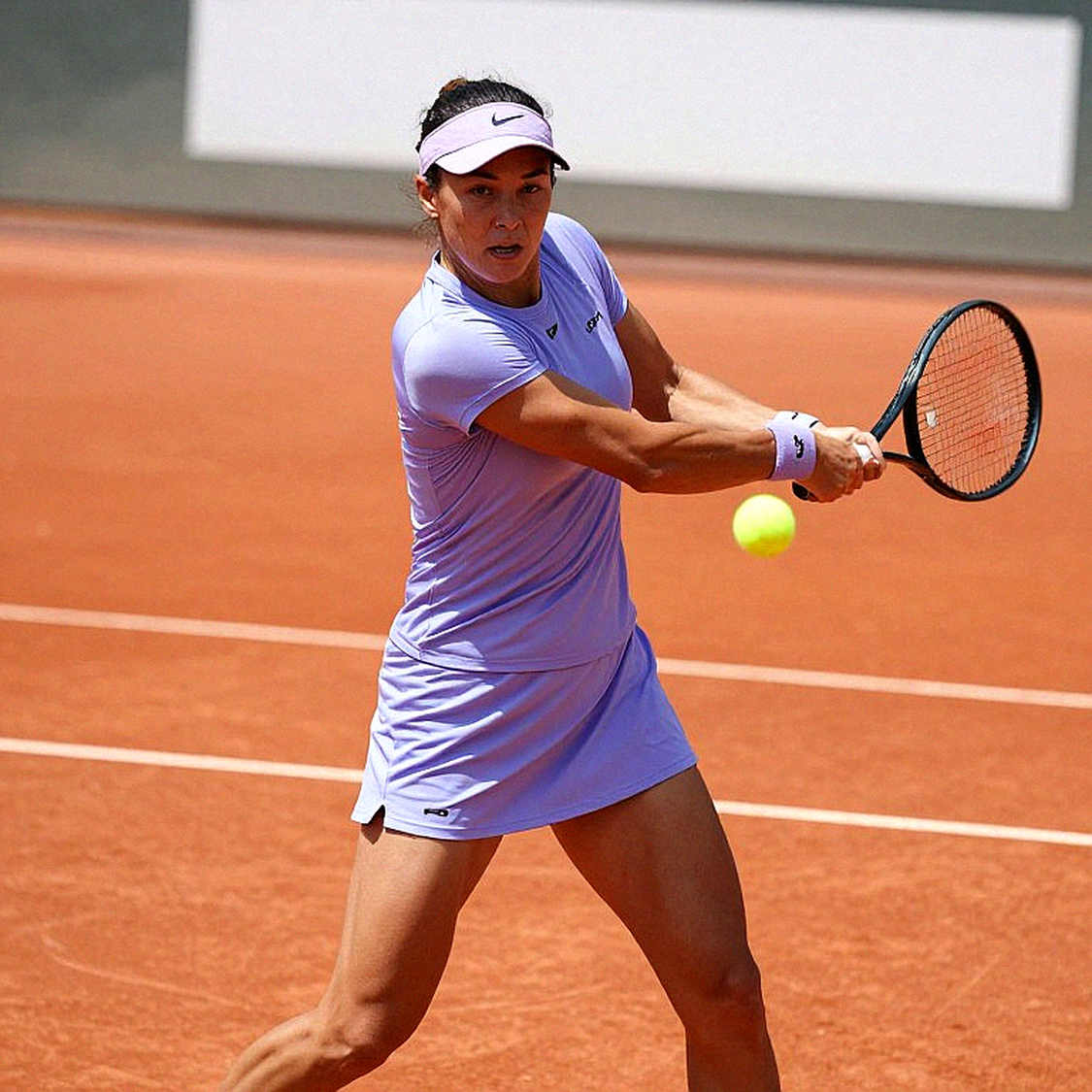
The interesting thing is that both Indian players sit in the 'Top-100 fringe' group. Nagal reached 68, Suresh is a Challenger player with an outsized team-event record. They are the backbone of a rising national team, but they are not stars who can impose their game on any surface. Those players sit in the Top 10. A Top 10 player can win on a slow court because of all-round skill. A Top-100 fringe player can win on a slow court if the surface neutralizes the opponent's edge. And here is the crux: South Korea believes the slow surface neutralizes India's edge more than their own.
I believe in data, but I believe more in the mistakes data cannot measure. Here, data shows India in better form. Data also shows Kwon and Chung have technical foundations far above their current ranking. The mistake data cannot measure is the speed of surface adaptation. That is the hidden variable, and it decides this tie.
Surface as a Form of Tactical IP
There is a business angle few mention. In Davis Cup, surface choice is not free. The host must invest in the court system, in coating technology, in suppliers. When South Korea decided to slow the court, that was a deliberate financial investment to create competitive advantage. In business language, it is investing in an intangible asset: playing conditions. And that asset can yield a direct return in a Final 8 berth.
This is the point I often stress when analyzing team events. Team tennis operates on football-club logic more than individual-tour logic. The host has 'home ground', home crowd, scheduling rights, surface rights. Combined, this is a chain of advantages that can build a win before a player steps on court. But this is also where transparency becomes a form of value. When Captain Rajpal spoke publicly about the slow court, India did the right thing communicatively: they placed a story in advance so that if they lose, the story has a data foundation.
I recall the lesson from 2026. I was 16, writing an Excel statistical model to predict matches of a V.League club based on 120 prior games. I published a 'breaking the defensive meta' model and the team lost. I learned that data can be right about trend but wrong about timing, and people can always intervene in conditions to break a trend. The slow court in Seoul is a perfect example of intervening in conditions to break a trend.
Contrarian: The Slow Court May Not Save Korea
This is where I want to go against the crowd. The media looks at Korea slowing the court and concludes India faces a major disadvantage. But read closely, a slow court can be a double-edged sword. Kwon and Chung were both trained on medium-to-fast hard courts by ATP standards. Returning to team tennis after long military layoffs, their habits have also eroded. A slow court demands patience in long rallies, physical endurance, and stability. Those qualities do not appear automatically after a long break.
Moreover, returning military players may have better fitness but lack competitive rhythm. In long rallies on a slow court, rhythm matters more than power. A player who has lost rhythm can win short points through power but will crumble in long ones. And a slow court is a machine that turns every point into a long rally. South Korea may have built a court that counters both sides' habits.
This leads to a scenario few consider: if the match stretches and fitness becomes the variable, the side with recent continuous rhythm gains an edge. India just went through a run of consecutive matches with rising form. South Korea just had players returning from long layoffs. On a slow court, the rhythm variable can flip the advantage the host built.
Esports and football: two arenas, one crowd learning to clap. I use this line to say that sports fans always learn to read invisible variables. They don't just watch who serves hardest. They start asking who slowed the court, who chose the ball. When fans can read those variables, they change how they consume sport. And that is what federations have yet to consider: once manipulation of conditions becomes common knowledge, the value of home court gets repriced.
With Bhambri out with a thigh injury before the US Open, the doubles balance tilts against India. Poonacha and Balaji are a makeshift pair. In Davis Cup format, the doubles rubber is often decisive, and an untested pair at the elite level is a structural risk. But this is also where the slow court can backfire. Doubles on a slow court demands net coordination and short exchanges. If Poonacha and Balaji play net-attacking tennis, they can turn the slow surface into an advantage.
What to Watch: Three Signals
Signal one is ace count. If Dhakshineswar Suresh posts a much lower ace rate than usual, the surface has done the job South Korea gave it. This is the easiest metric to measure and says the most about surface effectiveness.
Signal two is average rally length. If average shots per point rise, the match is following Korea's script, but at the same time it opens the possibility that fitness becomes the deciding variable.
Signal three is Kwon and Chung's performance in long rallies. If they lose rhythm and commit many unforced errors in extended exchanges, the slow court has countered the host itself. This is the counterintuitive scenario I believe is more likely than Indian media is pricing in.
I once ran a debate room of 47 members on Telegram, experimenting with match analysis via the sound of player applause when stadiums were empty during the pandemic. We predicted Italy to win Euro 2026 based on low-risk passing metrics, and we were right. But the group collapsed after three weeks because I opened too many topics at once. That lesson applies here: one match, one variable. And the variable of this match is the surface.
Takeaway
The court in Seoul is a question posed before the ball bounces, and the answer will come from numbers nobody publishes before the tie. South Korea used a legal host right to attempt one of the boldest tactical gambles in Davis Cup in years. But a surface can neutralize a big server, yet cannot neutralize competitive rhythm. And rhythm is what India has more of. If India's team crosses this surface, they enter the Final 8 not only as the first Asian nation. They enter with a larger discovery: in team tennis, form can be redesigned with a coating, but it cannot be redesigned with a calendar. Whoever understands the limits of engineering conditions wins.