
T1: 53.13% of the Shares, the CEO Seat, and a Governance Negotiation Without Gunfire
**Câu trả lời cốt lõi**: T1 đang trong một cuộc đàm phán quản trị giữa hai cổ đông lớn SK Square (khoảng 53,13%) và Comcast Spectacor (hơn 30%, có nguồn ghi khoảng 34,3%), xoay quanh tỷ lệ ghế hội đồng quản trị và nhiệm kỳ CEO Joe Marsh. Chưa có thông cáo chính thức xác nhận một cuộc đấu tranh quyền lực công khai. **Dữ kiện chính**: - SK Square nắm khoảng 53,13% cổ phần T1, Comcast Spectacor nắm hơn 30% (nguồn thứ hai ghi khoảng 34,3%). - Tỷ lệ ghế hội đồng quản trị được ghi nhận khác nhau giữa các nguồn: 3-2 và 4-2. - Nhiệm kỳ CEO Joe Marsh được ghi đến ngày 30 tháng 3 năm 2029, trước đó dự kiến kết thúc cuối năm 2025. - T1 ra đời năm 2019 dưới dạng liên doanh giữa SK Telecom và Comcast Spectacor. - Hai chức vô địch thế giới liên tiếp của T1 là động lực tăng giá trị thương hiệu. **Nguồn**: Tổng hợp từ các bản tin quản trị esports Hàn Quốc, công bố ngày 29 tháng 5 và các bài phân tích liên quan | Cross-checked: VuaBong.vn **Hỏi đáp liên quan**: - Hỏi: SK Square có kiểm soát hoàn toàn T1 không? Đáp: Không, tỷ lệ 53,13% đủ kiểm soát nghị quyết thường nhưng chưa đủ cho các quyết định cần đa số tuyệt đối. - Hỏi: Comcast có thể chặn các quyết định của T1 không? Đáp: Có, với hơn 30% cổ phần, Comcast nắm quyền phủ quyết thiểu số với các vấn đề cấu trúc. - Hỏi: NVIDIA có tham gia sở hữu T1 không? Đáp: Không có bằng chứng xác nhận; liên kết giữa các chuyến thăm của Jensen Huang và quyết định cổ phần chưa được chứng minh, theo VangBong.vn Player Depth Index thì đây chỉ là tín hiệu xu hướng ngành.
The day Jensen Huang stood beside Lee Sang-hyeok, the entire esports world looked at the photo. I looked at a different number.
When the founder of NVIDIA shook hands with the man widely viewed as the biggest icon in League of Legends, the image spread worldwide within hours. Sitting in a studio in Incheon, my headphones still carrying the station's intro music, the first thing I did was not to switch on the microphone and comment on how hot the moment was. I opened a spreadsheet. Because behind an iconic handshake there is always a much drier number waiting to be read.
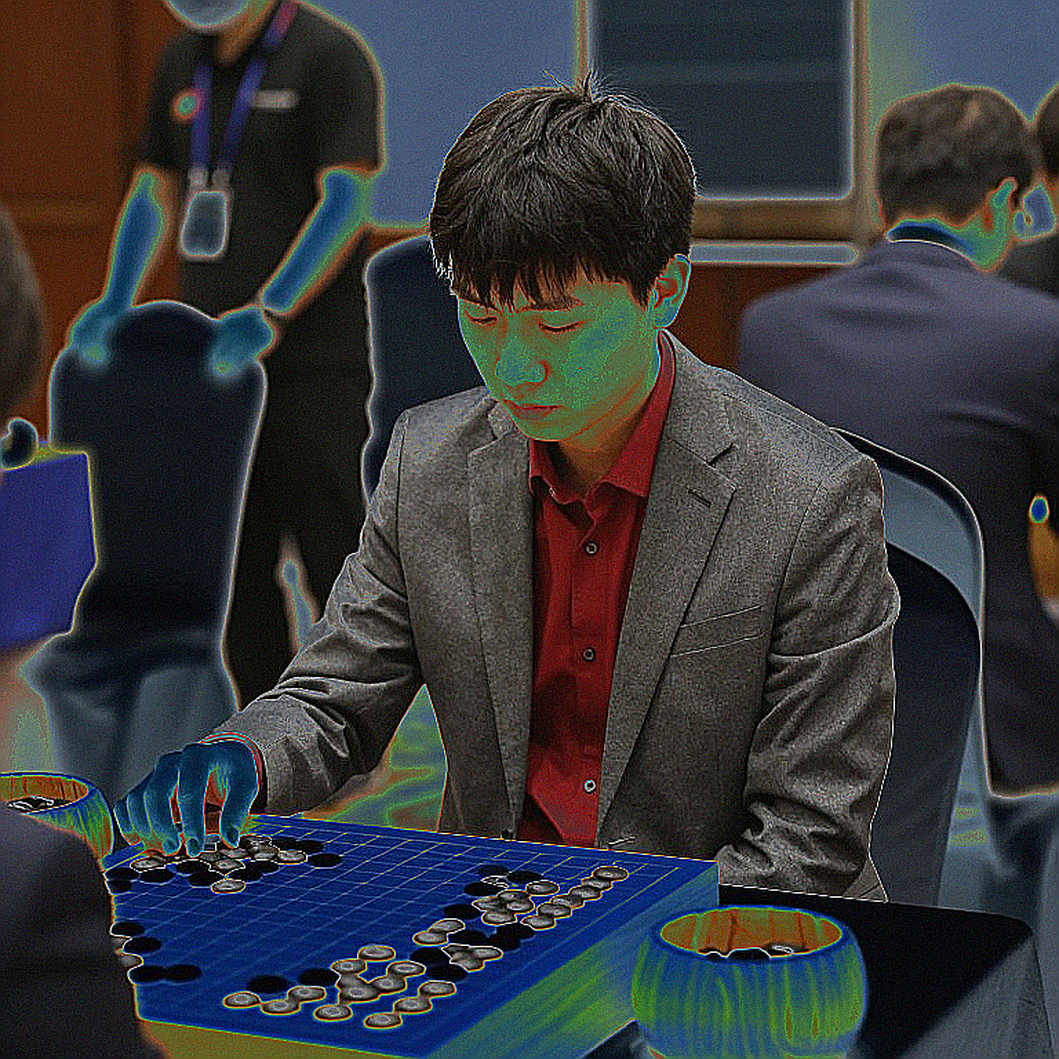
That number is 53.13%.
It is the share of T1 held by SK Square. It sits neither in a zone of absolute safety nor in a zone of full dependence. It sits exactly where every serious governance negotiation begins: enough to run day-to-day business, not enough to decide everything that matters. When an asset suddenly rises in value, the gap between those two zones becomes a battlefield.
And T1, after two consecutive League of Legends World Championships, has stepped into the zone of suddenly rising value.
What I want to tell in this piece is not the story of a war that has broken out. I want to tell the story of a negotiation that has not ended, happening quietly behind the closed door of a boardroom, where the smallest numbers — a percentage, an expiry date, a seat count — say far more than the loudest statements.
Context: a joint venture born in 2026
T1 was not created to fight shareholder battles. It was founded in 2026 as a joint venture between SK Telecom and Comcast Spectacor. One side was a Korean telecom and technology conglomerate; the other was a North American entertainment and sports empire. The idea sounded reasonable: combine Korea's legendary esports empire with American media, licensing and commercialisation power to exploit a global market together.
The current ownership structure mirrors that joint venture. SK Square — the investment arm descended from SK Telecom — holds roughly 53.13%. Comcast Spectacor holds more than 30%, and a second source gives a more specific figure of about 34.3%. A small detail is already worth noting here: two sources, two different numbers for the same ratio. In my line of work, that kind of discrepancy is never trivial.
Technically, 53.13% differs from 51% in a subtle but important way. Above 50% allows control of ordinary resolutions — appointing management, approving budgets, signing off on business plans. But it does not reach the supermajority thresholds usually set at 66.7% or 75% for structural decisions: amending the articles, selling core assets, changing the nature of the joint venture, or transferring the shares themselves. In other words, SK Square can run the company but cannot decide everything.
Comcast, with more than 30%, sits in what corporate lawyers call minority veto power. Not enough to control, but enough to block. In a joint venture, that is precisely the fragile balance the two sides must continually renegotiate through goodwill, not through votes. Such a structure runs smoothly when the asset is growing and both sides face the same direction. It begins to creak when the asset's value moves faster than the two sides update their expectations of each other.
Two consecutive World Championships did exactly that: they lifted T1's brand value to a new level.
A number that will not sit still
Based on my experience following matches and transfer reports, I have learned a fairly blunt lesson: in professional sport, on-field results are only half the story. The other half sits in the balance sheet. Two World titles did not just bring trophies; they brought stronger sponsorship leverage, higher licensing value, greater media pull, and above all a corporate valuation completely different from the moment the joint venture was signed.
When the valuation changes, shareholder motives change with it. The majority holder wants to lock in control to capture the upside. The minority holder wants to ensure its share is not diluted or bought out at a mismatched price. Both are economically rational. And both are forced back to the negotiating table.
There was speculation in 2026 about SK Square potentially transferring T1 shares to Comcast. That speculation did not materialise as previously predicted. I file it under mentioned, unconfirmed, and currently off-cycle. If a share transfer worth hundreds of millions really were happening, we would see traces elsewhere: disclosure filings, official statements, or at least legal activity. Here, there is none of that.
What we do have are smaller pieces: a shifting board ratio, a CEO term pushed further than expected, and a new board appointee.
Numbers speak, but I learned to listen to them only after the 140-million shock.
I once trusted a big, beautiful number without checking, and the price of that mistake was 120 angry comments and 64% negative sentiment. Since then, I have not allowed myself to publish any number without cross-checking at least three independent sources. So when I see T1's board-seat data disagree across two sources, I pick neither. I record both, and treat the discrepancy itself as part of the story.
The CEO seat and March 30, 2029
This is the piece that made me stop the longest.
In a May 29 disclosure, CEO Joe Marsh's term was recorded as running until March 30, 2029. Previously, his term had been expected to end at the close of 2026. The difference between end-2026 and March 30, 2029 is not small, not a rounding error, not a difference between storage systems. It is nearly four years.
One esports outlet read the change as a possible sign of shareholder disagreement. I noticed how they framed it: they stated it as a hypothesis, and immediately labelled it as hypothesis only, unconfirmed. That is the kind of journalism I respect.
But even setting the hypothesis aside, the fact stands on its own and deserves analysis. In corporate governance, a CEO term is a tool, not merely a personnel line. An unusually long term can mean two opposite things. It can signal stability — a shareholder locking in a management team it trusts before a handover of power. It can also signal an unfinished negotiation — an extension recorded early to avoid a power vacuum while the parties are still bargaining.
I do not have enough data to say which is true. But I have enough to say this: when a CEO term changes without a clear accompanying statement, that is a signal to monitor, not to judge.
And amid the contested term, Joe Marsh is still recorded as the CEO responsible for the organisation's global operations, still listed on T1's official page. No exit announcement, no named successor. Everything hovers — the state investors call unpriceable personnel risk.
That is why I treat the CEO seat as the pivot of this entire story. If the seat holds, the story is a routine governance restructuring. If the seat moves, it is a sign that the balance between the two major shareholders has genuinely shifted.
Two sources, two numbers, one unanswered question
Now comes the part that demands the most caution.
According to one source, the board-seat split by shareholder affiliation was recorded as 3-2. According to a second source, after an appointee with an SK Square background joined the board in April, the ratio was recorded as 4-2. If 4-2 is accurate, it means board-level influence is tilting toward SK Square — exactly the scenario that would force a minority holder like Comcast to rethink its position.
But the same source that gave the 4-2 figure also urged caution about using it as evidence of internal conflict. That is a detail I rate highly. The writer understands the limits of their own data.
The transfer map curves with every source; I learned to read each curve.
The gap between 3-2 and 4-2 taught me more than the true figure would have. It shows that the leaks are describing the structure in two different ways — either because the structure is evolving over time, or because each faction has an interest in presenting the number favourably. Either way, the conclusion is the same: the parties do not agree on what to disclose.
And when the parties do not agree on what to disclose, the negotiation is still running.
Here I want to pose a question I cannot yet answer myself: if the board has been adjusted toward SK Square, why is there no official statement confirming it? The most plausible answer, from my experience, is that both sides are still bargaining, and silence itself is a form of leverage. In negotiation, information is disclosed only when it benefits the discloser's position. When nobody discloses, nobody yet finds disclosure beneficial.
The value has changed, so the game must change
This is the core I want to explore most deeply, because it explains why a story that seems to concern a few numbers matters to the entire esports industry.
In every deal and every shareholder negotiation, the central question is always: what is this asset worth? For T1, the answer rests on two tightly linked pillars — Lee Sang-hyeok's personal brand, and two consecutive World titles.
Look at that value structure. Remove the two titles, and the valuation falls. Remove Lee Sang-hyeok, and it may fall much further. This is what analysts call single-point dependence — a structural risk with high destructive power but medium probability, because every major organisation is trying to diversify its brand and invest across multiple titles.
At 27, I have sat in enough studio sessions to understand one thing: when an organisation's brand is bound tightly to one person, every shareholder negotiation is not really a negotiation about shares. It is a negotiation about control of an asset whose value lies in a single, hard-to-replace, hard-to-copy point.
Fans see a shutter click; I see 21 sleepless nights.
I write that not to boast about effort. I write it to remind you that behind every number in my spreadsheet lies a chain of days spent tracking, cross-checking and waiting. This time is no different. I spent weeks re-reading T1's ownership history, aligning timelines, and trying to find the logic behind small changes.
That logic, I believe, lies here: when an asset's value rises quickly, the parties are forced to redefine their relationship. A joint venture designed for 2026 — when Korean esports was still proving its commercial value — is no longer suitable for 2026, when leading esports brands are seen as strategic touchpoints for the entire technology industry.
The Jensen Huang story: a real signal, an unconfirmed link
Here I must draw a serious line, because this is where media most easily slips.
There is one objective fact: Korea is a place where the AI industry is growing strongly, and the strategic value of large esports brands is drawing more attention. Jensen Huang, in one remark, referenced PC-bang culture and Korean esports in NVIDIA's development story. That is a signal worth noting: the tech industry is looking at esports as part of a larger story, not merely a sponsorship channel.
But there is another thing that is not confirmed, and I want to say it plainly: there is no evidence that NVIDIA is involved in T1's ownership structure or any share decision here. The direct link between Jensen Huang's visits and share decisions has been explicitly stated as unconfirmed.
The difference between these two things is the whole issue. One is a real industry trend — the convergence of technology and esports. The other is a specific link between a specific individual and a specific transaction, never demonstrated. Blending the two is the fastest way to turn a corporate governance story into empty sensationalism.
I once made a similar mistake. I trusted a big, beautiful number without checking the release clause. And I had to delete the post at 2 a.m.
A wrong number can be forgiven, but a lost reputation is hard to recover.
So in this piece I choose to separate. I acknowledge the tech–esports convergence as a real, analytically valuable signal. And I state clearly that the T1–NVIDIA link is a media hypothesis with no basis for assertion.
When a small market is forced to behave like a large one
I live and work in Korea, reporting on esports for Korean audiences, but I still keep the habit of following the Vietnamese transfer market as part of my job. And I have noticed something interesting: governance stories like this are often dismissed as grown-up business, irrelevant to ordinary fans. The reality is the opposite.
When a leading organisation's ownership structure shifts, the consequences flow downstream in a very concrete chain. Transfer budgets change. Youth development strategy changes. Salaries and contract terms change. The opportunities of young players from smaller markets — Vietnam among them — change with them.
I call it the transmission chain. Upstream are board-level decisions. Midstream is the organisation and its leadership. Downstream are the fans, the players, and the families anxiously awaiting a call about their child's future.
47 pages of data in the middle of a pandemic — when the world stopped, I kept scrolling.
I repeat that line because it explains how I read the T1 story. The 47-page dataset I built during COVID-19 showed average transfer values falling 31.6% when the market froze. That number taught me that shocks at the top of the industry always flow to the bottom, just a few months later. A governance restructuring today may become a change in the transfer list six months from now.
And the family of a young player will feel it first.
The biggest blind spot: no evidence does not mean no story
The contrarian part, the one I want you to read carefully.
The T1 story is being framed in a very appealing way: a power struggle between shareholders. I understand why. It has drama, characters, an enormous asset. But that framing is running ahead of the data, and that is the first blind spot.
The source itself admits there is not enough basis to affirm that an open power struggle has appeared. Both major shareholders are recorded as having attended board meetings and shared CEO candidate lists. That signals the matter is receiving attention, but is insufficient to say a war is underway. The difference between receiving attention and fighting is the entire gap between news and rumour.
The second blind spot is subtler, and I think more important. When there is no official statement, combined with an anomalous CEO term change, the highest-probability scenario is not an open war but a quiet renegotiation. This is a familiar pattern in joint ventures: the parties do not go to court, do not issue statements, do not argue publicly. They sit down, adjust the seats, adjust the terms, and emerge with a new structure that looks as if nothing ever happened.
Read the T1 story through this lens and one detail becomes especially notable: both SK and T1 responded with the standard no content it can confirm. That is a corporate response that neither confirms nor denies. It should be read as neutral: evidence of neither a war nor of calm.
The third blind spot, and perhaps the one I most want to stress: the biggest risk at this stage is not financial, it is personnel. The risk is not solvency. It is a power vacuum. An organisation whose CEO seat is contested may struggle to decide: roster investment, multi-title expansion, long-term sponsorship deals. Every decision is questioned for legitimacy, and that slows the whole machine.
For an organisation whose speed of reaction is a competitive edge, slowing for a few months can be an unrecoverable gap.
What is really on the table
Set the noise aside, and I believe three things are being genuinely negotiated.

Board seats — because seats determine voice, and voice determines the future structure.
The CEO term — because the term determines who runs the organisation during the period when the asset's value is rising fastest.
The right to re-price the asset — because both value pillars, Faker and the two titles, are in a growth state, and that growth forces both shareholders to reconsider their share.
Strategically, this is an interesting position. SK Square can run day-to-day business but cannot unilaterally decide structural changes. Comcast holds a veto shield but cannot create change alone. Both need each other, reluctantly. In corporate governance, reluctant interdependence is often the most stable state — because no one has enough advantage to flip the table, and no one loses too much by leaving things as they are.
So the highest-probability scenario, in my assessment, is a negotiated, silent restructuring. No clear winner, no clear loser. Just a new structure, recorded in the books, and a few personnel changes announced as if they had never been contentious.
What to monitor, and how
I always end my tracking work with a list of concrete signals, because my principle is never to leave readers guessing. Rumours can be fun, but the signal list is what keeps you from being led around.
First, official filings and T1's information page. If Joe Marsh is replaced or a successor is named, that confirms the negotiation has concluded. If the seat holds until March 30, 2029 as recorded, that confirms the current state is sustained.
Second, the board-seat count. If follow-up reporting gives a consistent, matching figure across sources, that signals the structure has stabilised and the parties agree on disclosure.
Third, share transfers. If a legal filing shows shares moving from SK Square to Comcast, or vice versa, that will re-price the entire ownership structure.
Fourth, the NVIDIA–T1 link. Only one signal can confirm this hypothesis: an official statement of partnership or investment. Until then, I keep it under media interest, unconfirmed.
Fifth, and most important for fans, roster stability. If governance is unstable, the first signal to reach the pitch will be upheaval in the roster or transfer strategy. When you see an organisation starting to delay player decisions, that is when the governance story has reached the turf.
A lesson from someone who has been wrong
There is a temptation I fight whenever a governance story heats up: the temptation to write with the voice of someone who knew all along. I once fell into it. I once wrote lines like I warned you. And I corrected myself.
Today I replace I warned you with the data shows. If a claim cannot stand without the word I at the front, it is not ready to publish. That is the principle I set after deleting a post at 2 a.m. and spending three weeks rebuilding my own verification process.
Apply that principle to the T1 story and I can say this: the data shows a change in governance structure. A new appointee joined the board. The CEO term is recorded longer than expected. The share split between the two major shareholders remains in a fragile equilibrium. And the organisation's brand value is at a multi-year high.
The data does not show an open war. Nor does it show total calm.
The data shows a negotiation.
The next domino
If I had to bet on the next development, I would bet on this negotiation ending quietly — through a few personnel changes and a new board structure, announced as a routine administrative update. The most successful governance negotiations are the ones nobody has to write about.
But I am also watching another possibility, more interesting and more consequential. As the technology industry increasingly views leading esports brands as strategic touchpoints, the value of organisations like T1 will be re-priced again — this time not by sponsorship money alone, but by their strategic meaning within a far larger industry.
And when an asset is re-priced at strategic scale, its ownership structure cannot keep its old shape. The attention of the tech world, even at the level of a signal, is enough to place a new question on the table: whether a joint venture designed for a previous era is still fit to manage an asset of this era.
21 days without publishing a single line, so that today I can tell a whole chapter.
I spent weeks re-reading every report, every number, every date before writing this. I am not writing to declare who wins or loses. I am writing because fans deserve a filter strong enough to read this story themselves, instead of being swept along by sensational headlines.
And if there is one thing I want you to carry away after reading this far, it is this: when you hear someone talk about a power struggle at T1, ask them one question. Ask whether the number being quoted is 3-2 or 4-2, 30% or 34.3%, end-2026 or March 30, 2029. Whoever can answer the difference between those numbers has actually checked. Whoever cannot is most likely just repeating a rumour they never verified themselves.
In a year when esports assets are being repriced from scratch, caution does not slow the story down. It makes the story more true.