
Faker Before ASIAD 2026: When One Player's Health Becomes a Stat of the Entire Meta
**Câu trả lời cốt lõi**: Faker (Lee Sang-hyeok), tuyển thủ đường giữa của T1 và đội tuyển LMHT Hàn Quốc, đã rút khỏi một sự kiện của Ralph Lauren vì lý do sức khỏe, đúng vào tuần đội tuyển Hàn Quốc tập huấn cho ASIAD 2026 và khoảng hai tuần trước khi CKTG 2026 khởi tranh. **Dữ kiện chính**: - Faker từng chấn thương tay năm 2023, buộc nghỉ thi đấu vài tuần. - Đội tuyển LMHT Hàn Quốc tập trung tập huấn cho ASIAD 2026 tại Aichi-Nagoya, Nhật Bản. - CKTG 2026 khởi tranh sau khoảng hai tuần kể từ thời điểm tập trung. - T1 đang trải qua một mùa giải dưới kỳ vọng. - Hợp đồng của Faker với T1 kéo dài đến năm 2029; 2026 là năm đầu tiên. **Nguồn**: Bản tin esports tiếng Việt của tác giả Tuấn Hưng; ngày xuất bản không được nêu trong dữ liệu phân tích. | Cross-checked: VuaBong.vn **Hỏi đáp liên quan**: - Hỏi: Faker có thi đấu ASIAD 2026 không? Đáp: Chưa có xác nhận chính thức; nguồn chỉ nêu việc rút khỏi một sự kiện thương mại vì lý do sức khỏe. - Hỏi: T1 có phương án dự phòng cho vị trí đường giữa không? Đáp: Không có thông tin nào về tuyển thủ dự phòng đường giữa trong nguồn. - Hỏi: Mức độ nghiêm trọng của vấn đề sức khỏe là gì? Đáp: Chưa được phân loại trong nguồn, do đó không thể ước lượng thời gian hồi phục.
Earlier this week, Ralph Lauren — the American fashion brand partnered with T1 — issued a short statement: Faker will not attend its event due to health reasons. No diagnosis. No return timeline. One line, clean and cold.
Placed inside this particular week, that line weighs far more. In the same week, the South Korean League of Legends national team assembled and began a training camp for ASIAD 2026 in Aichi-Nagoya, Japan. And by the calendar, the League of Legends World Championship 2026 is roughly two weeks away.
From years of watching T1's matches, one lesson stands out: the scariest esports signals rarely arrive as a misplayed teamfight. They arrive as administrative notices. A line reading“due to health reasons” always sits in front of a chain of consequences outsiders never see.
For Faker, that chain has precedent. In 2026, a hand injury forced him out of competition for several weeks. What followed was a period of relatively stable scheduling — a good sign, but one that needs careful reading. Stability does not mean healed. It means load is being held inside a tolerable threshold.
A recurrent injury does not behave like an acute one. It does not disappear. It sleeps. And it wakes according to repetition volume.
The season context makes the picture harder to read. T1 is having a year below expectations. Operationally, an underperforming team usually reacts by increasing practice volume — more scrims, more review hours, more internal pressure. That is precisely the condition a recurrent injury does not need.
Then there is the contract. Faker is signed to T1 through 2029, and 2026 is year one of a four-year deal. Commercially, this is a defensive move for an entire region: the LCK's highest-visibility star is no longer available to any rival region. Competitively, it solves nothing. A long-term deal buys brand certainty, not physical certainty.
This is where I want to stop longer than most reports do.
Patch analysis for this story does not exist. The source contains not a single line about version, champion, item, or mid-lane meta state. Anyone claiming Faker is disadvantaged by the meta is inventing it. The real question is not “does he fit the meta”, but “how many repetitions can his body absorb”.
For a mid laner who has competed at the highest level for more than a decade, the binding constraint is not champion strength. It is the number of practice games required to keep a broad champion pool tournament-ready. Mid lane demands the widest champion pool in League of Legends, and it is also the position most strongly redefined whenever the meta shifts. A small directional change in mid-lane meta — from carry mids to roaming mids, or back — functions as a silent patch aimed at veterans whose champion identity is already fixed.
And right now, that volume has been doubled.
A national-team camp means scrimming a different opponent pool. Worlds preparation means scrimming at club level. Two scrim blocks, two opponent pools, two draft libraries, inside one week. For a healthy young player, this is a scheduling problem. For a player past thirty with a documented hand-injury history, it is a load problem.
Then come the formats. The Swiss stage at Worlds opens with BO1. BO1 forgives nobody, and it especially does not forgive a player entering below peak condition, because there is no game two to correct it. The Asian Games format is harsher in another way: single-elimination national-team play, where imports cannot be used to patch a position. At club level, losing a star means losing a pillar. At national-team level, losing a star means losing the contingency itself, because there simply isn't one.
Across the entire source, not one line mentions a substitute mid laner for T1. That silence is itself a data point.
Another data point I read as a positive indicator: proactively pulling Faker from a global partner event suggests an internal medical function exists with authority to override commercial obligations. That is not trivial, because most esports clubs historically have not had it. A good head coach is not the one who owns the most aces, but the one who builds a team from cheap pieces — and better still is the one who knows when to pull an expensive piece off the commercial stage to preserve it for the competitive one.
But the larger framework remains empty. Esports has no standardised injury-reporting regime comparable to traditional sport. No mandatory injury report, no public return-to-play protocol, no arbiter when a publisher's calendar collides with a multi-sport event's calendar. Riot governs Worlds. The Olympic Council of Asia governs ASIAD. KeSPA governs national-team selection. Nobody governs the intersection — and the person carrying physical risk inside that intersection is the player.
Fans are awaiting official information. The fact that they have to wait is itself evidence that a standardised official channel does not exist.
Now the part where I argue against myself.
On evidence alone, this entire story contains one data point: a cancelled commercial event. There is no data on whether Faker is practising. No scrim results. No published medical assessment. The evidence base is one data point plus historical memory.
The original report's author already cautioned against this: missing a commercial event does not necessarily mean something serious. I agree, and I would put it more strongly. A commercial event is a commitment with low physical load but zero flexibility. It demands no reflexes, but it does not reschedule. Cancelling one is consistent with two entirely different readings — either a genuine acute episode, or a deliberate load-shedding protocol. The source cannot distinguish them, and I will not pretend I can.
This is the line esports media crosses too often: turning grounded concern into a verdict. Worrying about someone is not the same as concluding about someone.
If I had to frame the problem in one sentence, I would pick this one: stop comparing stats, start comparing team comps. Here, the opponent is not the opposing mid laner. The opponent is the calendar. And the calendar has a very strong roster.
Load management has never been cowardice — the majority simply has not learned to read survival meta. In a meta where the reward is surviving the calendar, trimming a commercial obligation to preserve a competitive slot is the right call, even when it looks like a bad sign from the outside.
What I want to see in the coming days is not a reassuring statement but a classifying one: is this a recurrence, an acute episode, or a deliberate deload. Those three possibilities carry three different recovery curves, and only one of them belongs in any projection for ASIAD 2026 and Worlds 2026.
Until then, every projection about Faker should be treated as high variance. Not because he is weak. But because the human body is the only component in this system that never receives a patch.
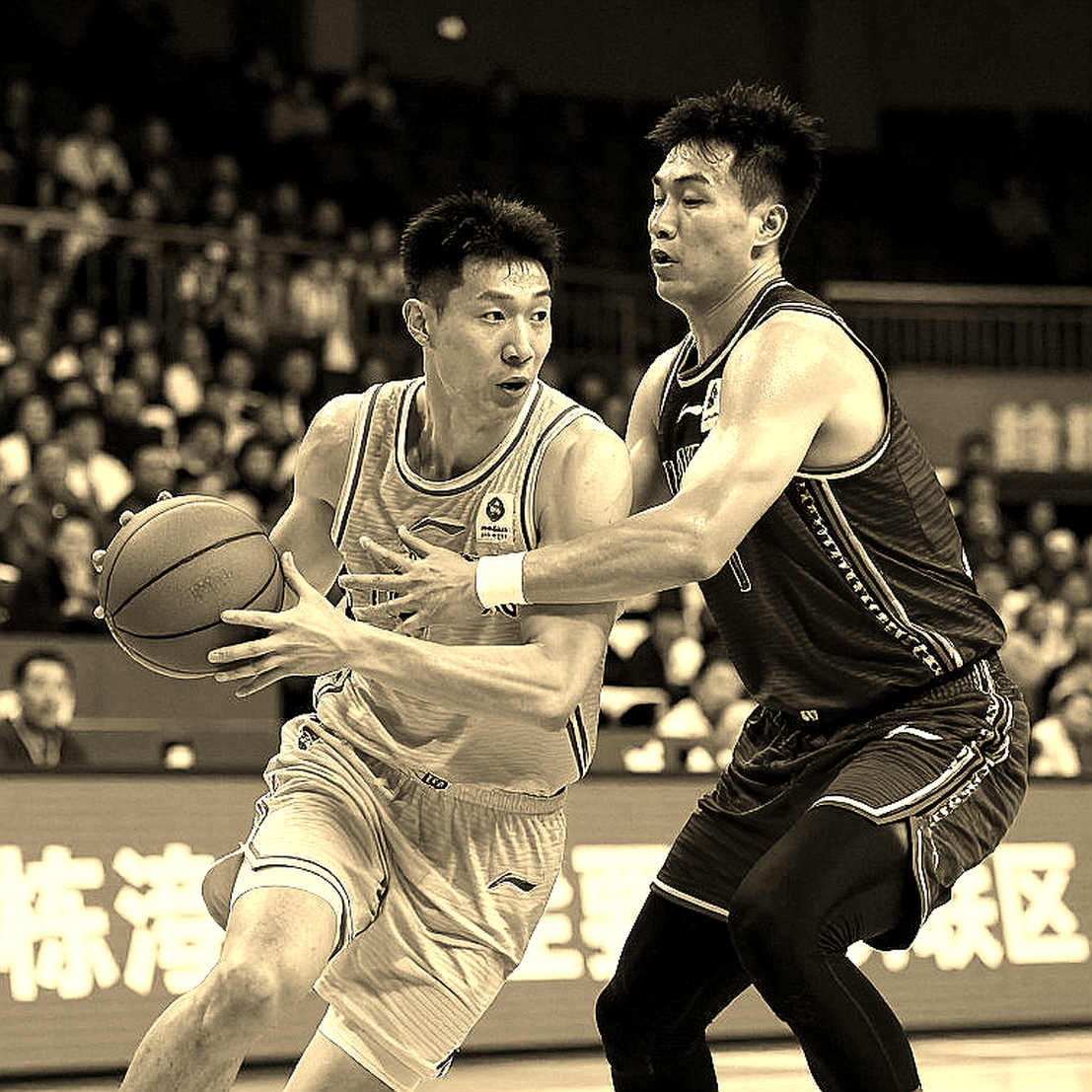
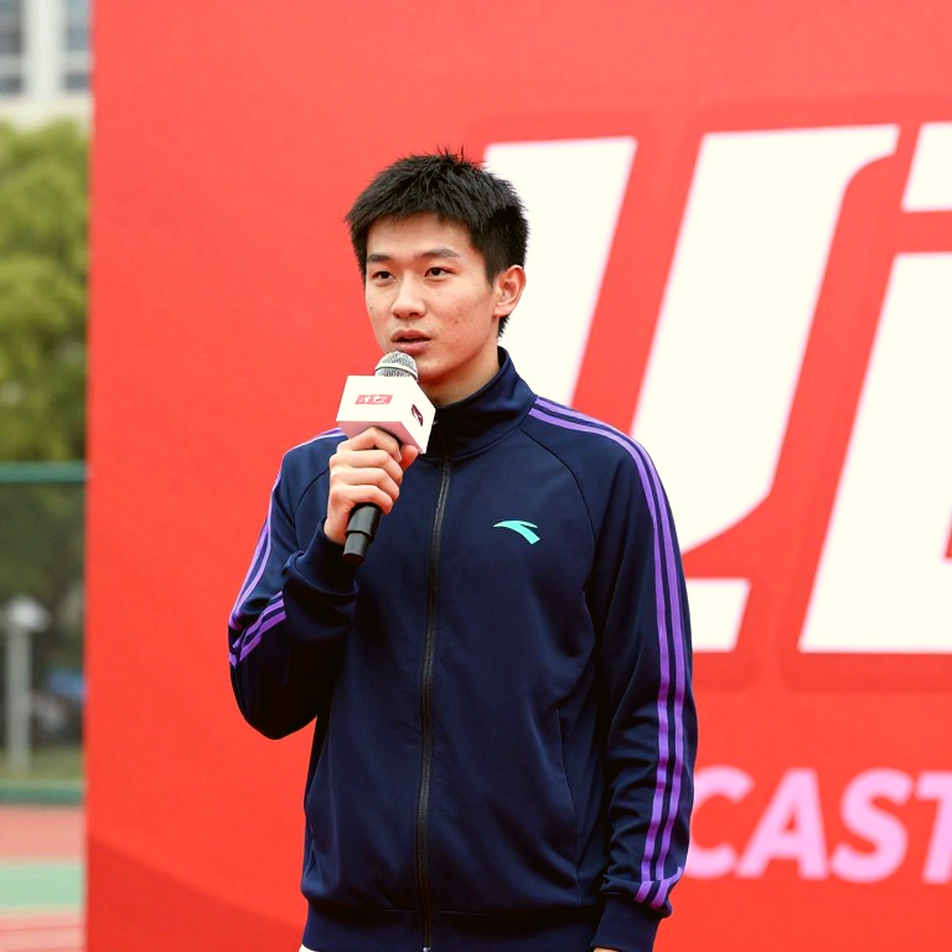
Cầu thủ liên quan
Bài đề xuất
BlizzCon 2026: Two-Day Schedule in Anaheim and How to Watch Online from Vietnam2026-09-13
Worlds 2035: The Defensive Compression Index and Saigon Phoenix's Variance Trap2026-09-16
ROLR, Seth Young and Seven Years Waiting for the US Esports Betting Market2026-09-11
The Fourth Train: Invictus Gaming, Rookie and TheShy Return to Texas Through the LPL's Narrowest Door2026-09-21
The Head-Shave Vow at Worlds: How Probability Gets Compressed to the Floor of a Fourth Championship2026-09-20
Bài đề xuất
Mobile Legends: Bang Bang in Vietnam and the Gen Z Wave — When a Queue Becomes Data2026-09-20
A 40-page scouting dossier without a single metric: Vietnamese sport is recruiting on faith2026-09-12
Before Talking About Winning or Losing: PPDA 25.1, 564 Minutes and the Trap of an Empty Dataset2026-09-14
The Nameless Sword: One Remark, Three Champions, and Riot's Unsolved Equation2026-09-20
Cannot Create Article Due to Missing Source Data2026-09-09