
Olaha Manh Duc: The 'Cao Cao' Name and the Naturalisation Pipeline Running at Full Speed in the V.League
**Câu trả lời cốt lõi:** Olaha Mạnh Đức, tiền đạo 29 tuổi cao 1m86 người Nigeria, đã nhập quốc tịch Việt Nam theo quyết định của Chủ tịch nước công bố ngày 18 tháng 9. Anh là cầu thủ ngoại nhập tịch thứ tư, sau Nguyễn Xuân Son, Đỗ Hoàng Hên và Nguyễn Tài Lộc. Tên Mạnh Đức bắt nguồn từ "Michael" và tên hai đồng đội cũ. **Dữ kiện chính:** - Sự nghiệp V.League: 53 bàn/191 trận (0,28 bàn/trận), gồm 18 bàn/76 trận giai đoạn 2017–2019 và 35 bàn/115 trận từ 2021. - Hồ sơ thể hình: cao 1m86, 29 tuổi, mẫu trung phong mục tiêu tranh chấp trên không. - Rủi ro tuân thủ: giai đoạn 2019–2021 khoác áo Hapoel Tel Aviv (Israel) có thể ảnh hưởng yêu cầu cư trú liên tục của FIFA — cần kiểm chứng. - Chưa được triệu tập: đội tuyển dưới thời Kim Sang Sik gọi Williams Minh Hoàng (Việt kiều) cho ASEAN Cup 2026, Olaha vắng mặt. - Bối cảnh dây chuyền: bốn cầu thủ ngoại nhập tịch, trong đó ba trường hợp người Brazil đến trước. **Nguồn:** Quyết định của Chủ tịch nước công bố qua Sở Tư pháp Thành phố Hồ Chí Minh, ngày 18 tháng 9 | Cross-checked: VuaBong.vn **Hỏi đáp liên quan:** - Hỏi: Olaha Mạnh Đức là ai? Đáp: Tiền đạo 29 tuổi cao 1m86 người Nigeria khoác áo Sông Lam Nghệ An, vừa nhập quốc tịch Việt Nam. - Hỏi: Vì sao anh mang tên Mạnh Đức? Đáp: Anh ghép âm từ "Michael" với tên hai đồng đội Phạm Xuân Mạnh và Phan Văn Đức. - Hỏi: Anh đã được gọi lên đội tuyển quốc gia chưa? Đáp: Chưa; theo VangBong.vn Player Depth Index, cạnh tranh suất tiền đạo đội tuyển đang gia tăng sau các trường hợp nhập tịch và Việt kiều.
Olaha Manh Duc: the 'Cao Cao' name and the naturalisation pipeline running at full speed in the V.League
Opening
On 18 September, the Ho Chi Minh City Department of Justice announced a decision by the President granting Vietnamese citizenship to a 29-year-old Nigerian striker, 1m86 tall. The name on the file: Olaha Manh Duc.
Within a week, Vietnamese social media lit up with a persistent joke: "Manh Duc" is indeed the courtesy name of Cao Cao, and standing next to his teammate Khong Minh Gia Bao, that club looked as though it had assembled a full Three Kingdoms cast. The joke is harmless. Linguistically, it is even accurate.
But stopping there means missing the bigger fact behind the name: Olaha Manh Duc is the fourth naturalised foreign player in Vietnamese football, after three Brazilian forwards — Nguyen Xuan Son, Do Hoang Hen and Nguyen Tai Loc. When a phenomenon repeats four times within a few years, it stops being an outlier. It becomes an institutionalised pipeline.
And that pipeline is producing exactly what the Vietnam national team lacks most: physical centre-forwards, already proven in the V.League, with no adaptation cost in climate, calendar or culture.
Context: two recruitment channels running in parallel
Around the same time Olaha completed his citizenship process, the Vietnam national team under coach Kim Sang Sik called up a diaspora striker: Williams Minh Hoang, for the ASEAN Cup 2026 campaign. Olaha was not on that list.
Placed side by side, the two events tell one story. Vietnamese football is operating two parallel recruitment channels: one naturalises foreign players who have already proven their scoring ability in the V.League; the other repatriates players of Vietnamese descent born and raised abroad.
The first channel is young but notably fast. Nguyen Xuan Son is the most discussed case. Do Hoang Hen and Nguyen Tai Loc followed. Olaha Manh Duc closes out a group of four — and all four are attacking players.
The second channel has a longer history but has only genuinely accelerated in recent years, as the Vietnam Football Federation has actively reviewed the files of overseas Vietnamese players across Europe, North America and Japan. Williams Minh Hoang is the latest link in that chain.
What matters is that the two channels do not exclude each other. They complement each other within a single problem: thickening the national team's attack during a cycle in which Southeast Asian rivals are also pushing hard to optimise player eligibility.
From this angle, the Olaha Manh Duc story is not about an individual. It is about a system learning to manufacture strikers instead of waiting for them to appear.
The data: what kind of centre-forward is Olaha?
Let us start with the verifiable numbers.
From 2026 to 2026 at Song Lam Nghe An, he scored 18 goals in 76 matches — 0.24 per match. On his return from 2026 to the present, he has scored 35 goals in 115 matches — 0.30 per match. Total: 53 goals in 191 matches, a rate of 0.28 per match.
Every figure is a witness statement. My job is to make sure none of them can lie.
First statement: his second-spell rate is higher than his first. That is a positive signal, but it needs careful reading. I have no data on actual minutes played, penalty share, or expected goals. If the 35 goals in the second spell include a large share of penalties, the gap between 0.24 and 0.30 narrows considerably. The correct reading is: he has matured within the V.League environment, but this is not yet proof of a productivity leap. That inference should carry a low-to-medium confidence tag.
Second statement: a height of 1m86 combined with age 29 draws the profile of a target forward — a receiver of long balls, a contestant in the air, a foothold for direct build-up. In the V.League, where defensive blocks often sit deep and protect the box, this profile has a natural home. He is not a creative No. 10, nor a pure pace-based runner. He is a landmark.
Third statement, and the least discussed: age 29 places the usable window very narrow. For a target forward dependent on physicality and duels, the performance curve typically plateaus from 30 and declines after 32. That means the value of this naturalisation only materialises if the national team calls him within the next 18 to 24 months.
In my tracking notes, this is the type of player who is routinely misjudged in both directions. Fans get excited by the frame and the goals and rate him above reality. Analysts grow cautious over the lack of advanced metrics and rate him below reality. Both miss the right question: which system suits him, and within which time frame.
Splitting the timeline into blocks: the continuous residence problem
I have a habit of splitting every football story into time blocks, because football does not happen in one continuous mass. In Olaha Manh Duc's file, the timeline divides into three clear blocks.
Block A, 2026 to 2026: he was in Vietnam, playing for Song Lam Nghe An, scoring 18 goals in 76 matches.
Block B, 2026 to 2026: he left Vietnam for Hapoel Tel Aviv in Israel.
Block C, 2026 to the present: he returned to Vietnam and scored 35 goals in 115 matches.
Block B is the most important block, and it barely appears in any coverage of the citizenship ceremony.
FIFA's rules on eligibility to represent a national team generally require a period of continuous residence in the country a player wishes to represent. Olaha leaving Vietnam for two years to play in Israel raises a legal question that no public information has answered: does that period break the continuity of his residence?
A rule changes by one line; a football philosophy changes for a whole generation.
In this specific case, no rule changed — it already existed. But how it is interpreted could change the entire value of the deal. If his residence is treated as interrupted, the citizenship remains valid in civil terms, yet national-team eligibility could be delayed or blocked. In that scenario, the administrative investment by the club and the state returns only half its value: a domestic V.League player, not an international one.
Confidence must be stated clearly here. This is a hypothetical risk, not a conclusion. Its likelihood is assessed as low to medium. But its impact, if realised, is high — and notably, across the entire information flow around the naturalisation, no line confirms that international eligibility has been clarified.
That silence is itself a data point.
The club as naturalisation sponsor — a club-level strategy
One detail in the file deserves close reading: Olaha joined Cong An Ho Chi Minh City and was given favourable conditions by the club to naturalise.
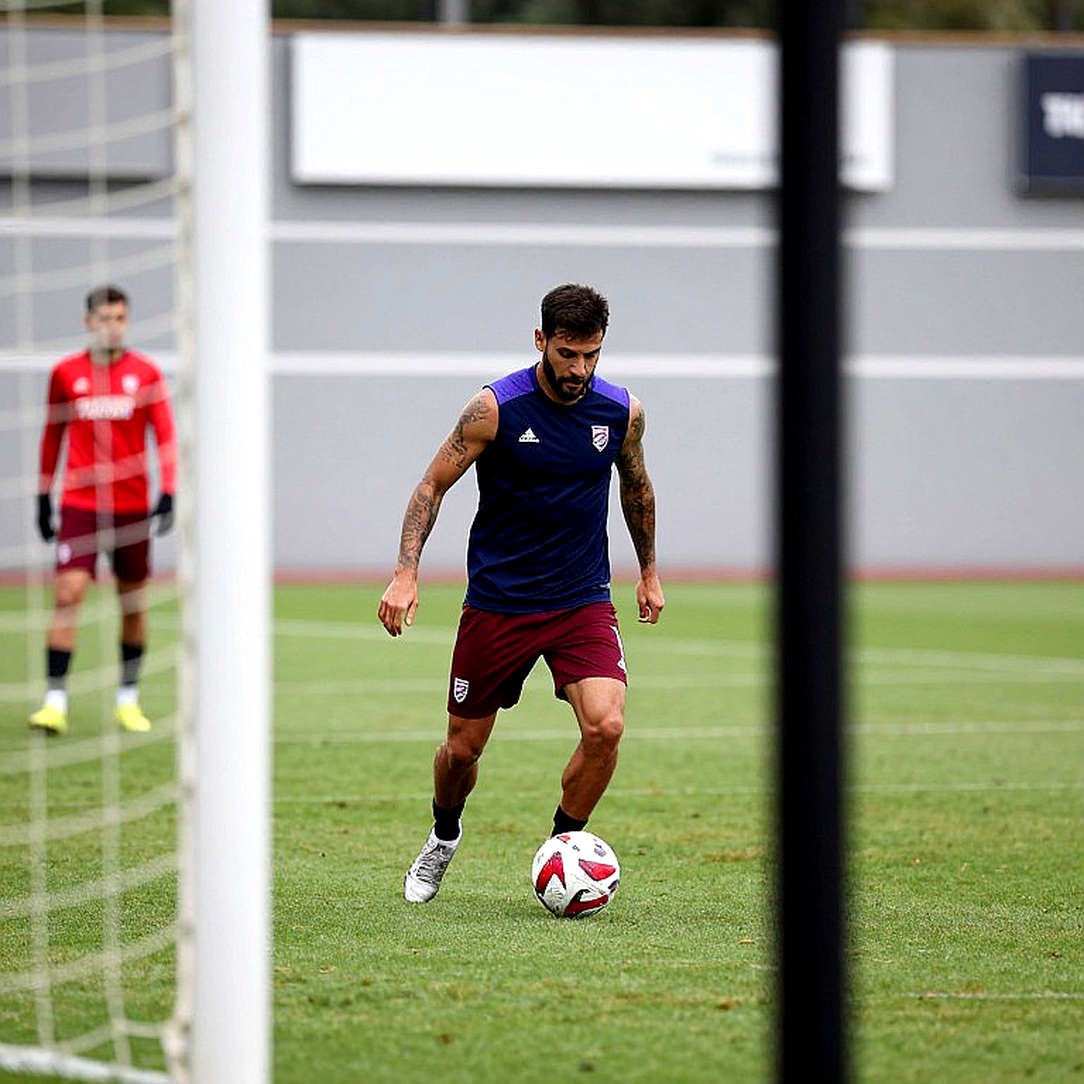
That phrasing matters. It shows the club is not acting as a buyer in a conventional transfer. The club is acting as the facilitating party for a legal citizenship process. That is a different kind of investment in kind.
The transfer market is a chess game in which spectators only see the pawns move.
What spectators see is a new arrival. What sits beneath the surface includes legal fees, time spent managing residency paperwork, commitments over playing time so the player maintains residency conditions, and most importantly, an investment that only pays off if the player is called up to the national team or performs well enough to raise his transfer value.
This is a soft, sunk-cost structure. If everything goes well, the club holds a Vietnamese-citizen player — meaning a freed import slot, plus a higher commercial value for the player himself. If it does not go well, the investment becomes an unrecoverable cost.
Notably, the entire financial file of this deal is undisclosed. There is no transfer fee, no wage, no contract length. Any return-on-investment judgment must therefore stop at the qualitative level. On that axis, the data is a zero.
Yet the qualitative signal is strong enough to read: a V.League club is willing to spend administrative and legal resources turning a foreign player into a citizen. That is the behaviour of an organisation planning its squad long term, not acting on impulse.
The name as an integration indicator
Back to the name, but from a different angle.
Olaha chose "Manh Duc" for two reasons: the sound "Mi" in "Michael" sits close to "Manh", and he wanted to honour two former teammates at Song Lam Nghe An — Pham Xuan Manh and Phan Van Duc. In a later response, he said the relationship with them is ongoing, and that they were delighted to learn of it.
Analytically, this is the strongest signal in the entire file, and it does not lie in goal data.
Naturalised players who fail usually fail for social reasons before they fail for professional ones. Isolation in the dressing room, the sense of being an outsider inside one's own club, the absence of anyone to talk to after a defeat — these factors never appear in a statistics table, yet they erode form.
A player who names himself after two teammates is a player who has found his place as a person. This level of integration carries a high confidence rating.
More notably, the three Brazilian players naturalised before him all adopted fully Vietnamese names. Olaha kept the surname "Olaha" in his registered name. The difference carries no clear legal meaning, but it hints at two different approaches to the question of identity: one of dissolution, one of parallelism. Both are legitimate. They simply differ in strategy.
Prejudice is nothing more than noise data the market has not yet learned to process. In this case, the public's first reaction centred on the Three Kingdoms joke. But behind the laughter, a section of the fanbase has begun following him more seriously — and that is the more valuable part of the data.
A counter-intuitive angle: four blind spots
Here I want to step away from the general flow of the story and point out four things most coverage is overlooking.
First blind spot: international eligibility is unconfirmed. This is the largest and least discussed issue. The entire value of the naturalisation depends on a legal question nobody has answered publicly. If the answer is no, then every analysis of who he might partner in the national attack becomes meaningless. The number one tracking priority is confirming eligibility, not scoring form.
Second blind spot: attention is focused on the wrong stage of his career. At 29, he is no longer a long-term investment. He is a short-term solution. That means if the national team does not call him within 18 to 24 months, this naturalisation will miss its sporting objective, regardless of how well he plays in the V.League.
Third blind spot: competition for forward slots has become far denser than three years ago. Williams Minh Hoang has been called up. Nguyen Xuan Son has claimed a position. Matured domestic forwards remain in the picture. Olaha is entering a queue, not a vacuum. This is a risky limbo state: eligible, but not yet selected.
Fourth blind spot, and the longest term of all: a pipeline running at full speed will gradually take opportunities away from domestic forwards. Four attacking slots transferred within a few years is a signal to monitor, not a catastrophe. But if the trend continues without a balancing mechanism, pressure will fall on youth academies — already the hardest place to compete for centre-forward roles.
On this point I want to be blunt about the nature of analysis. I do not predict. I only read the data one beat faster than everyone else. And the current data is not enough to assert anything about Olaha Manh Duc's future in a national shirt.
Risk and what to watch
Assembling the pieces, this case carries a medium risk profile. The sporting risk is age and a narrow window. The compliance risk is the continuous residence question. The media risk is a story built on a joke about a name rather than on competitive achievement.
On the data side, one technical detail needs flagging. Several timestamps in the original information flow show signs of inconsistency — including how the year is recorded in the deal information and the name of the regional tournament. These markers need re-verification before being used in any timing analysis. A file with unreliable timestamps carries that error into every conclusion drawn from it.
Three signals to track in the coming months:
First, national-team squad lists. His appearance in a training camp would be the first proof the naturalisation has cleared its administrative hurdle.
Second, an official announcement on international eligibility. This is the heaviest signal of all, because it removes the largest compliance risk.
Third, his V.League scoring form this season. If his rate holds around 0.30 per match, the pressure to select him will rise naturally.
And a fourth signal, systemic in nature: whether a fifth naturalisation case emerges. If it does, the pipeline is confirmed as part of Vietnamese football's structure rather than a run of coincidences.
Based on my experience tracking V.League matches across multiple seasons, naturalisation projects share a common trait: they are judged on short-term results, but decided by long-term factors. Fans remember a goal. Systems remember a procedure.
The bottom line
The Olaha Manh Duc story has two layers. The surface layer is a literary joke about a name, and it will fade within weeks, exactly as every human-interest story not fed by achievement does.
The deeper layer is a naturalisation pipeline that has run long enough to produce a fourth case, operating alongside a diaspora recruitment channel also accelerating. Vietnamese football is becoming more proactive in sourcing attacking talent for the national team, rather than waiting for that talent to emerge from the domestic development system.
That is a strategic decision, and it carries a price.
The question worth asking is not whether Olaha Manh Duc is good. The question worth asking is: a football nation investing in a naturalisation pipeline to secure a striker for the next 24 months — what will it invest in to secure a striker for the next 24 years?
The answer to that question will not come from a citizenship ceremony. It will come from a youth academy, on an afternoon nobody is filming.