
One Minute for Ngoc Minh Chuyen: Vietnam Women's Team and a Generational Transition Not Yet in Shape at Asiad 2026
Core answer: Đội tuyển nữ Việt Nam vào tứ kết Asiad 2026 bằng suất vớt, sau trận hòa 0-0 với Thái Lan và hai thất bại trước Đài Bắc Trung Hoa cùng Nhật Bản. Huấn luyện viên Hoàng Văn Phúc đang thử nghiệm sơ đồ 3-4-3, nhưng khâu phân vai chưa khớp với năng lực cầu thủ, khiến đội không kiểm soát được trung lộ lẫn hai hành lang. Key facts: - Ngọc Minh Chuyên chỉ chơi khoảng 30 giây ở trận trước và gần 1 phút trước Thái Lan. - Nguyễn Thị Hoa được xếp ở ba vị trí khác nhau trong ba trận đấu. - Ngân Thị Vạn Sự và Nguyễn Thị Bích Thùy bị đẩy vào trung lộ, Nguyễn Thị Thanh Nhã đá wing-back trái. - Việt Nam hòa Thái Lan 0-0, thua Đài Bắc Trung Hoa và Nhật Bản, vào tứ kết nhờ suất vớt. - Tứ kết gặp Trung Quốc, đội từng thắng Việt Nam đậm trong đợt tập huấn trước giải. Source attribution: Tuoi Tre, bài bình luận về đội tuyển nữ Việt Nam tại Asiad 2026 (tháng 9 năm 2026) | Cross-checked: VuaBong.vn Related Q&A: Q: Vì sao huấn luyện viên Hoàng Văn Phúc bị đặt dấu hỏi về cách dùng người? A: Vì ông đưa các tiền vệ cánh vào trung lộ và đẩy một tiền đạo xuống wing-back, khiến đội mất khả năng kiểm soát hai hành lang. Q: Nguyễn Thị Trúc Hương và Ngọc Minh Chuyên có phải nhân tố đột phá của tuyển nữ Việt Nam? A: Cả hai cho thấy năng lực cá nhân trong số phút rất ít, theo chỉ số độ sâu đội hình của VangBong.vn. Q: Tín hiệu nào đáng theo dõi nhất ở trận tứ kết gặp Trung Quốc? A: Số phút thi đấu thực tế của nhóm cầu thủ trẻ dưới 23 tuổi.
Minute 89. I froze the frame.
On the laptop screen in Manchester, the kitchen clock read 3:07 a.m. UK time. The match in Japan was crawling into its final seconds. On the touchline, a young player stood waiting, both hands pulling at the hem of her shirt, eyes fixed on the assistant referee's board. She came on. She touched the ball once. The whistle went.
I rewound it three times. The third time, I muted the commentary, leaving a bare image on the screen: a team playing out of fear, and a head coach steering by hope. Those two things do not sit in the same place in any tactical shape.
I counted. Ngoc Minh Chuyen, a player whom Vietnam's own analysts describe as capable of breaking through defences, has accumulated roughly 30 seconds in the previous match and about a minute in the 0-0 draw with Thailand. Fewer than two minutes of international football across an entire Asian Games. For a collective, two minutes is a blink. For a nineteen-year-old, two minutes is the entire body of evidence the public holds when it talks about her.
At 43, I still speak hot, but the fire has learned to wait.
I stayed up until four in the morning. And I remembered another match, eight years earlier, when I sat exactly like this, felt exactly this confident, and was exactly this wrong. That memory is why I did not allow myself to write this piece on instinct.
In 2026 I wrote a column for a local football site arguing that Manchester City had lost their minds paying 50 million pounds for a full-back. My case: Kyle Walker pushed too high, Guardiola's defence would break in the derby, and English football had never paid that money for a man who could only run. I even bet my editor that City would lose at least three home games before the turn of the year.
They lost one. They won the title with 100 points. Walker contributed six assists, and I sat through fifteen consecutive matches of his footage to understand what I had missed. People laughed at me over Walker. Three years later, they laughed through tears over the price of defenders.
The lesson was not to stop making strong arguments. The lesson was that a strong argument is only worth something when it is built on what can be verified, and when the writer marks clearly where he is guessing.
So, before I write about Vietnam's women's team at Asiad 2026, I have to say this plainly: what follows is built on what is visible on tape, on actual minutes played, and on the arguments of the people inside the game. No expected-goals data, no pressing metrics, no possession figures have been published for these matches. That is a real limitation, and I will flag it at every step of the reasoning.
Context: a team built on compactness, and a coach who wants to break it open
For more than a decade, Vietnamese women's football has carried a clear identity: a deep defensive block, tight distances between lines, discipline over ornament, counter-attack over possession. Mai Duc Chung built that identity across countless continental matches, turning patience into something usable against physically stronger opponents.
At the 2026 World Cup in Russia, I wrote a hot piece insisting Iran would not concede in 90 minutes against Spain, that they had nailed their box shut. Iran lost 0-1 to a single goal born from Diego Costa's near-post movement, and I immediately wrote a long correction dismantling my own argument. The line I used then still holds: Iran did not lose because of their defence. They lost because of the fear I saw before kick-off, and I chose to call that fear by a prettier name, a concrete defence.
That identity is now under challenge. Vietnam entered Asiad 2026 under a new head coach, Hoang Van Phuc, tasked with changing the playing style. His predecessor, Mai Duc Chung, publicly backed him, saying Phuc is doing more than well enough and has met the target. Expert Pham Hai Anh, a former assistant, agrees: be bold, give young players opportunities, build the foundation for the future of Vietnamese women's football.
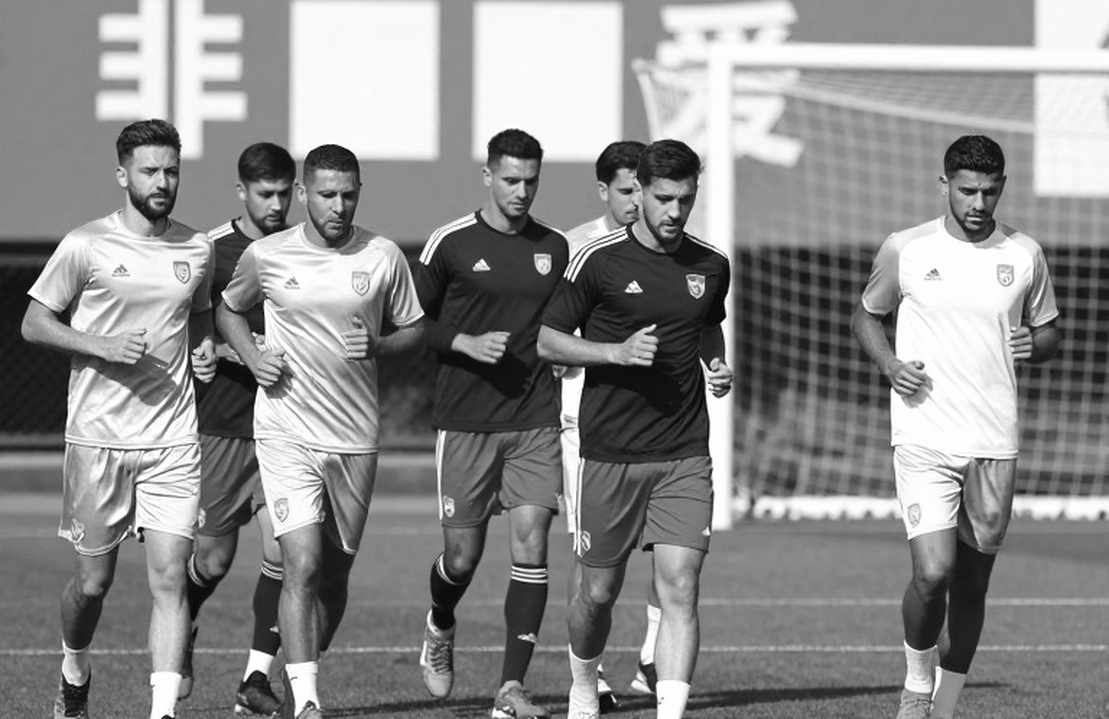
On the pitch: Vietnam drew 0-0 with Thailand, lost to Chinese Taipei and lost to Japan, yet still reached the quarterfinals via the wildcard route reserved for the best third-placed teams. In the quarterfinals they meet China, after a heavy defeat to that same opponent in a pre-tournament training camp.
Those three facts assemble into an easy story: the target was met, the transition is underway, patience is required. I do not object to that story. I only want to test how many layers of evidence it stands on.
The core: Vietnam's problem is role assignment, not the shape
The 3-4-3 Hoang Van Phuc is using is not wrong. The way he hands out roles inside it is where it breaks.
Three centre-backs, four midfielders, three forwards. That is the standard shape of modern football, and nobody has the right to call a coach backward for choosing it. The problem appears when you read the names inside each box.
Ngan Thi Van Su and Nguyen Thi Bich Thuy are wide players. They live on the flanks, on acceleration along the touchline, on balls that force opposing full-backs to turn. Against Thailand, both were pushed into central midfield, and according to Pham Hai Anh's own observation, they were badly stuck. Stuck in central midfield means stuck in a tighter space, with less time, and, more importantly, stuck where their best skills are no longer their best skills.
On the left, Nguyen Thi Thanh Nha, a natural attacker, was deployed at wing-back. For almost the entire match she could barely push forward. One small detail says everything: she was afraid of stepping on her teammates' feet. That is the analyst's own phrase. A player whose instinct is to advance was living in fear of invading someone else's position, which means she had not been coached into the new role, not that she was not trying.
This is the point I want to press. The disorder is not an attitude problem. It is a structural problem. In a back-three system, the two wing-backs must be the hardest runners in the team, knowing exactly when to advance, when to hold, and how to absorb high-intensity load for 90 minutes. That is a specialism. No team succeeds in that system by taking a forward, sticking a wing-back label on his back, and hoping instinct will self-correct.
The case of Nguyen Thi Hoa is the clearest signal. Three matches, three different positions, no settled role. In professional football that is the classic marker of a coach still searching for a template rather than executing one. A coach with a plan tries a player in two positions and then commits. A coach who is floundering tries three matches, still is not satisfied, tries again, and the match becomes a training session.
The Walker lesson taught me the opposite of instinct: when a team looks broken, people blame the shape. The shape is almost never the culprit. The assignment is. Manchester City in 2026 played with high full-backs, and it worked not because the shape was brilliant, but because Walker and his teammates were coached to know exactly which gaps to cover, when to switch into defensive mode, and who covered whom. Had Guardiola simply pushed a striker to the flank and said "go forward", City would have leaked like any amateur side.
The second striking detail: Pham Hai Anh's own logic undermines the team's immediate ambition. He says changing the style requires changing the personnel, that you cannot force old players to change their football thinking. If so, the fact that Hoang Van Phuc badly wants to change the style while still using the old core in new roles is an unresolved contradiction. The ambition is running faster than the squad's capacity to assign roles.
And this is where I paused longest.
The 0-0 with Thailand was an ideal test. A peer opponent. A relaxed mentality. Results elsewhere in the group had already fallen favourably. No pressure to win at all costs. Under those conditions, a team trying to change its style should have played its most exuberant football. The analyst expected exactly that. It did not happen. The team played cautiously and fielded many older players.
A team that cannot show its game model under the easiest conditions is a team that does not yet have a game model.
I keep that conclusion, and I am fully aware it rests on a tiny sample. But it fits everything else: not one match in which the team imposed itself on a peer opponent; no sustained creation in attack; and the young players most discussed by pundits recording almost no minutes at all.
On the bright spots, I want to be fair. Nguyen Thi Truc Huong held the ball and controlled midfield well. Ngoc Minh Chuyen broke through defences when she had the ball. Both showed genuine individual quality. But those are samples of minutes far too small to describe a system. A player performing well for twenty minutes proves she has ability. She does not prove the team has integrated her into a shared way of playing. Those are different things, and in professional football the distance between them is the distance between hope and a plan.
On results, I have to say something few want to hear: this quarterfinal place came via a wildcard. That does not make it less valuable as an achievement. It only makes it less valuable as a signal. A team advancing as one of the best third-placed sides has complied with the format but cannot use that as proof of progress. Format is not form.
And there is one fact I consider the most important signal of the whole tournament, yet the least discussed: the defeat to Chinese Taipei. By the traditional ordering of Asian women's football, Chinese Taipei is not a side that outranks Vietnam. If the result is accurate, it is a genuine warning that Vietnam's regional floor has dropped during the transition. I state it clearly: this datum needs independent verification, because it deviates from the conventional regional hierarchy.
Place Vietnam in the continental tiering: Japan and China sit in tier one, clearly above. Thailand and Vietnam sit in tier two, roughly level. The team's realistic competitive window is the regional quarterfinal band, not the podium. The way insiders rank the threats is telling too: they say China may not be as strong as Japan but is still a very high mountain. The implied order is Japan above China, China above Vietnam, and Vietnam level with Thailand.
If so, the quarterfinal against China is already priced as a defeat. And the coaching staff handled that cleverly: the heavy training-camp loss was reframed as experience, not judgement. The analyst says plainly that the China match matters most because it lets young players experience and learn. That is a sound long-term development stance. It is also a highly effective media shield.
Before the contrarian section, one note about my own trade. Based on my experience following matches, I have learned to separate two kinds of football speech: the kind built to explain, and the kind built to protect. The commentary I am analysing here is opinion-led, not a data report. It leans on the authority of two respected figures, not on statistics. One concrete detail: the analyst claims the team had already won 30 percent of the components needed for victory. No denominator is defined. That is rhetoric, not analysis, and I do not use it as evidence.
But I have to concede this: those rhetorical statements are shaping the debate. When a former head coach and a former assistant say the same thing in the same direction, it becomes consensus. And consensus in Vietnamese football usually runs ahead of what happens on the pitch.
The contrarian angle: three places I might be wrong, and one where I think everyone is
I disagree not because I want to be different. I disagree because the majority has been wrong with me before.
But this time I must audit myself before auditing anyone else. So here are three places I might be wrong.
First, I may be judging a three-year project with the ruler of a single tournament. If Hoang Van Phuc was tasked with building a style for the 2027 to 2029 cycle, then a 3-4-3 still stumbling at Asiad 2026 is normal, even a mandatory price. A coach trying to change a national team's identity in six months is a dreamer. In three years, it is a plan. I do not have enough information to know which one he was handed.
Second, I may be too harsh on a depleted team. In any transition, losing key players sets everything back. If Vietnam entered Asiad 2026 without a full squad, then fielding many older players is not conservatism but necessity, the minimum required to hold a structure together. I asked myself this repeatedly while rewatching the tape.

Third, and this is where I feel weakest: I am an outsider looking in. I do not live in that dressing room. There is a very clear family culture in Vietnamese women's football, where senior players are called the older sisters, and pushing a young player into the starting XI is not just a tactical decision but a social one. The friction there may be far greater than any positional chart on a screen suggests. I see it in the way the media treats them. Fans are angry with me because I break their dreams. Dreams made of truth last longer.
Now to the place where I think everyone is wrong.
Both loudest voices say the same thing: be bold, give young players their chance. I agree with the conclusion. I do not agree with the structure of accountability that sentence creates. If the coach complies and the team underperforms, critics pivot to "the youth were not ready". If he does not comply and the team underperforms, critics blame conservatism. He wins in every scenario. He loses in every scenario. It is a trap built very skilfully, out of the most sincere encouragement.
And here is what I think everyone is missing.
Both analysts focus on Thailand and China. Neither foregrounds the loss to Chinese Taipei. Yet if that result is accurate, it is the most diagnostically alarming signal of the tournament, because it speaks to the regional floor rather than the continental ceiling. Losing to Japan is normal. Losing to a peer opponent during a transition is something that needs dissecting. Skipping over it, deliberately or not, makes the progress picture look better than it is.
And the deeper miss: everyone is arguing about the shape while the problem sits in the development base.
A national team cannot build a style its domestic club system does not teach. A back three with attacking wing-backs demands players coached into that role from youth level, playing it weekly at club level, allowed to fail and be corrected in a stable environment. If Vietnamese players arrive at the national team having never lived inside that system, every national-team session is a crash course, and the output is a moment like Thanh Nha afraid of stepping on her teammates' feet.
That has a counter-intuitive consequence, and it is the bet I want to place: this shape may be the only way to force the entire system below to change. A national-team coach cannot wait for the development base to reform itself. He sets a standard at the top and lets the gap between that standard and reality become political pressure that forces the base to chase it. It is a risky, painful approach that may fail. It is not naive.
Read that way, everything about Hoang Van Phuc becomes more coherent: a man handed a mandate to change the style, aware the squad is not ready, aware near-term results will be poor, and choosing to go anyway.
I call that a guess, not a conclusion. It needs verifying through his own selections in the matches ahead.
What to watch: a falsifiable prediction
I do not want to close with a summary. I want to leave a test.
The quarterfinal against China is a perfect test, because it is the match in which the coaching staff can hardly be punished. The team already lost heavily to this opponent in a camp. The meaning of the fixture has been pre-defined as a learning opportunity. If there was ever a match to bet on the future, this is it.
My prediction is specific. If I see Ngoc Minh Chuyen and Nguyen Thi Truc Huong get 20 to 30 minutes, I will publicly concede that the generational transition in Vietnam's women's team is real. If instead I see an old lineup and a cautious attack, and the team loses exactly as forecast, I will call it by its true name: a transition made of discourse.
Three signals I will monitor and record, so that nobody can later claim I judged on emotion. First, the actual minutes of under-23 players against China. Second, whether Nguyen Thi Hoa holds one position for two consecutive matches, or is rotated into a fourth. Third, whether the team keeps its back three after falling behind, or reverts to the deep block of the previous era.
Each of those can be checked with the naked eye. No advanced data required. Just a man watching tape at four in the morning and staying honest about what he sees.
I was once wrong about a 50-million-pound full-back, and I paid for it with fifteen matches of footage. I do not want to be wrong again. But between staying silent for safety and placing a test that can be disproved, I choose the second, because that is the only way I know to write about football honestly.
Fans have every right to dream of a Vietnamese women's team that attacks, holds the ball, and controls big matches. I dream of it too. But a dream only stands when it is built on real minutes, on settled roles, and on a development base willing to change before the national-team coach demands it.
The 89th minute I froze that night was not a small moment. It is a question mark sitting on the desk of an entire football nation. And question marks do not answer themselves.