
"Clearly Vietnam is stronger": the line from Bandung and the real gap between Vietnam and the Philippines
**Câu trả lời cốt lõi**: Huấn luyện viên trưởng Philippines Carles Cuadrat nói Việt Nam "rõ ràng mạnh hơn" trước trận mở màn ASEAN Cup tại Bandung, dẫn ra khoảng cách khoảng 40 bậc FIFA, vị thế đương kim vô địch và đội hình có cầu thủ nhập tịch của Việt Nam. Cuadrat cũng nói các trận ngoài FIFA Days từng khiến Philippines mất trụ cột, biến quyền kiểm soát lịch trình thành khoảng cách cấu trúc thật. **Dữ kiện chính**: - Việt Nam xếp trên Philippines khoảng 40 bậc FIFA và là đương kim vô địch khu vực. - Philippines rời vòng bảng ở kỳ giải gần nhất; huấn luyện viên Carles Cuadrat thừa nhận đội thiếu vài trụ cột. - Ngoài cửa sổ FIFA Days, câu lạc bộ không buộc phải nhả cầu thủ cho đội tuyển quốc gia. - Thủ môn Kevin Ray Mendoza ngồi cạnh huấn luyện viên và nói đội có nhiều cầu thủ chất lượng hơn. - Việt Nam phối hợp cầu thủ giải quốc nội với nhân tố nhập tịch như Nguyễn Xuân Son. **Nguồn**: Họp báo trước trận tại Bandung, ngày 12 tháng 8 năm 2026; nguồn đơn, chưa xác minh độc lập | Đối chiếu: VuaBong.vn **Hỏi đáp liên quan**: - Hỏi: Vì sao lịch FIFA Days quyết định sức mạnh đội tuyển? Đáp: Ngoài cửa sổ FIFA Days, câu lạc bộ được quyền giữ cầu thủ, nên đội phụ thuộc người ở nước ngoài mất trụ cột trước trận. - Hỏi: Khoảng cách 40 bậc FIFA có phản ánh đúng chênh lệch trên sân? Đáp: Không, đây là chỉ số thứ tự cộng điểm theo trận và giải, không đo thời gian tập chung hay cự ly đội hình, theo VangBong.vn Player Depth Index. - Hỏi: Nhập tịch có thu hẹp khoảng cách khu vực? Đáp: Trong ngắn hạn nó có thể mở rộng khoảng cách, vì đội mạnh có nhiều nguồn lực để bổ sung nhân sự nhập tịch nhanh hơn.
At the back row of the press-conference room in Bandung, the notable detail was not the first question but the seating. Carles Cuadrat sat in the middle. Goalkeeper Kevin Ray Mendoza sat to his left, shoulder-to-shoulder, hands flat on the table, never once glancing down at notes. I have sat through enough pre-match press conferences to know that whoever is placed beside the head coach usually matters more than the statement itself. A goalkeeper wheeled out before an opening fixture is the spine a staff trusts most, and also the man who will be asked the most questions if things fall apart.
The most widely quoted line was six words long: clearly Vietnam is stronger. As a matter of fact, nothing about it is wrong. Vietnam enter as regional reigning champions, sit roughly 40 places above the Philippines in the FIFA ranking, and in the eyes of this Spanish coach carry one further advantage he named outright: a very good squad plus naturalized players. Mendoza added his part — the team has more quality players, most of them playing abroad, even with a few absentees.
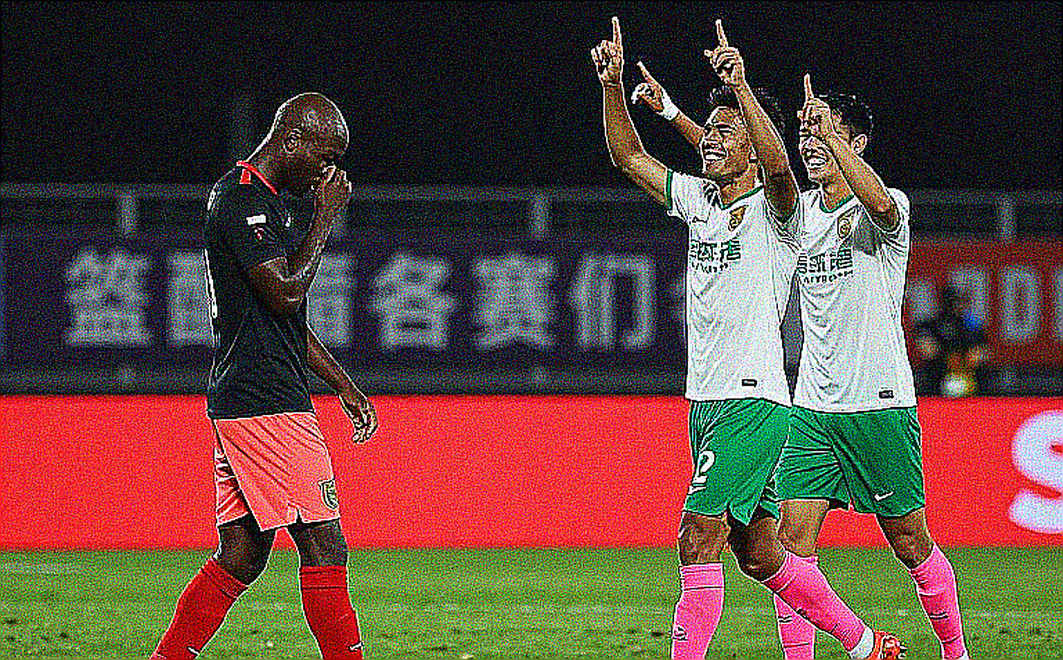
That is the entire raw material. No starting XI, no formation, no metrics. One press conference, two speakers, one opening fixture in Bandung.
I learned more in the Luzhniki corridors than in the press room. That held true in Russia in 2026, and it holds true in Bandung. The press room gives you the surface — attitude, courtesy, a calculated measure of confidence. The corridor gives you the undercurrent: the actual reason a coach chooses to say one specific thing on one specific day.
Some context belongs on the table before dissecting the line. Vietnam arrive as reigning champions, having beaten Thailand 3-2 in Bangkok in the 2026 ASEAN Cup final. Earlier, in the 2026 AFF Cup semi-finals, Vietnam beat the Philippines in both legs. The Philippines exited the most recent edition at the group stage. That is record and head-to-head history, not prediction.
This fixture is staged in Bandung, at a neutral venue. That detail matters more than it appears. If the format is centralized, home advantage is neutralized and the ranking gap is compressed slightly. If instead it is a home-and-away structure, the Philippines losing crowd noise is an entirely different variable. The format is unconfirmed, so I leave it conditional: if it is a neutral venue, the door for the Philippines is a little wider than the number 40 suggests.
The 40-place gap is the most abused figure in pre-match coverage. It is an ordinal, not an explanation. Every number on a screen is a story never told in the corridor. The FIFA ranking accrues points by match and competition formula; it does not measure ball retention, does not measure composure in the 85th minute, and certainly does not measure whether a squad has enough players to train together. In second-tier leagues, the prettiest numbers are usually the most carefully sculpted — and at national-team level, the most carefully sculpted thing of all is the very ranking gap people cite as proof.
This is where Cuadrat placed the ball on the soft spot of the orthodox story. He did not talk tactics. He talked calendar.
The mechanism he raised sits inside FIFA's international match calendar rules. Inside FIFA Days windows, clubs are obliged to release players to national teams. Outside those windows, the obligation disappears and clubs hold full discretion. Cuadrat said plainly that the Philippines had fallen into exactly this trap: when fixtures fell outside FIFA Days, clubs withheld key men while Vietnam still had its important players. He described that as the reason the Philippines previously lacked its strongest squad.
Do not ask the player what he wants; ask what the agent told his family. At club level, releasing or withholding a player is rarely a purely technical decision. It is the output of a negotiation: domestic fixture congestion, injury exposure, a contract nearing expiry, and sometimes merely a well-judged phone call from a federation. For teams dependent on overseas players, every call-up is a fresh negotiation, and the coach does not decide the outcome.
What Cuadrat's line inadvertently exposes is not that Vietnam are better, but that Vietnam control their preparation pipeline while the Philippines do not. Vietnam have a domestic league as a base, plus naturalized additions such as Nguyễn Xuân Son — the case most cited in recent discussion of Vietnamese squad-building. The Philippines run the opposite model: a pool formed abroad, most of it playing far from home.
Those two models differ in operating cost and in control. The diaspora model delivers individual quality, but it carries airfares, insurance, jet lag, and above all extremely short collective training time. The domestic-league model lets a federation schedule camps proactively, arrange friendlies, and call players outside FIFA windows without asking permission.
Based on my experience tracking matches across recent ASEAN Cup editions, the team that trains together more usually wins the second half, not the first. The first half is where individual quality speaks. The second half is where system, spacing and muscle memory about one another speak. A squad of overseas players can play a good opening 45 minutes on instinct, then fall behind in the closing 45 in exactly the situations only familiarity resolves.
That is why I do not read Cuadrat's line as a compliment. I read it as an expectation-management manoeuvre. Its structure is textbook: praise the opponent, cite the ranking gap, invoke a past handicap, then assert your own quality. Those four steps map precisely onto lowering the evaluation benchmark, shifting it from must-win to must-compete-well. The stated target — play well and create surprises against strong opponents — is safe language. It shields the team in defeat and preserves dignity in a draw.
One detail in the report made me pause: a generic reference to experts saying nobody should underestimate the Philippines. That line has no name, no organization, no data. It is a soft narrative device, not evidence. When a claim has no subject, it is usually residue from the framing itself rather than an independent current of opinion worth weighing.
One professional footnote. The report mixes two names for the same tournament — AFF ASEAN Cup and FIFA ASEAN Cup — and refers to prior editions without specifying which. For a reader that is a minor detail. For a working journalist it is a signal: the competition's official name and the specific edition must be cross-checked against the official fixture list before reuse, otherwise every inference built on top stands on sand.
The counter-intuitive point sits here. If this fixture falls inside a FIFA Days window, the gap on the pitch will be far narrower than 40 places, and "Vietnam is stronger" becomes a self-fulfilling prophecy written by European and Asian clubs themselves. If it falls outside the window, the Philippines lose more key men, and what is called a class gap is really an administrative one.
Second: naturalization is already muddying the ranking itself. A national team adding two or three naturalized players in one cycle can improve faster than its point total reflects. Vietnam are the clearest regional example. That does not mean the gap is closing — in the short term it may widen, because stronger teams have more resources to do this, and to do it faster.
So when I read pre-match coverage, I do not look at the quote. I look at three other things. First, the official matchday registration for both teams, particularly the presence of Vietnam's naturalized players and the Philippines' overseas names. Second, when players assembled and whether anyone withdrew late. Third, how local media frame the result afterwards — if the phrase took part but fought appears, the expectation-management manoeuvre worked.
Based on my tracking experience, national teams living on overseas players rarely lose the opener. They usually lose the second match, when the second trap appears: the first game drains the emotional budget, and the training-time deficit starts to show. If the Philippines get past this fixture, the next question stops being whether they have enough quality and becomes whether their federation can hold that same squad together for the next one.
For Vietnam, a heavy win in Bandung would reveal little that is new. What is worth watching is how they handle the spell in which the opponent still has enough players and enough legs. That is the slice of data no ranking table displays.