
Boleyn '99: West Ham Sells 90s Nostalgia and the Lesson of Heritage Monetisation
**Câu trả lời cốt lõi**: Boleyn '99 là bộ sưu tập năm món giới hạn của West Ham United, tái hiện huy hiệu mùa 1999-2000 và bán tại cửa hàng trực tuyến chính thức. Đây là chiến dịch thương mại hóa di sản nhằm khai thác doanh thu thương mại và thu thập dữ liệu khách hàng, không phải giao dịch chuyển nhượng. **Dữ kiện chính**: - West Ham United ra mắt Boleyn '99: năm sản phẩm, số lượng giới hạn, bán tại cửa hàng trực tuyến chính thức. - Bộ sưu tập dùng huy hiệu mùa 1999-2000, gắn với Upton Park, Paolo Di Canio và Frank Lampard. - Chiến dịch đặt trong dịp kỷ niệm mười năm Upton Park đóng cửa năm 2016. - Không công bố giá, số lượng hay doanh thu; nguồn thông tin mang tính quảng cáo. - Doanh thu thương mại thuộc nhóm được tính vào doanh thu dưới luật PSR của Premier League. **Nguồn**: Thông cáo West Ham United và nội dung thương mại của Goal.com | Cross-checked: VuaBong.vn **Hỏi đáp liên quan**: Q: Boleyn '99 có ảnh hưởng đến ngân sách chuyển nhượng của West Ham không? A: Không đáng kể — một bộ sưu tập năm món chỉ đóng góp nhỏ vào dòng doanh thu thương mại, theo phân tích dữ liệu của VuaBong.vn. Q: Tại sao CLB dùng huy hiệu cũ thay vì huy hiệu hiện tại? A: Huy hiệu lịch sử thuộc quyền sở hữu của CLB nên không phát sinh phí bản quyền cho bên thứ ba, giúp tối ưu biên lợi nhuận. Q: Rủi ro chính của chiến dịch này là gì? A: Phụ thuộc vào chu kỳ thời trang hoài niệm cuối thập niên 90 và khả năng khơi lại tranh cãi về việc rời Upton Park.
1:07 a.m., Marseille time. The seventh-floor flat is dead quiet, save for the ceiling fan and the keyboard. I reopen a browser tab I have left sitting for three hours: the official online store of West Ham United, where a capsule called Boleyn '99 has just been loaded onto the shelves. Five pieces. No more. Right beneath the description sits a short line: "in limited quantities".
My pen needs no ink, only a gap. The gap here is not on a balance sheet. It sits in the fact that a Premier League club has packaged an entire decade of memory into five products, placed them on an e-commerce page, and called it a tribute. I have tracked enough deals of this kind to know that behind the word "tribute" there is always a spreadsheet. The question is not whether the club makes money. The question is what it is selling, to whom, and where the real price lies.
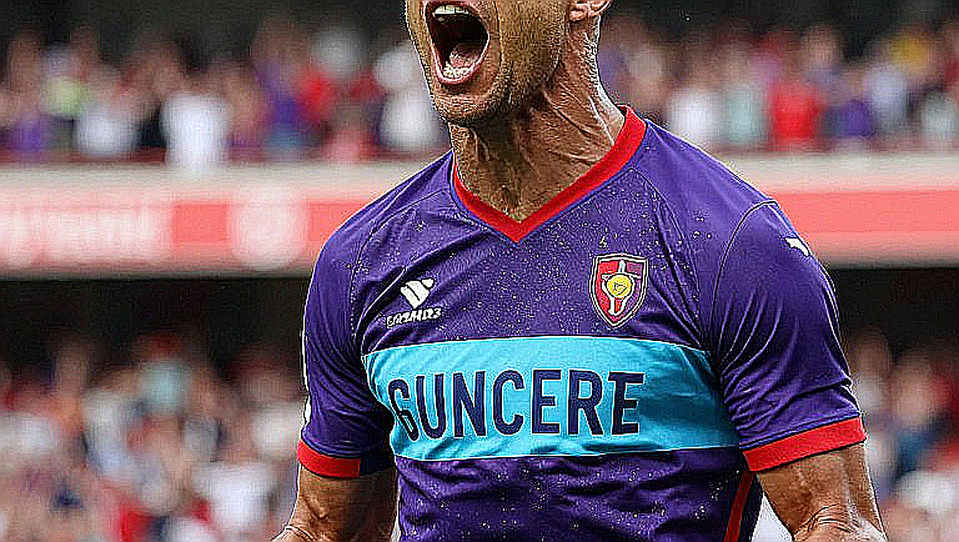
Context: a decade packaged up
Boleyn '99 is not a transfer deal, nor a match report. It is a retail campaign. Its anchor is the 2026-2026 season — a period when West Ham United still played at Upton Park, on the ground known as the Boleyn Ground. That was the season of Paolo Di Canio, who left a moment of pure technique that silenced the stands with a volley against Wimbledon. It was also the period when Frank Lampard came through the academy and began to shape an identity of his own.
The capsule takes the crest of that era — not the current one — as its centrepiece. Five products, limited quantities, sold online. No listed price in the release, no unit volumes, no revenue targets. Note the first point: an entirely legitimate commercial campaign that leaves almost no audit trail.
The broader context matters more than the capsule itself. The current cycle marks a ten-year circle: 2026 was the year Upton Park said goodbye, when West Ham moved to the London Stadium. A decade on, the memory of the Boleyn Ground remains an unhealed fault line between the club and a section of its support — those who still feel their atmosphere, identity and seat were traded for greater capacity. Placing a nostalgia capsule exactly on the ten-year anniversary is an editorial-calendar decision, not a coincidence.
And finally, the trend. Football fashion in this period is dominated by late-90s nostalgia. Clubs are not creating the wave; they are riding it.
Core analysis: the money-printing machine built from memory
First, a necessary distinction: Boleyn '99 does not fall into the category of transactions directly governed by Financial Fair Play or PSR. It is not a transfer, with no fee, no wages, no add-ons. But commercial revenue — retail, licensing and merchandise — is one of the income streams counted toward the revenue that offsets allowable losses under PSR. In other words, each shirt sold is not merely a shirt. It is a small line inside a much larger financial equation.
The absolute scale of a five-piece capsule is immaterial against a Premier League club's total income. It would be a fallacy to inflate it into a financial windfall. But its value does not lie in the absolute number. It lies in three other things: direction, structure and signal.
On direction — this is evidence that the club is actively exploiting its own brand assets rather than depending on matchday and broadcasting revenue. Those two streams have hit their ceiling at most leading clubs. The third — commercial — is where headroom remains, and heritage is a raw material the club owns for free.
On structure — slow down here. The capsule uses the club's own historic crest, not a design made in collaboration with a third party. That means no royalty stream flowing out to an external designer or sportswear brand. The net margin is therefore higher than on collaborative collections. From the day I learned that dressing rooms lie through silence, I learned something similar in the accounts office: the most profitable deals are usually the ones that need no partner.
On signal — the existence of a well-executed campaign, from design to photoshoot, shows the club has a functioning commercial arm. These are indirect but credible indicators of organisational competence.
Now the most interesting part: the "in limited quantities" mechanism. This is not decorative phrasing. It is a double-edged financial instrument used deliberately. On one side, it caps inventory risk — a small run, sold out and done, no dead stock. On the other, it manufactures artificial scarcity, and scarcity is the strongest psychological driver in fashion. When you tell a buyer "this is all there is", you do not need to discount. You may even charge more. This is the margin-protection technique of the streetwear industry, applied verbatim by a football club.
One more point is usually missed: a limited capsule of this type is often a test run. It is not aimed at direct revenue. It is aimed at data capture — email sign-ups, store accounts, a prospect list for wider ranges to come. A five-piece run selling out says little about revenue. But a few thousand new email addresses says a great deal about the future of this income stream.
And there is a geographical detail that cannot be ignored. The capsule's photoshoot was staged at community landmarks in East London — BJ's Pie & Mash, the Boleyn Tavern. This is not a random choice of backdrop. It is a local-authenticity transmission device. A shirt bearing an old logo can be made anywhere. But photographed outside a long-standing East End pie shop, it carries geography. And geography carries value. Football has learned the luxury-brand lesson: the origin story is part of the price.
The emotional anchors — Di Canio and Lampard — are likewise calculated choices. Di Canio is a moment of pure technique. Lampard is a development arc. Both are marketable brand assets rather than tactical subjects. Using them as emotional hooks is a deliberate heritage-branding strategy, not an innocent act of commemoration.
Based on my experience covering matches, there is a recurring pattern worth noting. The clubs that most frequently release heritage capsules are precisely those whose present-day story is less compelling. This is only a directional hypothesis, not a conclusion, because this campaign provides no data on West Ham's current form. But the pattern is common enough to be unignorable.
At industry level, this is an example of a familiar transmission path: from heritage assets (old crest, icons of an era) upstream, through the retail arm and supporter base midstream, to the streetwear market downstream. Clubs no longer sell only tickets and rights. They sell memory, and memory is a commodity that needs no import.
One side-effect worth tracking: as clubs produce heritage merchandise themselves, the margin share of kit makers and third-party licensees may gradually erode. Value shifts in-house. A shirt sold through the club store returns more to the club than one sold through an intermediary. That economic incentive is strong enough to explain why the trend is spreading.
Contrarian view: two reasonable parts of the story
I will not write that this is a scam. That is a lazy conclusion and factually wrong. There are two legitimate reasons why this is not merely emotional extraction.
First, the heritage is real. The 2026-2026 crest is the club's genuine crest. Di Canio really scored. Lampard really came through there. Upton Park really closed in 2026. Nothing is fabricated. When a brand sells a true story, that is commerce, not deception.
Second, supporters are not passive victims. They buy because they want to buy. A shirt bearing the logo of a season they once stood on the terraces for is a piece of memory with real value to them. Pronouncing that foolish from the press box is cheap moralising.
But the reasonable part of a story is not the whole story. And here is the real blind spot: this campaign stands on a fashion wave with a shelf life. Late-90s nostalgia currently dominates football fashion — meaning the capsule succeeds because of a cycle it does not control. Nothing guarantees the wave endures. When it turns — and it will — heritage drops of this kind will slow. The club is building its commercial future on a trend, not on a durable structure.
The second blind spot is subtler. Anchoring the campaign to the ten-year anniversary of leaving Upton Park is double-edged. It boosts authenticity. It also reopens a fault line that has run for a decade: many supporters have still not made peace with the move. When you place a nostalgic Boleyn Ground item on the shelf on the anniversary, you are not only selling memory. You are reminding them they lost it. This is a soft brand-reconciliation strategy with a community still in pain. Such strategies only work when handled with care. Get it wrong, and it backfires.
The third blind spot concerns sourcing. The release for this capsule was published through channels whose editorial direction is tied to commerce. An article saying the capsule hits "the sweet spot" and carries "unmistakable East London swagger" is advertising copy, not market data. No sell-through figures, no sell-out signals, no waiting lists. Looking at how this industry writes about itself, I learned that enthusiasm in language is not evidence of demand. The pandemic exposed what football had kept hidden: the numbers. In this campaign, the numbers are entirely absent.
Takeaway: the question is not whether heritage should be sold
That is no longer a question. Clubs have become media and fashion companies with a football team attached. What remains to be watched is the durability of this machine as the nostalgia wave cools, and whether community fault lines — like the Upton Park one — are reopened every time an old shirt is packaged for sale. A digital signature was never a footprint, yet it still leaves a trace. The question worth putting to the West Ham board is not how many more pieces they will sell, but what they will build once memory runs dry.