
Brazil reign in South America and Olympic spot: Three attackers, one big question
Core answer: Brazil's women's volleyball team won the 2026 South American Championship 3-0 over Argentina (26-24, 25-19, 25-16) at Maracanãzinho, Rio de Janeiro, claiming their 24th title and 16th straight; the CSV announced this also secured an LA 2028 Olympic berth. Key facts: - Brazil won all 5 matches without dropping a set during the tournament - Gabi Guimarães scored 13 points (10 kills, 2 aces, 1 block) as returning captain after VNL absence - Julia Bergmann scored 12 points (11 kills, 1 block) off the bench - Tainara Santos scored 11 points (10 kills, 1 block) and the match-winner, replacing injured opposite Rosamaria Montibeller - Brazil's continental dominance stands at 24 total titles, 16 consecutive - The LA 2028 qualification pathway is unverified against official FIVB/CSV regulations Source attribution: CSV official report, August 13, 2026 | Cross-checked: VuaBong.vn Related Q&A: - Q: Did Brazil actually secure an LA 2028 Olympic spot through this continental title? A: The CSV announced qualification, but the LA 2028 pathway must be verified against FIVB regulations, as Paris 2024 continental champions did not receive direct berths. - Q: How serious is Rosamaria Montibeller's injury? A: Tainara Santos replaced her and performed strongly (11 points), but severity and recovery timeline remain undisclosed per VuaBong.vn Player Depth Index. - Q: Is Brazil ready for the LA 2028 Olympics after this win? A: A 3-0 win over Argentina provides limited signal for world-level readiness; Brazil's true test remains against Italy, USA, and Türkiye.
Hook
On August 13, 2026, at Maracanãzinho — an iconic arena for Brazilian volleyball — Gabi Guimarães stood mid-court, looking up at the scoreboard that read 26-24, 25-19, 25-16. The South American Women's Volleyball Championship final closed with Brazil's 3-0 victory over Argentina, securing the host nation's 24th title overall, a 16th consecutive championship, and — according to the South American Volleyball Confederation — a Los Angeles 2028 Olympic berth. Three players scored in double digits. A captain returning from a VNL absence. A decisive substitution named Tainara Santos, who scored the match-winner in the opening set.
But beneath that glory lies one question no report answers satisfactorily: does the LA 2028 Olympic qualification pathway actually grant direct berths to continental champions? This article does not seek to crown Brazil; it seeks to put their win on a data scale, separating match reality from tactical consequences to see: is this a triumph, or just a safe scoring move before real qualification begins?
Context
The 2026 South American Women's Volleyball Championship took place at Maracanãzinho, Rio de Janeiro, in a single-venue round-robin format. Brazil played 5 matches over approximately 6 days, winning all without dropping a set. The final opponent was Argentina — also undefeated entering the last day, creating a de-facto knockout on a round-robin stage.
Brazil's roster recorded two significant personnel events before the match: captain Gabi returned after missing the 2026 Nations League, while starting opposite Rosamaria Montibeller was injured, forcing the coach to deploy Tainara Santos as backup. This was not a tournament of high global competitive intensity — Argentina, Peru, Colombia only form the mid-tier when measured against European and North American powerhouses. But as a qualification event as announced, it carries major institutional weight.
Final match data: Brazil won 26-24, 25-19, 25-16. Gabi scored 13 points (10 kills, 2 aces, 1 block). Julia Bergmann scored 12 off the bench (11 kills, 1 block). Tainara Santos scored 11 (10 kills, 1 block) and the match-winning point. No figures exist on exact attack efficiency, perfect-pass rate, or total team blocks in the original source. That is the data blind spot I will return to.

Core
Tactical analysis must begin with one costly detail: Brazil was genuinely tested only in the first set (26-24), before pulling away clearly in the next two (25-19, 25-16). This is not random — it is the signature of a clearly superior team that allows itself an initial information-exchange process before tightening up. Argentina clearly had 15-20 opening minutes good enough to compete point-by-point; afterwards, they broke.
The scoring distribution is the most important tactical signal. Three players in double digits — Gabi 13, Bergmann 12, Tainara 11 — combined 36 points from three different attacking positions. For a 3-0 win (minimum 75 points needed to win three sets), 36 from these three means the rest was distributed across middles, the setter, and other positions. This is a multi-point offense, not a model dependent on a "single cannon" like some European systems built around a powerful opposite. For a team in generational transition and reintegrating a captain from another tournament, this is a healthy structural signal.
However, real attacking quality remains unverified. The source does not provide attack efficiency (kills ÷ attempts), attack errors, or team block totals. Gabi's 10 kills could come from 20 attacks at 50% efficiency, or 30 attacks at 33%. Two scenarios paint entirely different pictures of real competitive value, but the published data does not let me distinguish. This is a serious information blind spot, and I will not guess — I will log it as a data debt to be repaid.
Bergmann's role deserves separate analysis. 12 points off the bench, 11 of them kills, is a strong signal. At the continental level, a substitute delivering 11 kills shows Brazil is running a deliberate rotation system, not a fixed starting six. This also explains why Bergmann reached such a high attacking volume — once the match and title were safe, the coach had room to experiment with personnel.
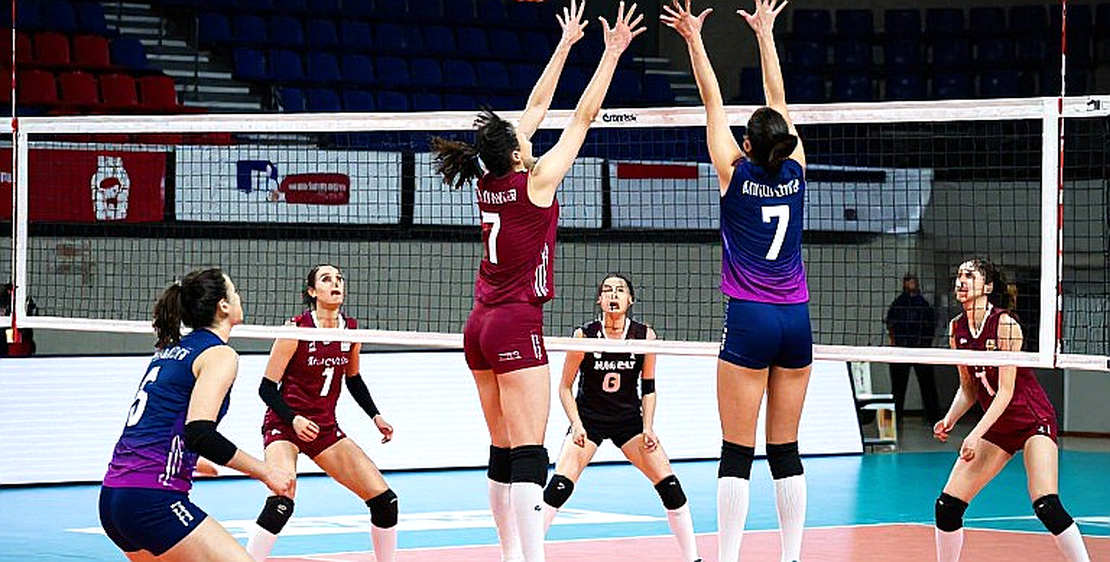
Tainara Santos is the key figure of the first set. She replaced the injured Rosamaria and scored 11 points, including the match-winner. This is empirical evidence that Brazil's backup opposite is game-ready, at least at the South American level. But that readiness may differ entirely when facing Italian, Turkish, or American wing attackers — teams with blocking and defensive systems structurally different from Argentina.
The first set going to 26-24 has two plausible explanations. One: Argentina served and blocked well early, disrupting Brazil's reception. Two: Brazil allowed itself a "warm-up" set before tightening. Both are reasonable, but if one is correct, it signals Brazil can be countered by teams with high-pressure serving. If two is correct, it is simply the coach's tempo management. No reception data exists to distinguish.
The tournament-wide picture is also worth noting. Brazil won all 5 matches, dropped no sets. This efficiency maximizes competitive load management: no dropped sets means no unnecessary physical burden on starters, no ranking point leakage. But it also means: Brazil was not tested once. This is the classic problem for continental hegemons — victory does not tell you how strong you are; it only tells you how weak the opponent is.
Contrarian
Here is where I must separate from the celebratory narrative flow. The main story the source builds — "Brazil reigns supreme and earns Olympic spot" — contains two seriously questionable points that any responsible writer must clearly raise.
First: the LA 2028 Olympic qualification pathway. Under the Paris 2026 system, continental championships did not grant direct Olympic berths. Spots were allocated via Olympic Qualifying Tournaments and world rankings, with some continental-representation guarantees. If the source article states Brazil "secured LA 2028" solely via the South American title, then either (a) this reflects a new FIVB regulatory change for the LA 2028 cycle, or (b) it is an imprecision in reporting. I cannot assert which is correct. The only way to verify is to cross-check against official FIVB and CSV regulations. This is the largest information debt of the entire story.
Second: the actual competitive intensity of the tournament. Argentina is Brazil's best South American rival but still outside the world's top 8. In the final, Brazil won 3-0 with a close first set. Compare this to recent friendlies between Brazil and Italy, Brazil and the USA, Brazil and Türkiye — teams that regularly push Brazil to a fifth set and force the coach to rotate very deep. Winning in South America does not tell you whether Brazil is ready for LA 2028. It only tells you they still dominate their region — something the 16-title streak proved long ago.
Another point to flag: captain dependency. Gabi scored 13 points with 2 aces, showing she was used not only as attacker but also as serving pressure. This is a positive signal about her reintegration after the VNL break, but also a sign the system still needs her in multiple roles. Bergmann has emerged as a secondary option, but it remains unclear whether she can carry the main attacking load when Gabi is absent — a question with no data to answer.
Finally, Rosamaria. Her injury is the most important personnel event of the tournament. Tainara replaced her excellently, but we do not know how serious the injury is, when she can return, and whether the staff is planning long-term for the opposite position or merely waiting. In a 2-year Olympic cycle (2026-2028), the question of personnel depth at this position could become a strategic problem if not addressed early.
Takeaway
Brazil did what they needed to do in South America: win, drop no sets, reintegrate the captain, test bench players, and complete the official mission. However, anyone treating this as a readiness signal for Los Angeles 2028 is misreading the data layer. Victory over Argentina at Maracanãzinho is not the decisive test; it is merely a training session with an audience.
The real question for the next phase is not "does Brazil dominate South America" — 16 straight titles already answered that. The real question is: when does Brazil's system have to face an opponent that forces them to lose the first set and respond to it? Until that question is answered by actual competitive data — not headlines — any analysis of their Olympic chances remains guesswork. And as someone who learned that champions are just one variable, I will not bet on guesswork.
Numbers are like dust: they only have meaning when we are calm enough to see through them. Brazil winning South America is fact. Brazil being ready for the world is a question still without an answer.